
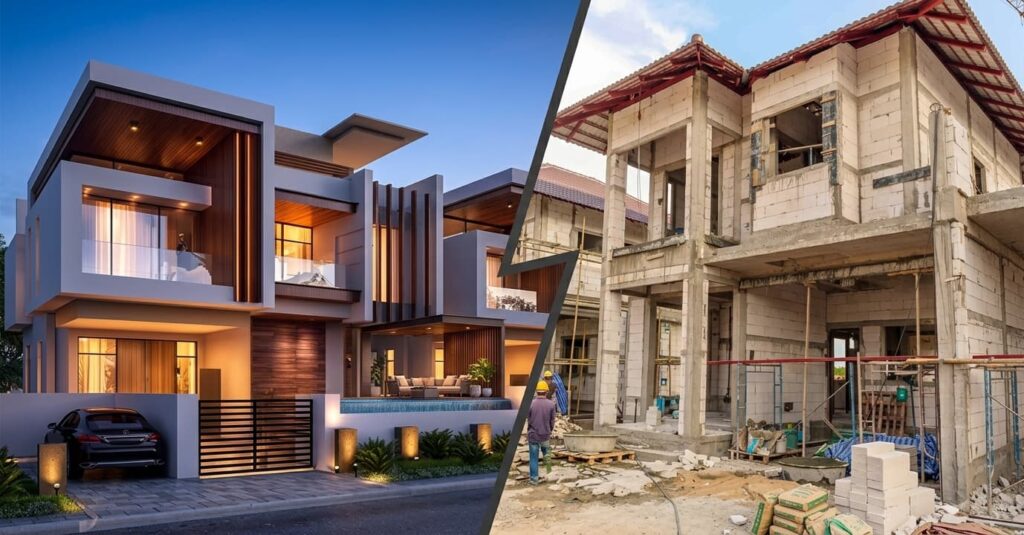
Quick Summary
Deciding between a ready-to-move-in home and an under-construction property is a pivotal financial choice. Completed homes offer immediate occupancy, zero execution risk, and lower taxation because they do not attract Goods and Services Tax (GST). However, they carry higher acquisition costs and limited customization. In contrast, under-construction properties feature lower purchase prices, flexible installment structures, and substantial capital appreciation potential, but are accompanied by construction delay risks and GST liabilities. This comprehensive guide details the cost, tax, legal, and operational variables to help buyers choose the ideal housing path.
Table of Contents
- The Evolution of Buyer Preferences in Modern Housing
- The Comprehensive Case for Ready-to-Move Properties
- Evaluating Under-Construction Properties: Value and Vulnerability
- Head-to-Head Comparison: Ready vs Under-Construction
- The Financial, Tax, and Loan Dynamics Explained
- Strategic Decision Framework: Matching Options to Buyer Profiles
The Evolution of Buyer Preferences in Modern Housing
Buying residential real estate is a significant financial undertaking for most individuals. Over the past decade, the decision-making framework for prospective home buyers has expanded beyond mere geographical location or aesthetic appeal. Today, the fundamental debate centers on the developmental stage of the building. Buyers constantly weigh the immediate utility of a finished dwelling against the long-term price appreciation of an incomplete development. This choice directly shapes the household budget, lifestyle adjustments, and tax planning strategies.
In fast-developing metropolitan areas, market dynamics have shifted considerably. Younger working professionals often find themselves balancing rental expenses with the prospect of paying home loan installments. Consulting an NCR real estate blog and market insights helps illustrate how regulatory measures like the Real Estate Regulation Act (RERA) have brought structural order to the industry, making under-construction options more secure than they were in the past. Consequently, buyers have become more analytical, evaluating the absolute cost of capital, construction timelines, and developer creditworthiness before signing a purchase agreement.
Why does the choice between ready and under-construction properties matter?
The decision goes beyond just choosing a move-in date; it dictates your cash flow allocation for months or years. Opting for a completed building removes execution risk, as the structure is fully realized, and you can inspect every square foot before finalizing the transaction. Conversely, selecting an incomplete asset allows you to enter the market at a lower price point, distributing the financial burden over several years through construction-linked payment schemes. The choice shapes your immediate financial obligations, specifically whether you will be managing simultaneous rental payments and home loan interests.
What are the primary emotional and financial triggers?
The peace of mind that comes with immediate ownership is a significant emotional driver. Knowing that there are no pending municipal approvals or delayed handovers relieves a great deal of anxiety. Financially, the decision is influenced by the immediate availability of tax deductions on home loans for completed houses, compared to the deferred, capitalized deductions for properties still under development. Investors, however, are driven by potential capital gains, which are historically higher when buying during the initial excavation or planning phases of a residential project.
The Comprehensive Case for Ready-to-Move Properties
A ready-to-move property represents an immediate, tangible asset. When you purchase completed premium residential properties in Delhi NCR, you pay for exactly what you see. The structural alignment, the quality of plastering, the layout of the electrical wiring, and the actual view from the windows are all available for inspection. There are no artistic renderings or computer-generated walkthroughs; the physical product is fully visible and ready for occupancy.
This transparency eliminates structural surprises. It allows buyers to walk through the neighborhood, evaluate the functional state of common areas, test the efficiency of elevators, and talk to existing residents about water supply and electricity backup. Furthermore, completed developments with an official Occupancy Certificate (OC) do not attract Goods and Services Tax (GST). This single exclusion can save buyers between 1% and 5% of the total property value, which translates to a substantial saving on premium acquisitions.
What defines a ready-to-move property in the current market?
A ready-to-move property is officially defined as a completed structural unit that has received an Occupancy Certificate and a Completion Certificate from local municipal authorities. These documents verify that the building has been constructed according to approved layout plans and meets safety, structural, and civil engineering guidelines. Legally, a buyer can occupy or rent out this property immediately after executing the sale deed and paying the registration fees.
What are the immediate advantages of choosing completed homes?
The primary advantage is the total elimination of construction delay risks. History shows that project delays have been a persistent challenge in major urban markets, making immediate possession highly appealing. Additionally, you can eliminate rental outgoings immediately. Your monthly outflow is redirected towards your home loan principal and interest repayment, helping you build equity from day one. You also avoid the risk of developer insolvency or legal disputes over land ownership, as the completed structure has already passed municipal and legal clearances.
What are the hidden costs and disadvantages of immediate occupancy?
The major drawback is the premium price tag. Ready properties are priced higher because the developer has carried the cost of capital throughout the construction cycle. Additionally, buyers must pay the entire cost of the property in a short window, usually within 30 to 90 days. This requires a substantial initial down payment and immediate financial liquidity. There is also limited scope for structural customization. Any modifications to the floor plan, tiling, or plumbing require breaking down existing fixtures, which increases your overall costs. Companies like Heritage Prime maintain high structural standards, ensuring that ready units stand the test of time, but older ready options from less reliable builders might require costly renovations.
Evaluating Under-Construction Properties: Value and Vulnerability
An under-construction property is an investment in future potential. It attracts buyers who seek lower purchase rates and flexible, milestone-based payment schedules. By entering the project in its early phases, such as during the launch or early structural stages of the Palm Villas Noida gated community, buyers secure premium layouts at introductory prices. This difference in pricing acts as an initial cushion against market volatility and serves as a strong foundation for capital gains.
However, buying an incomplete building requires trust in the developer’s execution capabilities. While the introduction of RERA has reduced defaults by requiring developers to put 70% of project funds into a dedicated escrow account, construction delays, regulatory hurdles, and rising material costs can still impact delivery schedules. Therefore, performing deep due diligence on the developer’s financial track record is essential before committing capital to an incomplete structure.
How do under-construction properties operate under regulatory frameworks?
Under current RERA guidelines, developers must register their projects with the state regulatory authority before marketing or selling any units. The registration requires publishing the approved master layout plans, civil architecture details, and committed possession timelines on the RERA public portal. Developers must also provide progress updates every quarter. These measures prevent developers from redirecting capital to other projects, significantly lowering execution risks and protecting home buyers.
Why do investors prefer pre-launch and early construction phases?
For investors, buying early is highly profitable. Initial booking prices are typically 15% to 30% lower than the prices of completed projects in the same neighborhood. As construction moves from excavation to the structural framing phase, the market value of the property rises. Investors can leverage payment structures like Construction Linked Plans (CLP), which only require payments when specific structural milestones are met, reducing their initial cash outlay while maximizing capital appreciation.
What risks are associated with buying incomplete housing projects?
The main risk is delayed possession, which can disrupt your financial planning and living arrangements. If a project is delayed by two years, you must continue paying rent alongside your home loan interest payments. There is also the potential risk of deviations from the original layout plans, variations in the quality of final fittings, or changes in common amenities. Working with a reputable real estate developer in NCR is a practical way to manage these risks, as established developers possess the operational stability and capital reserves needed to deliver on their structural promises.
Head-to-Head Comparison: Ready vs Under-Construction
When comparing these two options, it is helpful to look at structural, financial, and regulatory differences side by side. The following table highlights the key parameters that buyers should consider during their evaluation process.
| Parameter | Ready-to-Move Property | Under-Construction Property |
|---|---|---|
| Purchase Price | Higher premium rate due to finished status and immediate utility. | Lower entry cost, usually 15% to 30% lower than finished units. |
| GST Liability | 0% GST applies once the Occupancy Certificate is issued. | 5% for standard housing; 1% for affordable segment projects. |
| Appreciation Potential | Slower, steady appreciation aligned with local market growth. | Higher appreciation potential as construction progresses. |
| Possession Timeline | Immediate, once registry and sale formalities are completed. | Typically 2 to 5 years depending on the project scope and size. |
| Financial Risk | Extremely low, as the physical asset is fully built. | Moderate to high; influenced by builder solvency and approvals. |
| Payment Terms | Lump-sum payment is required in a short timeframe. | Flexible payment terms matched to construction milestones. |
How does the Goods and Services Tax (GST) apply to each category?
The application of GST is a key difference between these two transaction models. Under-construction properties are viewed as services under development, making them subject to GST. Standard residential projects attract a 5% GST rate without Input Tax Credit (ITC), while affordable housing developments are subject to a 1% rate. Ready-to-move properties that have received their Occupancy Certificate are classified as completed immovable assets rather than services. Therefore, they are entirely exempt from GST, which can represent a major upfront saving for buyers.
Which option yields higher capital appreciation over a five-year window?
Historically, under-construction properties offer higher capital appreciation over a five-year period. When a buyer books an apartment or villa at the structural framing stage, they buy at a discounted rate. As the builder completes milestones, such as blockwork, plastering, internal systems, and road paving, the property value increases. A completed home purchased today, however, is already priced at peak market rates. While its value will grow with general local inflation, it lacks the initial value growth phase that occurs during construction.
The Financial, Tax, and Loan Dynamics Explained
The structure of home loans and tax benefits varies significantly depending on whether a property is ready or under construction. Understanding these rules is essential to avoid unexpected tax liabilities or dry spells in your personal cash flow. Under the Income Tax Act, tax benefits are tied directly to the possession date, which can impact when you can claim deductions on your tax returns.
For completed homes, home loan borrowers can immediately claim deductions under Section 24(b) for interest payments (up to INR 2 Lakhs per annum for self-occupied properties) and Section 80C for principal repayment (up to INR 1.5 Lakhs per annum) starting from the financial year of purchase. If the property is still under construction, you cannot claim these deductions during the construction phase. Instead, the interest paid during this period is capitalized as pre-construction interest.
How do home loan disbursements differ between the two options?
For a ready property, the banking partner reviews the property documents, verifies the clear title, and disburses the entire sanctioned loan amount directly to the seller in a single payment. For an under-construction project, banks utilize a staggered disbursement approach linked to construction progress. The bank releases funds in phases, such as after the foundation is laid, after specific floors are completed, and after brickwork is finished. Consequently, the buyer pays interest only on the partially disbursed amount during the development phase, which is referred to as Pre-EMI interest.
What are the tax deduction rules during the pre-construction phase?
Pre-construction interest must be accumulated throughout the building phase. Once you receive physical possession, this accumulated interest can be claimed in five equal annual installments. These installments are added to your standard Section 24(b) interest deduction, subject to the overall cap of INR 2 Lakhs per annum. It is important to note that if construction takes more than five years from the end of the financial year in which the loan was taken, the maximum annual interest deduction drops from INR 2 Lakhs to INR 30,000. This makes choosing a reliable builder with clear timelines even more critical.
Strategic Decision Framework: Matching Options to Buyer Profiles
The right choice ultimately depends on your personal financial situation, risk tolerance, and long-term living plans. If you are currently renting and your rental outflow matches or exceeds your projected EMI, a ready-to-move home is often the most sensible path. It allows you to replace your rent with EMI payments right away, keeping your monthly budget balanced and predictable.
For buyers seeking higher square footage or premium upgrades, such as luxury independent villas in Noida, an under-construction project provides a practical way to manage payments. You can secure a premium layout without needing to pay the entire amount upfront. This structure gives you time to organize your finances, liquidate other assets, and plan customized interior designs while construction is underway.
How do you evaluate your personal cash flow and timeline?
Start by analyzing your monthly income and expenses. If you plan to purchase an under-construction home, calculate your total monthly outlay by adding your current rent to the expected Pre-EMI payments. Make sure you have enough savings to cover this dual commitment if the project faces delays. If this combined cost strains your finances, focusing on completed homes is a safer approach. Ready homes allow you to avoid dual housing costs entirely, as you can move in immediately after purchase.
What role does the builder track record play in your decision?
The developer’s reputation is one of the most important factors when buying an under-construction property. Review the builder’s past delivery records, financial health, and customer satisfaction levels. Experienced builders with strong financial backing are better equipped to navigate challenges like rising material costs or labor shortages without delaying project delivery. When evaluating under-construction options, choosing developers with a strong track record of delivering projects on schedule ensures a much smoother and more secure buying process.
Frequently Asked Questions
1. Can I claim tax deductions on a home loan for an under-construction property before getting possession?
No, you cannot claim tax deductions on either principal repayments under Section 80C or interest payments under Section 24(b) while the project is under construction. All tax benefits are deferred until the financial year in which construction is completed and you receive physical possession. The interest paid during the construction phase is accumulated and claimed in five equal annual installments starting from the year of possession.
2. How does the absence of an Occupancy Certificate (OC) affect a ready-to-move property purchase?
Buying a completed property without an Occupancy Certificate carries significant legal and financial risks. An OC verifies that the building has been constructed in compliance with local municipal laws and safety regulations. Without an OC, the building can be declared unauthorized, municipal utilities like water and electricity connections can be disconnected, and registering the sale deed may be legally restricted.
3. What are the key due diligence steps required when buying an under-construction property?
First, verify the project’s RERA registration number and check its construction milestones on the state’s RERA portal. Next, review the land title documents to ensure the developer has legal ownership and clear development rights. Verify that all major local municipal clearances, environmental approvals, and building layout sanctions are in place, and ensure the builder has a clean track record of delivering projects on time.
4. Why does a ready-to-move property cost more than an under-construction property in the same locality?
Ready properties carry a premium because they offer immediate utility, eliminate construction delay risks, and save you from paying double housing expenses (rent and EMI). Developers also price ready homes higher to cover the cost of carrying capital and maintaining the structure throughout the construction phase. This premium is the cost of absolute certainty and immediate possession.