
Quick Summary
Two-bedroom independent villas (2BHK) represent a high-yield, resilient asset class combining the security of land ownership with manageable ticket sizes. This comprehensive analysis evaluates their superior capital appreciation, consistent rental demand, lower density advantages, and optimal maintenance profiles compared to traditional apartments, offering a strategic guide for wealth-building in suburban real estate hubs.
Table of Contents
- Defining the 2BHK Villa Asset Class
- Financial Advantages and Capital Appreciation Potential
- Rental Yield and Passive Income Generation
- Cost-Effectiveness and Maintenance Dynamics
- Gated Communities versus Standalone Developments
- Investment Evaluation Checklist and Risk Mitigation
- Comparative Analysis: Apartments vs. 2BHK Villas
- The Long-Term Economic Outlook
Defining the 2BHK Villa Asset Class
The residential real estate market has witnessed a major structural shift over the past decade. While high-rise apartments dominated urban centers for a long time, buyers and investors are increasingly seeking lower-density, high-privacy housing options. In this context, the two-bedroom hall kitchen (2BHK) villa has emerged as a highly versatile and lucrative real estate asset class. It fills the specific gap between high-density multi-storey living and ultra-expensive, expansive mansion properties. It offers a unique combination of absolute land ownership, structural autonomy, and affordability.
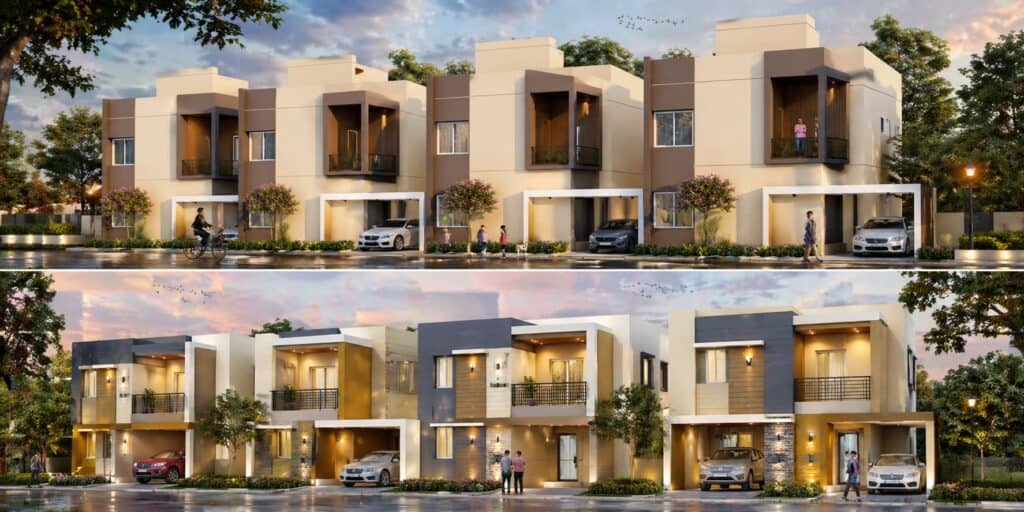
From an architectural perspective, a 2BHK villa represents a compact, independent house constructed on a dedicated plot of land. Unlike an apartment where the buyer only owns an undivided share of land (UDS) along with hundreds of other residents, a villa owner holds sole title to the physical land parcel beneath the structure. Heritage Prime has observed that this single factor significantly alters the long-term economic behavior of the property, making it far more resilient to inflation and physical depreciation than conventional flat units.
What makes a two-bedroom villa different from apartments?
The core difference lies in the ratio of land value to building value. In a standard multi-storey apartment complex, the structural cost constitutes the majority of the purchase price, while the associated land share is minimal. Because physical structures depreciate over time due to wear, tear, and aging, the overall value of an apartment can plateaus or even drop after twenty to thirty years. Conversely, in a 2BHK villa development, the land value represents a major portion of the total acquisition price. Land is a finite, appreciating asset that does not degrade, which ensures a strong protective floor under the property valuation.
Additionally, villas offer absolute structural independence. Owners retain the freedom to expand, renovate, repaint, or modify the layout as their families grow, subject to local municipal building codes. This degree of personalization is impossible in apartments, where major layout modifications are structurally prohibited. For those searching for long-term investments, seeking premium villas for sale in Noida offers a highly viable pathway to capitalize on this structural flexibility and land-backed value security.
The target demographic for boutique low-rise homes
The market demand for 2BHK villas is driven by distinct and expanding demographics. First, young, affluent professionals who work remotely desire dedicated, quiet spaces with private backyards or terraces, but do not need the expansive maintenance requirements of a five-bedroom mansion. Second, senior citizens and retirees look for low-density environments where they can enjoy independent, quiet living without the constant movement and crowded common areas of large high-rise communities. Third, nuclear families find the 2BHK layout to be the ideal size, balancing spaciousness with cost efficiency.
Financial Advantages and Capital Appreciation Potential
The principal objective of any long-term real estate investment is capital appreciation. Two-bedroom villas perform exceptionally well in this area because of the fundamental economic principles of supply and demand. Urban centers are constantly expanding, and land situated in well-planned peripheral or suburban corridors grows increasingly scarce. As land prices rise, the value of independent villas appreciates at a pace that regularly outstrips the appreciation rate of high-rise flats in the same vicinity.
Historically, the physical depreciation of building materials hurts apartment valuations over time. An apartment building constructed twenty years ago often suffers from outdated architectural styles, aging plumbing, and declining facade appeal, which limits its resale value. An independent villa, however, preserves its intrinsic value because the buyer of a pre-owned villa is primarily paying for the land plot itself. The structure can easily be modernised, expanded, or completely rebuilt, preserving the owner’s capital investment across generations.
Why do 2BHK villas appreciate faster than high-rise apartments?
The rapid appreciation is directly tied to the density density ratio. When a developer builds a high-rise on a one-acre plot, they might construct 150 apartments, dividing the land ownership among 150 different families. When a developer builds a low-density project like the Palm Villas Noida gated community, the land is divided among far fewer owners. Each villa owner holds a substantial, exclusive share of land. Because land appreciates while concrete depreciates, the higher land-to-building value ratio of these villas ensures that their overall price climbs faster when regional infrastructure improves.
Furthermore, supply constraints play a major role. High-rise projects can be scaled vertically, meaning developers can quickly add hundreds of new apartments to the local market, creating potential oversupply issues. Independent villas cannot be stacked vertically, which creates a natural, structural limit on supply. This permanent scarcity keeps the resale prices of independent villas highly competitive and stable even during broader market slowdowns.
Rental Yield and Passive Income Generation
While capital appreciation builds long-term wealth, rental income provides the near-term cash flow needed to offset mortgage payments and maintenance costs. A 2BHK villa offers a highly resilient and versatile rental model. Standard 3BHK or 4BHK villas command high absolute rental prices, which naturally shrinks the pool of potential tenants who can afford them. On the other hand, 2BHK villas are priced within a highly accessible rental bracket, making them attractive to middle-management corporate employees, young families, and expatriates.
According to market studies published on the NCR real estate blog and market insights, rental properties that offer independent outdoor spaces like small private lawns, terraces, and dedicated car parking spaces command a premium of 15% to 25% over similarly sized high-rise apartments in the same micro-market. Tenants are willing to pay this premium to avoid the noise, shared elevator issues, and density-related disruptions common in high-density developments.
Identifying high-demand rental markets for small villas
To maximize rental yields, investors should target developments situated near major employment corridors, technology parks, and educational hubs. Modern professionals prefer short commute times but highly desire serene, quiet residential environments once they finish their work. Small villas located in suburban zones with strong highway connectivity offer the ideal balance. These properties attract long-term corporate tenants who tend to stay for multiple years, which reduces vacancy-related losses and minimizes leasing costs.
Co-living, vacation rentals, and long-term lease structures
The structural layout of a 2BHK villa makes it uniquely adaptable to diverse hospitality models. Beyond standard 11-month residential leases, investors can easily list independent villas on short-term vacation rental networks. This is highly effective if the villa is located near tourist attractions, historical zones, or major green corridors. By furnishing the villa to a high standard, owners can run a boutique homestay business, which often yields double or triple the revenue of traditional long-term leasing models, especially during holiday seasons.
Cost-Effectiveness and Maintenance Dynamics
A common misconception among first-time real estate buyers is that maintaining an independent villa is a highly expensive, complex undertaking. While maintaining a large mansion can indeed be challenging, a 2BHK villa offers a compact, highly efficient footprint that simplifies maintenance and keeps operational costs low. The manageable structural size ensures that routine tasks like repainting, waterproofing, roof care, and gardening can be handled easily and affordably.
Additionally, the construction and interior fit-out expenses of a 2BHK villa are highly predictable. Investors do not need to purchase large amounts of furniture or extensive air conditioning systems to make the property functional. The compact layout allows for high-quality, luxury finishes without the enormous material costs associated with larger residential properties. This lower capital requirement allows investors to focus their budget on premium upgrades like solar panels, modular kitchens, and energy-efficient lighting systems, which directly boost the property value.
Understanding construction costs and plot share value
For those considering building or customizing their independent home, buying into an organized low-density development like the Shyam Kunj Villas luxury township helps manage construction costs effectively. Planned townships leverage economies of scale to source high-grade building materials, secure municipal approvals, and manage labor logistics. This results in a much lower per-square-foot construction cost compared to a single individual building a standalone home in an unorganized neighborhood, which greatly improves the investor’s immediate equity margin.
Gated Communities versus Standalone Developments
When investing in a 2BHK villa, the environment surrounding the property is just as important as the structure itself. Investors must choose between standalone villas located on municipal streets and villas situated within planned, secure gated communities. While standalone villas offer complete freedom from community guidelines, they often suffer from poor neighborhood planning, erratic security, lack of backup utilities, and unstable public infrastructure.
In contrast, investing in a villa within an organized gated community provides a far more stable, high-value asset. These projects offer comprehensive security systems, professional property maintenance, underground utility networks, backup power facilities, and recreational spaces like parks and clubhouses. This managed environment is highly attractive to premium tenants and future buyers, allowing the investor to charge higher rents and demand a premium resale price.
Why secure, low-density developments outperform the broader market
The security and common amenities of a gated community create a solid economic moat for the property. Families are highly focused on safety, controlled access, and reliable basic utilities like water and electricity. A gated villa community provides these necessities seamlessly, shielding the property from local civic challenges. This makes the home a highly liquid asset in the resale market, as buyers are willing to pay more for a secure, organized community lifestyle than for an isolated standalone plot.
Investment Evaluation Checklist and Risk Mitigation
Investing in real estate requires thorough due diligence to avoid legal disputes, structural issues, or stagnant property valuations. Before committing capital to any 2BHK villa, investors should systematically evaluate the asset against a comprehensive checklist of legal, location, and structural parameters. This disciplined approach ensures that the property is positioned to deliver the expected capital appreciation and rental yield over the holding period.
- Land Title Verification: Ensure that the developer holds clear, unencumbered ownership of the land. The property must have clean titles, free of legal disputes, with all historical ownership records verified back at least thirty years.
- Regulatory Approvals: Confirm that the project is approved by the regional Real Estate Regulatory Authority (RERA) and holds all necessary municipal certificates, including the layout approval, environmental clearance, and building sanction plan.
- Access Road Width: Ensure the approach roads and internal community roads are wide enough (ideally at least 9 to 12 meters) to accommodate modern vehicles and emergency services comfortably, as narrow roads limit future commercial viability and resale values.
- Water and Utility Security: Verify the local municipal water supply, groundwater levels, and electricity infrastructure. Properties that rely entirely on expensive external water tankers face higher running costs, which hurts rental yields.
- Proximity to Infrastructure: Evaluate the distance to major transport hubs like metro stations, expressways, airports, and upcoming commercial centers, as these infrastructural catalysts drive long-term property values.
By focusing on these structural and legal parameters, investors can avoid low-quality developments and target high-performing assets. Working with professional developers who build high-quality premium residential properties in Delhi NCR ensures that your capital is backed by clear legal structures, professional site engineering, and exceptional location design.
Comparative Analysis: Apartments vs. 2BHK Villas
To provide a clear view of the economic landscape, the following table compares the typical financial and operational metrics of a high-rise apartment and an independent 2BHK villa within a gated community over a standard ten-year holding period. This comparison illustrates how the distinct characteristics of each asset class affect investor returns and long-term wealth building.
| Parameter | High-Rise 2BHK Apartment | Gated 2BHK Villa |
|---|---|---|
| Land Ownership Type | Undivided Share of Land (UDS) only | Exclusive, absolute plot title ownership |
| Appreciation Profile | Moderate (linked to local market and building age) | High (driven directly by land scarcity) |
| Rental Premium Capability | Standard market rates based on area | 15% to 25% premium for private spaces |
| Structural Customization | Strictly prohibited (fixed structural layout) | High (expandable vertically/internally) |
| Structural Depreciation Risk | Significant over 20-30 years | Low (offset by the rising value of underlying land) |
| Community Density | High (shared amenities among many families) | Low to medium (exclusive, private living) |
The data shows that while apartments can offer good entry-level pricing in central areas, they lack the structural flexibility and land-backed security of a 2BHK villa. The ability to customize the structure, combined with high capital appreciation from absolute land ownership, makes independent villas the preferred choice for long-term investors looking to build generational wealth.
The Long-Term Economic Outlook
Looking forward, the economic case for 2BHK villas remains exceptionally strong. As major cities expand outward and create new suburban corridors, these peripheral zones are being planned with high-quality, modern infrastructure. The expansion of expressways, high-speed rail links, and tech hubs has transformed suburban locations into highly desirable places to live, which makes early-stage investments in 2BHK villas in these areas highly lucrative.
Additionally, the shift toward flexible work arrangements has changed how buyers evaluate residential space. The home is no longer just a place to sleep; it has become an integrated living, working, and recreational environment. A 2BHK independent villa, with its private terrace, small green space, and dedicated study options, matches these modern lifestyles perfectly. This permanent shift in how people live ensures that the 2BHK villa remains a highly resilient, high-demand, and appreciating real estate asset for years to come.
Frequently Asked Questions (FAQ)
1. Is a 2BHK villa a better investment than a 3BHK apartment?
Yes, from a long-term capital appreciation perspective. A 2BHK villa includes exclusive ownership of the underlying land plot, which naturally appreciates over time. A 3BHK apartment only gives you an undivided share of land, and the concrete structure itself depreciates. Additionally, a villa allows you to expand the structure vertically or customize the layout, which keeps its resale value high.
2. What are the typical maintenance costs for a 2BHK independent villa?
Maintenance costs for a 2BHK villa are highly manageable due to its compact structural footprint. If located in a gated community, you will pay a monthly or quarterly maintenance fee for shared security, roads, and landscaping. Independent maintenance like roof treatment or facade painting is only done every few years and can be managed easily without the massive expenses of larger luxury homes.
3. Can I easily get a home loan for an independent 2BHK villa?
Yes, nationalized and private banks readily fund independent villas, provided the project is approved by RERA and has clear, legal land titles. When buying a villa in an organized, developer-backed township, the bank approval process is often faster because the developer has already submitted the master layout plans for legal verification.
4. How do rental yields of 2BHK villas compare to high-rise flats?
2BHK villas often deliver higher rental yields because of their broad appeal to corporate professionals, small families, and retirees. Properties with private gardens, terraces, and dedicated parking can command a 15% to 25% rent premium over typical high-rise flats. Their layout also makes them excellent candidates for lucrative short-term holiday rentals or corporate stays.