
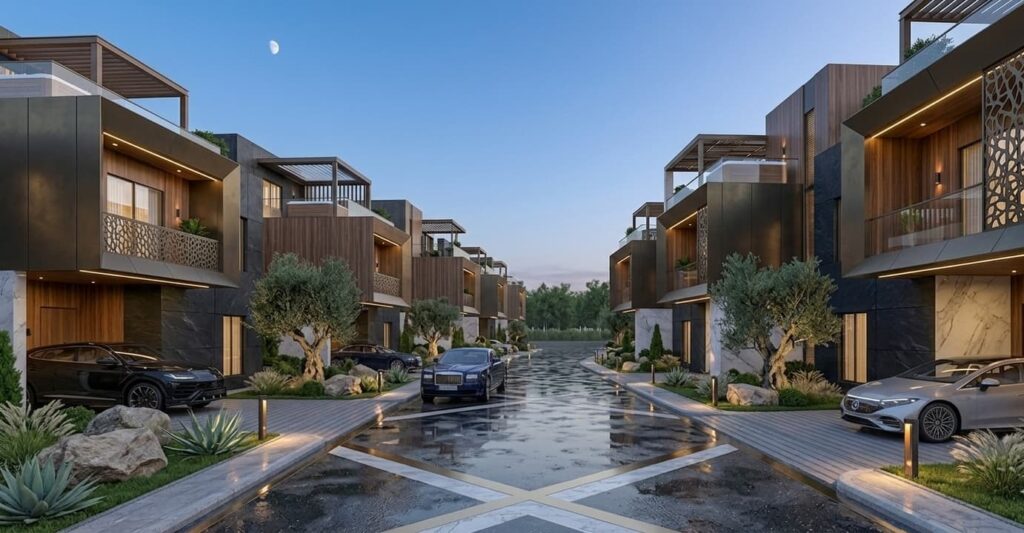
Quick Summary
Acquiring a 2BHK villa involves complex legal clearances spanning land ownership, regulatory approvals, and financial checks. This comprehensive guide outlines the essential legal checklist to ensure a secure, dispute-free transaction. Key focuses include verifying the title chain, confirming RERA registration, checking building plans against master layouts, obtaining utility clearances, and reviewing sale agreements to safeguard your investment.
Table of Contents
- Understanding Land Title and Ownership History
- RERA Compliance and Registration Mandates
- Local Authority Approvals and Building Sanction Plans
- Encumbrance Certificates and Financial Due Diligence
- Possession, Occupancy, and Utility Clearances
- Essential Agreements and Execution Protocols
Understanding Land Title and Ownership History
The foundational step in purchasing any landed property, especially individual residential structures, is verifying the land title. Unlike high-rise apartments where land ownership is divided proportionally, buying a villa means acquiring ownership of both the physical structure and the specific parcel of land on which it stands. A clear, marketable title ensures that the seller has the undisputed legal right to transfer ownership to you without future litigation risks.
What is a mother deed and why is it critical for a 2BHK villa?
The mother deed, also referred to as the parent document, traces the origin of the land ownership from its earliest recorded transactions down to the current developer or seller. For individual homes and low-density housing developments, this document is the primary evidence of how the land changed hands through sales, gifts, inheritance, or partitions. A thorough title search must trace the history back at least thirty years to rule out any gaps in ownership or unresolved familial claims.
When examining properties like luxury independent villas in Noida, buyers must demand to see the original mother deeds. If the original documents are pledged with a financial institution for project funding, a certified copy signed by the bank must be provided. Ensuring that the sequence of transfers is chronologically consistent and legally registered prevents future challenges from third-party claimants or forgotten heirs.
How do you verify the chain of title for agricultural converted land?
Many suburban villa developments are constructed on land that was historically designated for agricultural use. For such developments to be legally valid, the land must undergo a formal conversion process known as Non-Agricultural (NA) conversion. This conversion is authorized by local revenue authorities, who issue a formal conversion order or certificate.
Buyers must verify the NA conversion certificate to confirm that the land has been legally designated for residential use. If the land remains classified as agricultural under government records, constructing a residential villa on it is illegal, making the structure liable for demolition. Additionally, you must cross-examine the local municipal records, often referred to as Khata or Patta documents, to ensure that the developer has paid the requisite conversion charges and that the land is registered in the developer’s name in the government land registry database.
RERA Compliance and Registration Mandates
The Real Estate (Regulation and Development) Act, enacted in 2016, serves as the primary regulatory framework protecting home buyers in India. Any real estate project that exceeds five hundred square meters of land area or comprises more than eight individual units must be registered under the respective state’s RERA authority. Checking the RERA status of a project is a non-negotiable step in your legal checklist.
Is RERA registration mandatory for individual 2BHK villa projects?
Yes, if the villa is part of a larger gated community, township, or phased development project, the developer must obtain a unique RERA registration number for that specific phase. This registration binds the builder to strict timelines, construction quality standards, and financial disclosures. If a developer claims that RERA registration is not required for a multi-unit villa project, buyers should approach the claim with extreme skepticism and seek independent legal counsel.
For those keeping up with the NCR real estate blog and market insights, it is evident that regulators have intensified crackdowns on unregistered projects. Buying a villa in an unregistered project deprives you of the fast-track dispute resolution mechanisms provided by RERA, leaving you vulnerable to prolonged court battles in the event of construction delays or quality compromises.
What specific details must you verify on the official RERA portal?
Do not rely solely on the registration number provided in the developer’s marketing brochures. You must visit the state’s official RERA portal and look up the registration number to verify the following critical data points:
- Project Sanction Plans: The exact layouts, villa dimensions, and common amenities approved by the authority must match the marketing materials shown to you.
- Financial Disclosures: Check the quarterly progress reports submitted by the builder, including details on fund utilization from the designated escrow account.
- Litigation Status: RERA portals list active legal disputes or customer complaints filed against the developer or the specific project.
- Completion Timeline: The official deadline declared by the developer to RERA for project completion and hand-over must align with the date promised in your sales agreement.
Local Authority Approvals and Building Sanction Plans
A builder cannot legally commence construction on a villa without receiving explicit approvals from the local planning authority. These approvals guarantee that the construction complies with local zoning regulations, structural safety standards, and environmental protection laws.
What happens if a villa plan deviates from the master layout?
A common risk in individual villa developments is the occurrence of structural deviations. Developers sometimes modify individual layouts to maximize space or accommodate buyer requests, ignoring the sanctioned plans. If the local municipal corporation discovers that the built structure deviates significantly from the approved blueprint, they can declare the building unauthorized, refuse to issue utility connections, or order demolition of the unapproved sections.
Before signing any transaction papers, request the master layout plan and the individual villa sanction plan approved by the local municipal authority. When dealing with a reputable real estate developer in NCR, these blueprints are readily shared with buyers to maintain transparency and establish trust throughout the buying process.
Which local government bodies must issue No Objection Certificates (NOCs)?
An authorized villa project requires clearance from multiple municipal and state-level government bodies. You should request the developer to provide copies of the following key No Objection Certificates:
| Issuing Authority | Purpose of Clearance | Key Checkpoint for Buyers |
|---|---|---|
| Fire and Emergency Services | Verifies adherence to emergency access standards and fire safety layouts within the gated community. | Ensure the clearance remains valid and is not expired. |
| State Pollution Control Board | Confirms that the construction process and subsequent waste management do not harm the local ecosystem. | Check for structural waste disposal plan approvals. |
| Aviation Authority (if applicable) | Ensures that the height of structures, especially overhead tanks or towers, does not interfere with flight paths. | Applicable if the villa is situated near airport boundaries. |
| Water Supply and Sewerage Board | Grants permission to connect the residential units to the city municipal water grid and sewer systems. | Ensures the villa project will not face perpetual water scarcity. |
Encumbrance Certificates and Financial Due Diligence
An encumbrance on a property refers to any liability, lien, or financial charge registered against it. If a developer has taken a construction loan using the project land as collateral, that land is considered encumbered. Buyers must ensure that the specific villa unit they are purchasing is free from all monetary and legal liabilities.
How do you verify if the property has been pledged for a bank loan?
To check for registered liabilities, you must obtain an Encumbrance Certificate (EC) from the sub-registrar office under whose jurisdiction the property falls. The EC provides a detailed history of all registered transactions, mortgages, and legal claims associated with the land over a specified timeframe. There are two primary types of Encumbrance Certificates:
- Form 15: This document lists all registered transactions, mortgages, and sales historical details associated with the property, providing clear evidence of any active financial liabilities.
- Form 16: This is a certificate of nil encumbrance, indicating that no registered liabilities or transactions have occurred during the requested period. A buyer should ideally look for a Form 16 covering the past fifteen to thirty years.
If the developer has taken a construction loan, ensure they provide a No Objection Certificate or a Release Letter from the lending bank. This document confirms that the bank has waived its charge over your specific villa unit and will not contest your ownership once the purchase is complete.
Why is a property tax history check crucial for resale villas?
If you are purchasing a 2BHK villa in the resale market, you must verify that the current owner has paid all municipal property taxes up to the date of transfer. Unpaid property taxes accumulate hefty interest penalties, which legally transfer to the new owner upon registration. Demand the original tax receipts from the seller and verify them on the local municipal corporation’s online portal to ensure there are no outstanding dues.
Possession, Occupancy, and Utility Clearances
Physical possession of a villa is legally incomplete and highly risky without obtaining the correct completion and occupancy certificates from the municipal authorities. Moving into a villa without these documents is a regulatory violation that can lead to severe fines and utility disconnections.
What is the structural difference between a completion certificate and an occupancy certificate?
While often confused, these two documents serve entirely different legal purposes. A Completion Certificate (CC) is issued by the local municipal body once the physical construction of the villa is completed. It certifies that the building has been constructed in strict compliance with the approved building sanction plans and local zoning bylaws.
An Occupancy Certificate (OC) is issued after the CC. It is the final approval certifying that the building is structurally sound, safe, and fully fit for human habitation. The OC is only granted after municipal inspectors verify that the structure has functional sewage, water, and electricity lines that meet local safety parameters. Reviewing the legal terms and service conditions of your sales agreement will clarify the developer’s liability if they fail to deliver a valid OC within the agreed timeframe.
How do you secure seamless utility meter transfers?
Once you secure the occupancy certificate and the sale deed is registered, you must officially transfer the utility connections to your name. This involves updating the names on the electricity meter, water connection, and piped gas connection if available. To execute this, you will need to submit copies of the registered sale deed, the occupancy certificate, and No Objection Certificates from both the developer and the previous owner to the respective utility boards.
Essential Agreements and Execution Protocols
The final phase of your purchase involves the drafting, execution, and registration of transaction agreements. These contracts define the financial terms, possession timelines, and indemnity clauses that protect your capital investment.
What clauses in the Sale Agreement safeguard buyer interests?
The Agreement to Sell is the primary contract that binds both parties to the transaction details. It is vital to ensure that your legal counsel thoroughly reviews this document before you sign. A balanced agreement must include the following protective clauses:
- Indemnity Clause: This clause obligates the seller to compensate you for any financial loss or legal dispute arising from defect of title, historical claims, or outstanding municipal dues that existed before the date of purchase.
- Penalty for Delay Clause: The builder must be contractually obligated to pay monthly interest or penalties if they fail to hand over the possession of the villa by the promised date.
- Defect Liability Clause: Under RERA, developers are legally liable for correcting structural defects or quality compromises in the building for a minimum of five years from the date of handing over possession, without any extra cost to the buyer.
- Force Majeure Definition: Carefully review the force majeure clause to ensure the developer cannot use minor supply chain issues or labor shortages as excuses to indefinitely delay project delivery.
How are registration charges and stamp duties calculated for independent homes?
The final legal step is registering the Sale Deed at the local sub-registrar office. The registration fees and stamp duties are calculated as a percentage of either the circle rate declared by the local government or the actual transaction value stated in the sale deed, whichever is higher.
Because stamp duty rates vary across states, genders, and municipal boundaries, it is crucial to perform precise calculations beforehand to manage your financial outlays effectively. If you are unsure about the registration process or require legal assistance in examining property titles, do not hesitate to contact Heritage Prime property experts for professional guidance and comprehensive transactional support.
Frequently Asked Questions
1. Can I buy a 2BHK villa if the developer has not yet received the Occupancy Certificate?
While you can sign an Agreement to Sell and register the transaction before the Occupancy Certificate (OC) is issued, you should not take physical possession or move into the villa without a valid OC. Living in a building without an OC is illegal under municipal laws, and local authorities can impose penalties, disconnect utility supplies, or declare the structure unauthorized.
2. What is the difference between a Sale Agreement and a Sale Deed?
An Agreement to Sell is a preliminary contract that outlines the mutually agreed terms, conditions, purchase price, and payment schedule for the future transfer of the property. A Sale Deed is the final legal document executed and registered at the sub-registrar office that actually transfers the ownership title of the property from the seller to the buyer.
3. How do I verify if a resale villa has any outstanding bank loans?
To confirm that a resale villa is free from active mortgages, you must check the Encumbrance Certificate (EC) for Form 15 entries, which record all historical financial liabilities. Additionally, you should request the seller to provide a clear title search report prepared by an independent legal counsel and obtain a written declaration confirming that the property documents have not been pledged as collateral.
4. Is the super built-up area different from the carpet area in a 2BHK villa?
Yes. The carpet area is the actual usable floor area inside the villa walls, excluding external walls, balconies, and common areas. The super built-up area includes the carpet area plus thick walls, balconies, and a proportionate share of common infrastructure such as corridors, clubhouse spaces, and security cabins. Ensure that the price of the villa is structured primarily around the RERA-approved carpet area.