
Quick Summary
Designing a luxury villa living room requires balancing architectural scale with highly refined spatial planning. This comprehensive guide covers structural volume, sophisticated color choices, bespoke furniture arrangements, lighting layers, and premium material selections. Discover how to transform an expansive reception space into an intimate, warm, and visually striking environment that remains highly functional for daily living while reflecting an uncompromising aesthetic standard.
The Core Elements of Villa Living Room Architecture
How does ceiling height impact luxury villa decor?
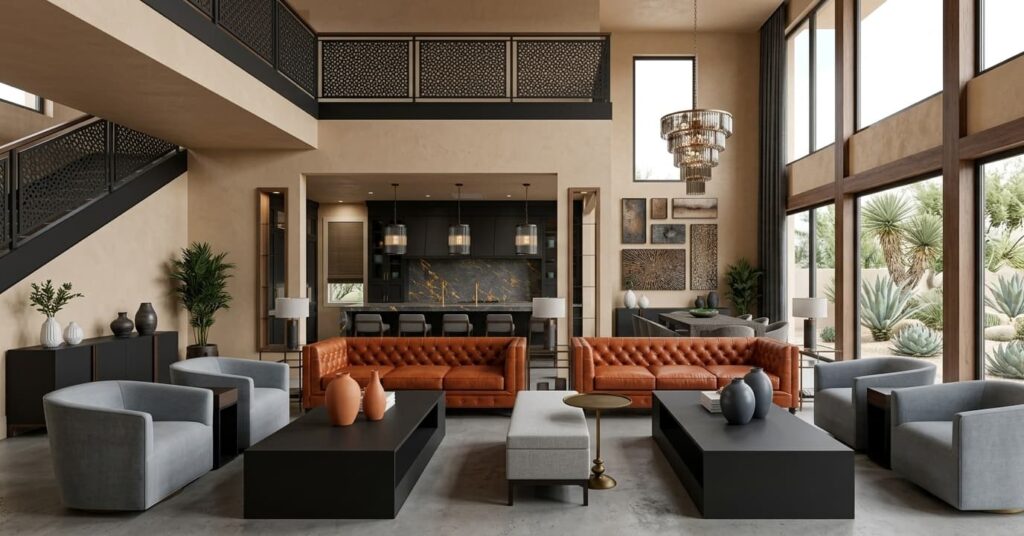
Ceiling height defines the initial emotional response to a space. Grand villas often feature double-height ceilings or exposed structural beams, which require a strategic approach to decoration to avoid feeling cavernous. When dealing with heights exceeding twelve feet, the primary design challenge is to bring the visual scale down to human proportions without compromising the sense of grandeur. Designers achieve this by establishing a strong horizontal datum line. This can be done using high-level molding, contrasting paint colors, or architectural paneling that stops at a specific height, drawing the eye to the lower two-thirds of the wall.
Additionally, selecting oversized structural elements such as statement pendant installations or floor-to-ceiling fireplace surrounds helps bridge the gap between the floor and the ceiling. The volume of the room dictates the acoustic properties as well; soft plaster finishes, acoustically absorbent wall coverings, and integrated wood slat detailing prevent unwanted echoes, making a massive room feel remarkably private and conversational.
What role do expansive windows play in a living area?
Large windows, such as steel-framed crittall glass walls or floor-to-ceiling sliding systems, serve as dynamic architectural frames. Rather than merely letting in natural daylight, they establish an active relationship with the exterior landscape, bringing natural elements into the interior color story. Decorating a room with massive fenestrations requires careful consideration of light modulation and furniture placement. To handle solar heat gain and preserve delicate fabrics, the integration of motorized architectural drapery is a necessity.
Using light-filtering sheers alongside heavier wool or silk-velvet drapes allows the homeowner to control the ambiance throughout the day. Furniture should be positioned to complement, not obstruct, these views. Low-profile seating arrangements ensure that the line of sight remains uninterrupted, allowing the eye to travel naturally from the indoor seating group directly out to the manicured gardens, terraces, or water features outside.
Establishing a High-End Color Palette for Spacious Living Rooms
How do you choose between monochromatic sophistication and bold jewel tones?
Color selections in expansive villa layouts must be approached with a clear understanding of spatial depth. A monochromatic scheme, focusing on variations of warm greiges, soft creams, and rich taupes, creates a cohesive backdrop that emphasizes architectural forms and material textures. The secret to preventing a neutral palette from looking flat is the layering of varied materials, such as combining matte boucle upholstery with polished marble and brushed brass.
Conversely, incorporating deep jewel tones like muted emerald, sapphire, or deep terracotta can partition a large space, creating distinct zones of interest. When utilizing deeper shades, it is wise to restrict them to specific architectural features, such as a lacquered accent wall, a custom-upholstered library alcove, or structural columns. This method adds drama without overwhelming the senses, ensuring that the room remains airy and inviting rather than dark and confined.
How does the choice of wall finish alter spatial perception?
The texture of the walls dictates how light behaves within a space. Standard flat latex paint can absorb light in a way that makes a grand room feel clinical. To counter this, luxury villa design relies heavily on dimensional wall finishes. Venetian plaster, applied in multiple thin layers and burnished to a soft luster, catches natural light and reflects it with subtle variation, giving the walls a tactile depth.
Custom wood paneling, whether in rift-sawn white oak, walnut, or lacquer-finished wainscoting, adds architectural weight and structure to the living room. Textile wallcoverings, such as grasscloth, raw silk, or embossed linen, offer an extra layer of acoustic insulation while softening the overall aesthetic. By varying these finishes on different walls, designers can direct visual focus, making long walls feel shorter and low ceilings appear higher.
Selecting Statement Furniture and Layout Strategies
Why is scale critical when furnishing an expansive estate living room?
One of the most common errors in large homes is using standard-sized furniture, which quickly gets lost in a grand floor plan. In luxury independent villas in Noida, the scale of the furniture must match the volume of the space. Instead of a single standard sofa, a massive living room demands custom-built sectional sofas with generous depths and extended lengths. Bespoke furniture pieces allow for precise proportioning, ensuring that the seating matches the room’s architectural grid.
Incorporating oversized lounge chairs, monumental marble-topped coffee tables, and wide credenzas balances the room’s layout. These substantial pieces act as grounding anchors. When choosing furniture, look for solid weight and architectural profiles, such as plinth bases and wide armrests, which communicate stability and permanent luxury. This approach is highly visible in premium residential properties in Delhi NCR where spaciousness is a defining feature of high-end home construction.
How should you arrange seating to encourage conversation and comfort?
An expansive floor plan should never be treated as a single massive seating zone. Instead, the layout should be divided into multiple, highly functional conversational hubs. The primary group, centered around a main focal point such as a grand fireplace or an expansive window view, should feature facing sofas or a U-shaped configuration that facilitates natural face-to-face interaction.
Secondary seating zones can be arranged in corners or transitional spaces, featuring a pair of comfortable club chairs paired with a small drink table, or a chaise longue placed next to a reading light. By creating these distinct micro-environments, the room remains highly versatile, accommodating a large social gathering just as easily as an intimate evening with family. Grounding each of these zones with custom-sized area rugs helps define the individual spaces visually without the need for physical partition walls.
Curating Bespoke Textiles, Rugs, and Lighting
What are the best luxury upholstery fabrics for high-traffic villa salons?
Selecting fabrics for a primary living area requires a perfect balance of durability and tactile sophistication. Natural materials remain the benchmark for luxury interior spaces. Mohair velvet, renowned for its rich sheen and exceptional durability, is highly resistant to crushing and wear, making it an excellent choice for primary sofas. Belgian linen, with its relaxed yet sophisticated texture, works beautifully on accent seating and drapery, offering a breezy, organic counterpoint to more structured design elements.
For high-use pieces, performance fabrics woven from solution-dyed acrylics provide stain resistance without sacrificing the soft hand-feel of natural cotton or wool blends. Incorporating accents of distressed full-grain Italian leather adds another layer of texture, introducing natural imperfections and character that age beautifully over time.
How do you select the perfect statement chandelier for a grand foyer or living room?
Lighting is the ultimate tool for defining atmosphere and scale. A singular, undersized ceiling light will make a grand living room feel empty and uncoordinated. Instead, a multi-tiered lighting plan is required, anchored by a significant statement chandelier or architectural light installation. When selecting a central luminaire, consider its physical scale and material composition. Hand-blown Murano glass, brushed brass, or alabaster fixtures create striking focal points even when unlit.
This design philosophy is clearly demonstrated in the custom interiors of ultra-luxury homes at Palm Villas Noida, where statement lighting works in harmony with high ceilings. To supplement the central fixture, incorporate architectural task and accent lighting: custom plaster wall sconces, integrated LED warm cove lighting along the ceiling perimeter, and low-level floor lamps. This layered approach allows the homeowner to shift the mood from bright and social to low-key and intimate at the touch of a button.
Incorporating Architectural Features and Custom Millwork
How can custom built-ins and library walls anchor a grand room?
Off-the-shelf shelving has no place in a high-end villa. Custom architectural millwork is fundamental to establishing structural permanency. A full-height library wall, constructed from rich hardwoods such as walnut or white oak, creates a strong vertical focus and provides a dedicated space for curated book collections and sculpture display. Integrating hidden storage, media screens behind pocketing art doors, or a concealed wet bar with a marble countertop adds functional depth.
The joinery should feature fine detailing, such as mitred corners, integrated soft-close hardware, and subtle LED backlighting built directly into the shelves. This level of craftsmanship ensures the millwork feels like a natural extension of the villa’s structure, anchoring the room with a sense of purpose and built-in heritage.
What is the impact of luxury stone selection on fireplaces and accent walls?
A magnificent fireplace is often the heart of a villa’s living room. Utilizing natural stone with strong veining, such as Calacatta Viola, Arabescato marble, or honed silver travertine, transforms a standard fireplace into a monument of design. Book-matched stone slabs, where the natural patterns of the marble mirror each other perfectly, create an artistic statement wall that commands attention.
When designing a stone fireplace surround, consider a floor-to-ceiling installation to emphasize the verticality of the room. The finish of the stone also plays a role: a honed or leathered finish offers a modern, tactile feel that diffuses light softly, while a high-polish finish reflects light, adding brightness and a formal touch to the surrounding decor.
Curating Art and Accessories with Discernment
How should large-scale art pieces be displayed in premium spaces?
In large-scale luxury interiors, small, scattered artwork can make walls look cluttered and fragmented. The preferred approach is to feature monumental, museum-grade art pieces that match the physical proportions of the room. A single, large-format abstract canvas or a substantial sculptural installation establishes a clear focal point and sets a sophisticated tone.
When positioning large artwork, proper lighting is paramount. Utilizing dedicated ceiling-mounted framing projectors or adjustable art lighting ensures the piece is illuminated evenly without glare. Additionally, the frame selection should complement the room’s architectural millwork, using simple museum-style profiles in solid wood or blackened metal to keep the focus entirely on the artwork itself. You can explore further styling guides and spatial inspiration on our NCR real estate blog and market insights.
How do you balance decorative accessories without cluttering a grand room?
Accessorizing a luxury living room requires restraint and a focus on material quality over quantity. Instead of filling shelves and tables with small trinkets, choose a select number of sculptural objects that possess individual artistic merit. Think in terms of scale, material contrast, and form. A heavy hand-carved alabaster bowl, a collection of hand-thrown ceramic vases with textured glazes, or a singular bronze sculpture can make a powerful statement.
When arranging accessories, employ the rule of three, grouping items of varying heights and shapes to create a balanced, asymmetrical composition. Leaving ample negative space around each object allows its form to be appreciated fully, maintaining an atmosphere of calm refinement.
Comparing Living Room Layout Philosophies for Large Homes
When planning the layout of an expansive villa salon, choosing the right spatial philosophy is essential. Below is an overview of three prominent layout styles used in modern luxury estates to balance form and daily functionality.
| Layout Style | Core Characteristic | Best Suited For | Key Furnishing Element |
|---|---|---|---|
| Classic Symmetry | Pairs of matching sofas and chairs facing a central fireplace. | Formal reception rooms and traditional villa designs. | Matching tuxedo sofas and twin chandeliers. |
| Zonal Multi-Hub | Dividing the space into separate conversational, reading, and viewing zones. | Double-height rooms and open-plan great halls. | Custom large-scale area rugs and modular sectionals. |
| Minimalist Curvilinear | Sculptural, organic furniture shapes positioned away from walls. | Modernist architecture with expansive window walls. | Curved sofas, round stone plinths, and free-standing art. |
Frequently Asked Questions
How do I choose the right rug size for a grand living room?
A common mistake is selecting a rug that is too small, which can make furniture appear disconnected. In a large villa living area, all furniture legs, or at least the front feet of every seating piece, must sit comfortably on the rug. If a standard rug size is inadequate, consider sourcing a custom-sized rug or layering multiple rugs to define distinct zones. Opt for high-quality natural fibers like hand-knotted wool and silk blends for a soft feel underfoot and enduring quality.
How can I make a double-height living room feel warm and cozy?
To cultivate warmth in a room with soaring ceilings, focus on low-level lighting, rich textures, and deep color values. Incorporating wall sconces at eye level, comfortable floor lamps, and table lamps creates warm pockets of light that draw the eyes downward. Additionally, introducing natural materials like wood paneling, heavy linen drapes, and plush textiles like bouclé and cashmere softens the acoustics and builds a comfortable, inviting ambiance. Working with a reputable real estate developer in NCR like Heritage Prime ensures that the foundational layout, ceiling heights, and fireplace placements are thoughtfully designed from the very beginning to facilitate these warm, livable configurations.
Should the television be a focal point in a luxury living area?
In formal villa reception spaces, the TV should not dominate the design layout. Consider using advanced concealment options, such as motorized art lifts where a beautiful canvas slides over the screen when not in use. Alternatively, choose a display that functions as framed artwork in standby mode, or place the television in a secondary living lounge, leaving the primary living room dedicated to conversation, reading, and beautiful garden views.
What are the best flooring options for luxury villa living rooms?
Hardwood flooring in wide-plank European oak or American walnut brings organic warmth and timeless style to the space. If stone is preferred, select large-format marble, quartzite, or premium limestone tiles with minimal grout lines to establish a seamless, expansive look. Incorporating custom inset marble patterns or contrasting borders can define specific zones, adding architectural character directly to the floor.