
Quick Summary
Post-2030, Greater Noida is projected to transition from a high-growth emerging market to a mature, high-value real estate hub. Driven by the operational stability of the Noida International Airport, expanded metro corridors, and massive industrial developments, property prices are anticipated to double or triple in select sectors. This comprehensive analysis evaluates the long-term price appreciation across residential, commercial, and luxury segments, highlighting the critical sub-regions poised for maximum return on investment.
The Long-Term Real Estate Landscape of Greater Noida
Why is the year 2030 a critical milestone for real estate in Noida and Greater Noida?
The year 2030 represents a defining horizon for the entire National Capital Region (NCR), particularly for Greater Noida. Up to this point, much of the market growth is driven by speculation, planning announcements, and early-stage infrastructure deployment. By 2030, the primary phases of major mega-projects, including the Yamuna Expressway industrial zones, the initial multi-runway configurations of the Noida International Airport, and extensive metro networks, will have reached operational maturity. This shifts the real estate market from a speculative playground to a utility-driven economy, where pricing is determined by actual occupancy, rental yields, and corporate employment density.
Analysis from market observers, including research studies compiled by Heritage Prime, indicates that the region will undergo structural urbanization. In the pre-2030 era, developers focused heavily on mass-market affordable housing. Post-2030, land scarcity in key pockets and a surge in corporate headquarters will drive premiumization. The demographic profile of incoming residents will shift from budget-conscious commuters to high-earning multinational professionals, tech executives, and aviation industry specialists, fundamentally altering the baseline price of residential developments.
How does infrastructural maturity influence property appreciation rates over the next decade?
During the early phases of city development, property prices experience volatile, sentiment-driven spikes. As infrastructure matures, the appreciation trajectory stabilizes but shifts to a higher baseline value. Once physical amenities like supply-grade water grids, underground cabling, expansive green belts, and signal-free expressways are fully functional, the risk premium associated with buying property in undeveloped areas completely disappears. This reduction in risk attracts conservative, institutional capital, including pension funds and international real estate investment trusts (REITs), which inject massive liquidity into the commercial and premium residential sectors.
Historically, mature micro-markets show consistent, inflation-beating capital growth of 8% to 12% annually, compared to the wild 20% to 30% speculative swings seen in early development cycles. In Greater Noida, the stabilization of physical infrastructure will ensure that price growth post-2030 is backed by real rental demand rather than mere holding-pattern investments, offering a highly secure asset class for multigenerational wealth creation.
Key Drivers of Post-2030 Property Price Movements
What role will Noida International Airport (Jewar) play in long-term valuations?
The Noida International Airport at Jewar is the most significant economic catalyst in Northern India. By the post-2030 era, the airport will have completed multiple operational phases, handling tens of millions of passengers annually and acting as a massive global cargo hub. Airports are no longer just transit points; they are nuclei for aerotropolis development, which encompasses hotels, convention centers, logistics parks, and high-tech manufacturing corridors. The proximity to this global gateway will cause a ripple effect, driving capital values upward throughout the entire Yamuna Expressway and Greater Noida sectors.
As the aerotropolis expands, global corporate occupiers will establish secondary and tertiary offices along the Expressway to leverage seamless logistics. This corporate migration will create hundreds of thousands of white-collar jobs, triggering an unprecedented demand for high-end housing nearby. The rapid economic integration of this zone will position Greater Noida as a preferred destination for multinational corporations, attracting international executives who seek world-class living standards. This shift is expected to attract substantial demand for premium residential properties in Delhi NCR, as buyers seek structured, low-density modern developments over older, congested urban centers.
How will the expansion of high-speed transit and metro networks reshape micro-market pricing?
The integration of rapid transit systems will redraw the map of Greater Noida’s micro-markets. The proposed high-speed metro link connecting Jewar Airport to the Delhi Metro network, along with the expansion of the Aqua Line, will drastically reduce travel times to central business districts. Furthermore, the Eastern Peripheral Expressway and the planned Delhi-Mumbai Expressway links will position Greater Noida at the center of the country’s industrial transit grid. This level of connectivity means that physical distance from the national capital will no longer be a discounting factor for property prices.
Transit-Oriented Development (TOD) policies will encourage high-density, mixed-use projects around metro stations. Consequently, areas situated directly along metro corridors will command a significant premium, with property values in these localized hubs potentially rising 40% to 50% higher than properties located just a few kilometers away. The convenience of seamless, multi-modal transport will attract a transient professional population, driving up rental yields and ensuring exceptionally low vacancy rates for property owners.
Segment-Wise Projections: Residential, Commercial, and Luxury Real Estate
Will high-end apartments and luxury villas dominate the market?
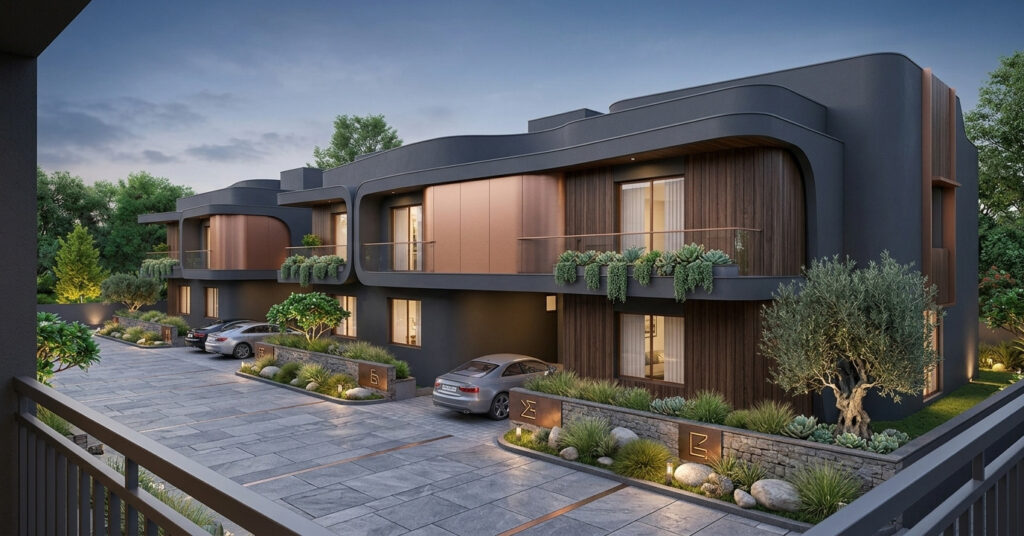
The post-2030 residential market in Greater Noida will see a decisive shift toward luxury and ultra-luxury developments. With the basic infrastructure fully established, premium developers will acquire remaining land parcels to build ultra-low-density residential complexes. These projects will cater to high-net-worth individuals, top corporate executives, and NRI investors who prioritize wellness, green spaces, advanced security, and comprehensive lifestyle amenities over simple square footage. This appetite is shifting focus toward high-end gated communities and luxury independent villas in Noida and its adjacent Greater Noida sectors, where land availability allows for expansive, custom-built estates.
The demand for luxury villas will be particularly pronounced in sectors that feature championship golf courses, private parklands, and advanced smart-home integrations. High-end apartments, on the other hand, will evolve to include concierge services, private elevators, sky lounges, and advanced sustainability features such as net-zero carbon footprints. This premiumization of the residential sector will result in a wider pricing gap between older, standard group-housing societies and modern luxury developments, with the latter commanding premium pricing structures previously only seen in established central micro-markets.
How will commercial hubs and office spaces evolve after 2030?
Greater Noida is rapidly moving beyond its reputation as a mere residential suburb or industrial zone. Post-2030, the region is set to mature into a major corporate powerhouse. Specially designated tech zones, IT parks, and data centers will be fully operational, attracting domestic tech giants and global corporations. Large-scale commercial office layouts will evolve to accommodate hybrid workforces, placing a heavy emphasis on premium Grade-A office spaces that offer flexible configurations, state-of-the-art communication setups, and high environmental ratings.
Retail commercial spaces will undergo a similar evolution. Traditional strip malls and local shopping centers will be replaced by sprawling, experiential retail entertainment destinations. These integrated commercial hubs, combining shopping, dining, and workspace, will see substantial appreciation in capital and rental values. Investors who secure commercial retail units early in key growth sectors can expect high rental yields, driven by the robust spending power of the incoming affluent resident base.
Strategic Analysis: Projected Capital Value Appreciation
Predicting long-term real estate valuations requires a careful analysis of historical trends, infrastructure timelines, and macroeconomic variables. The table below outlines conservative projections for average capital values across various sectors of Greater Noida, illustrating the expected transition from the medium-term (2030) to the long-term (post-2030) horizon.
| Micro-Market Sector / Zone | Est. Avg Price 2025 (INR/sq.ft.) | Proj. Avg Price 2030 (INR/sq.ft.) | Post-2030 Long-Term Outlook (CAGR) |
|---|---|---|---|
| Greater Noida West (Residential) | 6,500 – 8,500 | 11,000 – 14,000 | 7% – 9% (Stable Rental Yields) |
| Yamuna Expressway (Near Airport) | 5,500 – 7,500 | 12,000 – 16,000 | 12% – 15% (High Capital Gains) |
| Omega, Chi, Phi Sectors (Premium Res.) | 9,000 – 12,000 | 16,000 – 20,000 | 8% – 10% (End-User Driven) |
| Knowledge Park V (Commercial/IT) | 8,000 – 11,000 | 14,000 – 18,500 | 9% – 11% (High Corporate Occupancy) |
The data suggests that while established areas like Greater Noida West will experience stable, organic growth, sectors directly aligned with the Yamuna Expressway and the airport corridor will see much higher capital appreciation rates. This variation is primarily due to the vast availability of land along the expressway, allowing for massive, master-planned developments, industrial parks, and modern commercial spaces that are not feasible in older, denser parts of Delhi NCR.
Emerging Micro-Markets and Investment Hotspots
Which sectors of Greater Noida will offer the highest ROI post-2030?
As we look beyond 2030, the center of gravity for investment will shift from established sectors to emerging micro-markets. Sectors situated along the Yamuna Expressway, specifically Sectors 18, 20, and 22D, are highly favored for substantial capital appreciation. These sectors are positioned to benefit from their proximity to the upcoming airport and the planned Electronic City and Toy Park developments. This continuous industrial expansion will create a robust local economy, driving sustained residential demand.
Additionally, Greater Noida West, often referred to as Noida Extension, will transition from a high-volume residential hub to a mature, high-value district. With the planned extension of the Aqua Line metro deep into Greater Noida West, commuting times will fall drastically, unlocking a massive wave of end-user demand. Early investors in these sectors stand to benefit from a substantial rise in both asset valuation and monthly rental income, as the area evolves into a self-sustaining urban center.
How will sustainable infrastructure and smart city initiatives impact pricing?
Environmental factors and resource management will play a vital role in real estate pricing in the post-2030 era. As climate concerns escalate and energy costs rise, properties designed with sustainability in mind will command a significant market premium. Greater Noida, planned with wide roads, extensive green coverage, and modern waste management systems, is uniquely positioned to lead the transition to green living. Developers incorporating rainwater harvesting, solar power grids, waste recycling facilities, and electric vehicle charging infrastructure will attract premium buyers.
Smart city initiatives, such as centralized traffic management, intelligent street lighting, and integrated security surveillance systems, will further enhance the liveability of these sectors. This high level of urban planning will prevent the chaotic congestion seen in older cities, ensuring that Greater Noida remains an attractive, high-value destination for long-term residents and corporate occupiers alike.
Risk Factors and Market Challenges to Consider
What legal, environmental, and regulatory hurdles could impact property values?
While the long-term growth story of Greater Noida is exceptionally strong, prospective buyers must remain vigilant about administrative policies, local zoning updates, and the specific legal terms and service conditions associated with developer agreements. Land acquisition disputes have historically caused delays in key infrastructure projects, and any future legal challenges regarding land ownership could slow down the development of planned commercial and industrial zones. Environmental regulations will also become increasingly strict, and projects failing to meet stringent green building codes or water conservation guidelines may face substantial delays and regulatory penalties.
Investors must also carefully research developer credentials. Post-2030, the market will favor highly capitalized, reputable developers who possess a proven track record of timely project delivery and adherence to RERA guidelines. Investing in unapproved projects or dealing with highly leveraged developers can lead to prolonged delays, legal complications, and a significant loss of capital, emphasizing the importance of thorough due diligence before making any commitment.
How might macroeconomic fluctuations and policy shifts affect capital appreciation?
No real estate market operates in a vacuum, and Greater Noida is subject to both national and global macroeconomic shifts. Interest rate cycles, inflation levels, and overall GDP growth will continue to influence buyer purchasing power and developer borrowing costs. If central banks maintain high interest rates to combat inflation, home loan costs will rise, potentially slowing down residential transaction volumes and tempering price appreciation. To navigate these long-term macro shifts, keeping track of the latest data through an authoritative NCR real estate blog and market insights remains an invaluable asset for making informed decisions.
Furthermore, changes in state government policies, tax incentives for industries, or alterations to master plans can quickly reshape micro-market dynamics. For instance, any policy shift that reduces incentives for manufacturing or IT companies to set up offices in the Yamuna Expressway authority zone would directly impact local job creation and, consequently, residential rental demand. Diversifying investments across different asset classes and sub-regions is a prudent strategy to mitigate these macroeconomic and regulatory risks.
Frequently Asked Questions
Will Greater Noida property prices surpass Noida’s prices after 2030?
While Greater Noida will see higher percentage growth rates due to its lower starting price point and massive infrastructure development, average absolute prices in central Noida are likely to remain higher due to land scarcity and established corporate presence. However, select ultra-luxury sectors and premium villa communities in Greater Noida will command prices comparable to Noida’s top-tier markets.
What is the projected CAGR for Greater Noida properties post-2030?
Post-2030, the market will transition from speculative spikes to steady, utility-driven growth. On average, residential sectors are expected to grow at a healthy CAGR of 7% to 10%, while premium commercial spaces and properties located near Jewar Airport could experience a higher appreciation rate of 12% to 15% annually.
How will the completion of Jewar Airport affect rental yields?
The operational maturity of Jewar Airport will drive a major influx of corporate professionals, aviation staff, and logistics executives. This surge in employment will boost rental demand, particularly along the Yamuna Expressway and adjacent sectors, potentially pushing average rental yields up to 4% to 6% for well-located residential properties.
Is Greater Noida West a safe bet for long-term investment post-2030?
Yes, Greater Noida West is a highly secure long-term investment. By 2030, metro connectivity will be fully functional, and community infrastructure will be mature. This will transform the area from an emerging affordable market into a highly desirable, self-sustaining suburban hub, offering stable rental returns and consistent capital appreciation.