
Quick Summary
This guide provides a comprehensive comparison between villa and plot investments in Greater Noida. While plots offer unmatched capital appreciation potential and absolute customization freedom, villas provide immediate occupancy, stable rental income, and structured security within gated ecosystems. Explore detailed financial metrics, location guides, and buyer profile matches to make an informed choice for your next real estate acquisition.
Understanding the Greater Noida Real Estate Landscape
Greater Noida has emerged as a major hub for infrastructure and industrial development in northern India. Over the past decade, the region has transitioned from an extended suburb into a highly structured metropolitan zone. This shift is driven by systematic urban planning, wide road networks, and massive public sector investments. The upcoming Jewar International Airport, the expansion of the Aqua Line metro, and the development of the Eastern Peripheral Expressway have repositioned this market as a prime destination for institutional and private investors alike. This systematic expansion ensures steady demand across multiple asset classes.
Why is Greater Noida attracting massive capital?
The inflow of capital into Greater Noida is not accidental. The region offers pre-planned sectors with high green cover, underground wiring, and robust drainage networks. Multinational corporations, data centers, and manufacturing units are establishing offices along the Yamuna Expressway and the Noida-Greater Noida Expressway. This commercial growth drives a continuous influx of professionals seeking quality housing, which in turn fuels the residential real estate market. The availability of large land parcels allows developers to execute master-planned communities that are difficult to replicate in land-locked parts of Delhi or Gurugram.
How does infrastructure growth influence land and villa values?
Infrastructure growth acts as a direct catalyst for property value appreciation. When a new metro line is approved or a major highway is completed, the accessibility of surrounding sectors improves instantly. For plots, this infrastructure push often results in sudden, sharp spikes in land valuation. For villas, the appreciation is accompanied by rising rental demand, as families look to relocate near operational schools, hospitals, and commercial zones. Heritage Prime observes that while land prices react rapidly to infrastructural milestones, finished residential units enjoy a more stable, long-term appreciation trajectory tied to actual occupancy levels.
The Mechanics of Plot Investments in Greater Noida
Investing in residential plots in Greater Noida represents a classic strategy focused on long-term wealth accumulation. Land is a finite resource, and as the population density of the National Capital Region rises, vacant plots in planned sectors become increasingly scarce. This scarcity forms the foundation of the high appreciation rates associated with plot investments.
What are the primary advantages of buying residential plots?
Plots offer absolute flexibility in terms of construction and utilization. A buyer can purchase a plot today and decide to build a custom residence years later, adapting the architectural style to changing personal preferences or modern trends. There are no recurring maintenance overheads compared to constructed residential buildings, and holding costs remain minimal. Additionally, plots historically appreciate at a faster rate than built-up structures because the value lies entirely in the land itself, which does not depreciate over time, unlike concrete buildings.
What are the risks and maintenance requirements for raw land?
While plots yield excellent capital gains, they are not without challenges. Raw land is highly vulnerable to encroachment, local boundary disputes, and title issues if not monitored carefully. Landowners must actively secure their boundaries, build perimeter walls, and periodically inspect their properties. Furthermore, financing a plot purchase differs significantly from home loans, as banks typically offer lower loan-to-value ratios for land acquisitions, requiring buyers to mobilize more upfront capital.
The Dynamics of Villa Investments in Greater Noida
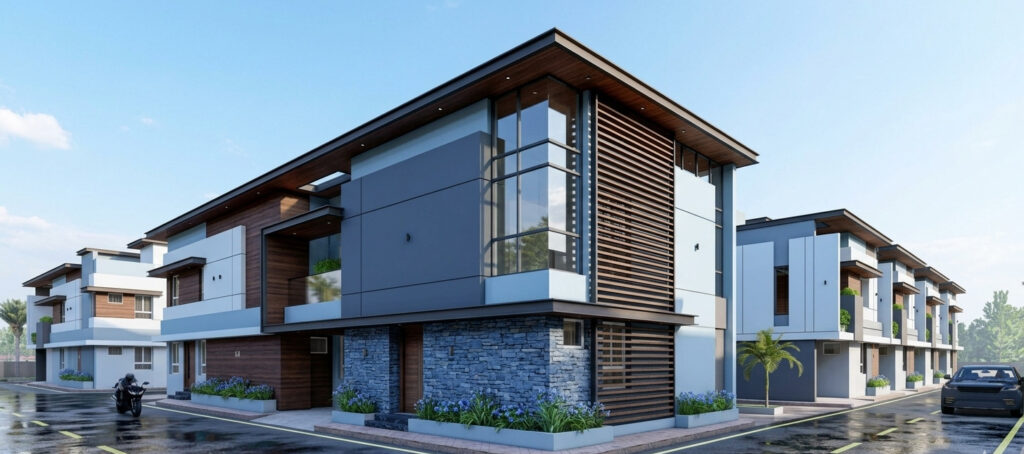
Villas represent the premium segment of the residential housing market, combining the privacy of independent living with the security and amenities of modern residential developments. In Greater Noida, the demand for spacious, low-density living has increased significantly as families seek healthier lifestyles away from congested urban pockets.
Why do ready-to-move and gated community villas command a premium?
A villa within a structured development offers a ready lifestyle. Residents gain access to secure, gated perimeters, manicured parks, dedicated clubhouses, swimming pools, and power backup facilities. Buyers who prioritize immediate utility and premium living spaces find immense value in projects like the Palm Villas Noida gated community. These properties eliminate the hassle of managing individual construction, dealing with local municipal clearances, or supervising labor, providing a hassle-free transition into a sophisticated lifestyle.
What rental yields and resale prospects can villa buyers expect?
Villas in well-connected areas generate reliable monthly rental yields, catering to corporate executives and expatriates working in the regional commercial hubs. While the percentage of rental yield for luxury housing generally ranges between two to three percent annually, the capital appreciation of these structured assets remains strong. Resale prospects are bolstered by the ongoing demand for premium, ready-to-use properties, particularly those that offer independent homes with modern amenities. These developments appeal to buyers who want luxury living without the stress of self-construction.
Comparative Analysis: Plot vs Villa Investment
To make an informed decision, investors must compare these two asset classes across several financial and operational parameters. The choice depends on the investor’s risk tolerance, investment horizon, and need for cash flow. Let us examine the key differences in a structured format:
| Parameter | Plot Investment | Villa Investment |
|---|---|---|
| Initial Capital Required | Moderate to high, requires greater self-funding as bank loan ratios are lower. | High, but easily financed through standard home loans with high LTV. |
| Appreciation Potential | Very high, driven by land scarcity and rapid infrastructural development. | Steady and predictable, linked to community maturation and occupancy rates. |
| Immediate Rental Yield | Negligible or zero, unless commercial usage or temporary leasing is applied. | Consistent rental income from corporate professionals and families. |
| Maintenance Effort | Low, but requires security measures to prevent boundary encroachment. | Moderate to high, handled largely by society maintenance teams for a monthly fee. |
| Construction Effort | Entirely the owner’s responsibility, demanding time, permits, and builders. | Zero, delivered fully constructed and ready for customized interior fit-outs. |
Financial outlay and financing options
The financial structures of these two investments differ significantly. Purchasing a plot often demands a larger immediate down payment because financial institutions are conservative with land loans. Loan repayment tenures for plots are also typically shorter, adding to the monthly financial obligation. Conversely, villa buyers can access standard home loans with competitive interest rates and extended repayment tenures up to thirty years. This makes villas highly accessible to salaried professionals who prefer to leverage debt rather than liquidating their personal savings.
Timelines for returns and liquidity profiles
Villas offer a dual-return model, providing monthly rental cash flow alongside long-term capital appreciation. This makes them highly liquid assets within active residential markets, as constructed homes always attract a broader pool of end-user buyers. Plots, however, are long-term holding instruments. While they can deliver exponential returns when a regional development milestone is achieved, their liquidity is lower during market corrections. Selling a vacant plot requires finding an investor with similar cash reserves, which can sometimes extend the transaction timeline.
Strategic Investment Decisions Based on Buyer Profiles
Choosing between these two options is not merely about identifying which asset appreciates faster. It is about aligning the purchase with your financial goals, lifestyle requirements, and management capacity.
Who should choose plots over constructed properties?
Plots are perfect for investors who have a long investment horizon and do not require immediate regular income. If you want to build a highly customized family home that spans multiple generations, starting with a plot is the most sensible route. It allows you to select your own architects, materials, and layout configurations. It is also suitable for seasoned buyers who have the resources to protect their land and manage local administrative requirements without feeling overwhelmed by periodic visits.
Who is best suited for gated villa communities?
Gated villa developments are best for end-users seeking immediate comfort, security, and access to premium amenities. It suits professionals who do not have the time to oversee complex construction projects but still desire the privacy of an independent home. This option is also highly recommended for non-resident Indian investors who want to buy secure property in India without worrying about land safety or unauthorized encroachment. To explore custom options that match your financial goals, you can get in touch with our real estate consultants. To understand how we handle your personal details during these consultations, you can review our customer data privacy policy.
Key Locations in Greater Noida for Maximum Returns
Location remains the ultimate deciding factor in real estate performance. Greater Noida is divided into distinct zones, each offering unique growth drivers for both plots and villas.
Sector Chi, Zeta, and Yamuna Expressway corridors compared
Sectors like Chi 5 and Zeta 1 are highly developed residential hubs. These sectors are characterized by established villa communities, wide roads, and immediate proximity to top tier educational institutions and retail centers. Villas in these sectors have shown reliable rental performance due to ready demand from families. On the other hand, the Yamuna Expressway corridor is a hotspot for residential plots. With the Noida International Airport progressing rapidly, the surrounding sectors are seeing massive speculative interest. Buying a plot along this corridor is highly speculative but promises exceptional capital gains over the next seven to ten years as the industrial and aviation hubs become fully functional. Investors looking for a balanced approach often target the sectors closer to the Noida-Greater Noida Expressway, which offer a stable mix of luxury villas and premium residential plots within integrated townships.
Regulatory Frameworks and Investment Security in Greater Noida
Understanding the legal landscape is vital when purchasing any property in Uttar Pradesh. The Greater Noida Industrial Development Authority (GNIDA) regulates land allotments, construction approvals, and master plans. Understanding these regional frameworks can save investors from costly legal disputes.
Navigating GNIDA regulations and RERA compliance
Both plots and villas are subject to strict regional guidelines. For plots, buyers must ensure the land allotment is authorized by GNIDA and free from agricultural disputes. For villas, verifying the Uttar Pradesh Real Estate Regulatory Authority (UP RERA) registration is essential. RERA compliance ensures that developers adhere to timelines, construction standards, and layout plans, protecting the buyer’s capital. Investing in projects with valid approvals ensures hassle-free resale and seamless processing of home loans from nationalized banks.
Tax implications of plot vs villa investments
The tax treatment for both assets differs, especially concerning long-term capital gains and construction-linked tax benefits. When you buy a villa with a home loan, you can claim income tax deductions on both the principal repayment and interest paid under Indian tax laws. These benefits are not available for plots unless you construct a residential building on the land within specified timelines. Additionally, selling a plot after a short holding period may attract higher short-term capital gains tax, making a thorough analysis of tax implications critical before finalizing any large-scale real estate transaction.
Frequently Asked Questions
Is it better to buy a plot or a villa in Greater Noida for long-term capital appreciation?
Plots generally offer higher capital appreciation over the long term because land is a scarce resource that does not depreciate. However, the appreciation of plots is highly dependent on regional infrastructural milestones, such as the upcoming Jewar Airport. Villas offer more stable, gradual appreciation combined with regular monthly rental yields, making them a more balanced investment for those seeking a mix of growth and cash flow.
Can I get a home loan easily for both plots and villas in Greater Noida?
Yes, but the loan terms differ significantly. Banks readily offer home loans for constructed villas with high loan-to-value (LTV) ratios of up to 80-90% and extended repayment periods of up to 30 years. For plots, banks usually offer land purchase loans with lower LTV ratios (around 60-70%), shorter repayment tenures, and often require construction to begin within a specified number of years to avail of competitive interest rates.
What are the maintenance costs associated with plots vs villas?
Villas in gated communities require regular monthly maintenance fees to cover security, common area upkeep, clubhouse access, and power backup. Plots have minimal day-to-day maintenance costs, but owners must invest in building a boundary wall, clearing wild vegetation, and occasionally hiring security services to prevent unauthorized encroachment or land disputes.
How does the resale liquidity compare between plots and villas?
Villas typically enjoy higher liquidity in mature markets because they appeal directly to end-users who want to move in immediately without dealing with the complexities of construction. Plots are highly liquid during market booms and speculative phases but can become difficult to sell quickly during market downturns, as they attract a narrower pool of pure investors who must pay entirely in cash or with high down payments.