
Quick Summary
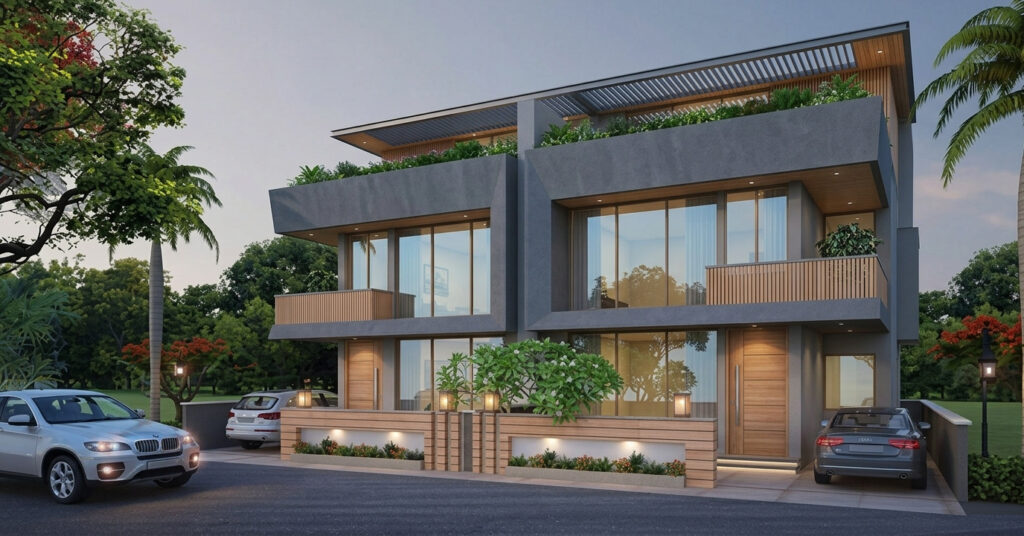
Real estate investment dynamics in the National Capital Region are undergoing a structural shift. High-net-worth individuals and institutional investors are increasingly allocating capital to independent villas rather than premium high-rise apartments. This transition is driven by the intrinsic value of direct land ownership, superior long-term capital appreciation, structural autonomy, and the long-term depreciation risks associated with aging high-rise towers. Gated villa communities across Noida, Greater Noida, and Gurgaon now offer the security of traditional apartments alongside the unparalleled exclusivity of private plots.
The Shifting Investment Paradigm in NCR Real Estate
The real estate landscape within the National Capital Region (NCR) has experienced several distinct evolutionary cycles. For nearly two decades, vertical expansion dominated the skyline. Rapid high-rise construction met the immediate housing needs of corporate professionals in Gurugram, Noida, and Greater Noida. However, the investment narrative is pivoting back to horizontal developments. Sophisticated buyers now recognize that while apartments offer convenience, they carry structural limitations and depreciating physical value over multi-decadal horizons.
Market research by Heritage Prime highlights a growing divergence in buyer sentiment. High-net-worth individuals are looking beyond simple rental yields, focusing instead on absolute asset control and generational wealth preservation. This change in investor behavior is not merely a temporary trend but a fundamental reassessment of what constitutes resilient residential real estate in a rapidly developing metropolitan region.
Why is there a major migration from high-rise living to horizontal developments?
High-rise apartments are subject to collective decision-making bodies, such as Apartment Owners Associations (AOAs), which control maintenance budgets, structural modifications, and common area usage. Over time, high-density residential towers experience physical wear that can be costly and logistically challenging to repair. The shared infrastructure, ranging from elevators to complex plumbing networks, tends to deteriorate, impacting the overall market value of individual units. Horizontal developments, particularly villas, eliminate these shared structural vulnerabilities by transferring complete physical control to the individual owner.
How does physical land ownership influence investor psychology?
Land is a finite resource, especially within prime economic corridors of the National Capital Region. When an investor purchases a villa, the underlying asset is the land itself, while the physical structure represents a customizable wrapper. In contrast, an apartment buyer is purchasing a volume of air space with a fractional, undivided share of land. Because land consistently appreciates while concrete structures depreciate, direct land ownership offers a reliable hedge against inflation and market volatility, establishing a far more robust financial foundation for multi-generational wealth.
Financial Architecture: Comparative Economics of Villas and Apartments
Evaluating these two asset classes requires a rigorous examination of financial metrics, including capital appreciation trajectories, reconstruction rights, and long-term depreciation. Apartments typically show strong initial price increases during the construction phase and early occupancy years. However, once a high-rise project crosses the ten to fifteen year mark, the appreciation rate often flattens due to physical aging and competition from newer, more modern residential complexes nearby.
Villas follow a highly stable and compounding appreciation curve. Since the land parcel constitutes the bulk of the initial transaction value, the overall investment remains insulated from building-specific physical deterioration. If a villa structure becomes outdated, the owner can easily renovate, reconstruct, or expand the property without needing approvals from hundreds of co-owners, directly protecting and enhancing the underlying capital value.
Which asset class delivers superior capital appreciation in Delhi NCR?
The historical data from major micro-markets across NCR clearly indicates that plotted developments and independent villas outperform apartments in long-term capital appreciation by a substantial margin. Over a seven to ten year holding period, prime villa plots in expanding corridors have demonstrated appreciation rates that are often double those of nearby high-rise apartments, primarily because land supply remains strictly limited while high-rise developments can continually add vertical inventory to the market.
| Investment Aspect | Luxury Gated Villas | Premium High-Rise Apartments |
|---|---|---|
| Land Ownership Type | Direct, exclusive ownership of the plot | Undivided, diluted share of common land |
| Depreciation Impact | Negligible; land value growth offsets structure wear | Significant; aging structures limit resale premium |
| Reconstruction Rights | Absolute authority within local building codes | None; dependent on society consensus and developer |
| Supply Dynamics | Highly restricted due to physical land limits | Elastic; developers can increase vertical density |
| Privacy and Control | Complete independent borders and open skies | Shared walls, common lobbies, and community rules |
What is the significance of Undivided Share of Land (UDS) for property buyers?
Undivided Share of Land is the percentage of land associated with an individual apartment unit. In massive high-rise developments with high-density layouts, the UDS allocated to each flat is incredibly small. In the event of natural disasters, structural obsolescence, or future redevelopment, the compensation or equity returned to each owner is directly proportional to their UDS. Villa owners, holding one hundred percent of their plot’s land title, possess total legal autonomy and maximum collateral value, making their investment significantly more secure against long-term structural liabilities.
Autonomy, Customization, and Structural Longevity
One of the primary frustrations experienced by luxury apartment owners is the structural rigidity of high-rise living. Renovations are strictly confined to the interior non-load-bearing walls. Exterior modifications, expansions, or custom spatial layouts are impossible due to uniform architectural codes. This restriction limits personal expression and prevents homeowners from adapting their living environments as their families grow or lifestyle requirements change.
Independent residences offer absolute design freedom. Owners can curate custom basement offices, home theaters, personal fitness centers, private terraces, and double-height lobbies. Families looking for low-density options often select the independent homes with modern amenities in emerging growth zones, finding a perfect balance between personal design flexibility and community security.
Why do private investors prefer structural independence over shared vertical layouts?
Shared vertical layouts expose residents to disruptions from neighboring units, including plumbing leaks, acoustic intrusions, and shared ventilation concerns. Additionally, the dependency on central building systems means that any system failure directly impacts daily life. Structural independence ensures that utilities, water filtration systems, solar setups, and power backup units can be managed privately, offering a level of self-sufficiency that high-rise apartments simply cannot match.
How do modern low-density townships compare with standalone builder floors?
Standalone builder floors, common in older sectors of Delhi and Gurgaon, often suffer from poor parking management, narrow approach roads, and a complete lack of recreational space. Modern master-planned low-density townships resolve these issues by offering wide internal roads, advanced security infrastructure, dedicated green belts, and professional facility management. This ensures that while investors enjoy the complete independence of their villa, they are not forced to compromise on safety, community amenities, or basic neighborhood infrastructure.
Master-Planned Gated Communities: Security, Shared Infrastructure, and Exclusivity
The modern villa market in the NCR is no longer limited to isolated countryside estates. Today, developers focus heavily on luxury gated enclaves that provide comprehensive security protocols, five-star clubhouses, and backup infrastructure. This combined approach bridges the gap that previously made apartments attractive, offering the quiet sanctuary of an independent villa within a safe, controlled environment.
These curated spaces attract successful entrepreneurs, corporate leaders, and creative professionals who value privacy alongside high-end recreational amenities. Those seeking premium properties frequently explore options like the ultra-luxury homes in Noida, which showcase how well-integrated green space, advanced home automation, and private security can elevate daily living standards.
How do gated villa societies balance individual privacy with community amenities?
Gated villa developments are intentionally planned with low-density density layouts, maintaining significant setbacks between properties to guarantee privacy. Green buffer zones, private boundary walls, and customized orientation ensure that outdoor living spaces, such as private pools and verandas, remain shielded from view. Meanwhile, residents enjoy shared access to premium master facilities, including luxury clubhouses, sporting courts, and wellness spaces, located at a comfortable distance from private residences.
What design and architectural personalizations are driving luxury buyer trends?
Current design trends lean heavily toward sustainable luxury. Homebuyers are requesting solar power integration, double-glazed energy-efficient facades, natural air purification courtyards, and smart automation systems that handle lighting, security, and climate control seamlessly. There is also strong demand for expansive floor plans that include professional-grade home offices, multi-car parking spaces with integrated EV charging points, and dedicated private staff quarters with independent access points.
Location Hotspots and Infrastructure Drivers in the National Capital Region
The rapid growth of the NCR makes geographic selection critical for capital growth. Certain corridors have emerged as major hubs for villa developments due to massive state-level infrastructure investments. Improved transit times, wider expressways, and upcoming commercial districts are transforming formerly peripheral zones into highly desirable residential addresses for high-net-worth investors.
In Greater Noida, planned sectors like Sector 150 and areas adjacent to the Yamuna Expressway are seeing steady villa development. In Gurugram, locations along the Southern Peripheral Road, Dwarka Expressway, and Sohna Road continue to attract top-tier developers. These areas offer the large land parcels required to develop low-density luxury communities while maintaining excellent connectivity to major commercial centers.
Which micromarkets in Noida, Greater Noida, and Gurugram are witnessing the maximum villa demand?
In Gurugram, the Golf Course Extension Road and Sector 65 to 70 continue to attract significant premium capital due to their proximity to established office corridors. In Noida, sectors bordering the Noida Expressway, notably Sector 150, are highly favored because of their high-density green planning and low concrete ratio. Greater Noida West and the Yamuna Expressway corridor are also gaining substantial attention from long-term investors looking for larger plots with high future appreciation potential.
How do regional infrastructure megaprojects influence long-term villa valuations?
Major projects like the Noida International Airport at Jewar, the Delhi-Mumbai Industrial Corridor, and the expansion of the Dwarka Expressway act as significant drivers for real estate values. As transit times decrease and multinational corporations set up offices near these transport nodes, the demand for executive housing rises. Because the supply of independent land remains fixed, these infrastructure improvements directly translate to rapid capital appreciation for villa developments located along these key transit corridors.
Strategic Guidelines and Risk Management for High-Value Land Acquisitions
Investing in villas or plotted land requires a specialized level of legal diligence compared to buying standard high-rise apartments. While apartment purchases are heavily regulated via standardized builder buyer agreements, independent land transactions require extensive verification of master land titles, local zoning laws, and municipal building codes. Working with established developers and experienced advisory firms remains critical to securing a safe and profitable investment.
Before sharing personal information, verifying security protocols with your chosen advisors is an important first step. For example, reviewing our customer data privacy policy will give you clear insight into how your financial preferences and identity details are protected during high-value market transactions. Ensuring your data and transaction pathways are fully secure is vital in the modern real estate sector.
What due diligence and title checks are required before purchasing independent luxury properties?
Investors must ensure the developer has obtained all necessary local approvals, including clear RERA registration, non-agricultural land use certificates, forest clearance NOCs, and environmental approvals. The master title deed must be examined to verify that the land is free from any existing litigation, legal disputes, or third-party financial claims. It is also important to verify that the project’s internal development plans align with the master plans of local municipal authorities, such as the Noida Authority, GNIDA, or GMDA.
How can institutional and private investors optimize their acquisition strategies?
Successful buyers look to enter projects during early launching phases, when developers offer competitive pricing, and secure units with premium views, corner positions, or larger private gardens. To navigate these complex legal and financial pathways smoothly, smart buyers can contact seasoned property experts who can provide comprehensive market data, coordinate private tours, and guide the entire legal and transaction process efficiently.
The Structural Future of Premium NCR Residential Investments
The growing investment in independent villas across the NCR represents a permanent market shift rather than a brief trend. As the region’s elite seek to protect their capital from structural depreciation and high-density living challenges, exclusive low-density developments will continue to see strong demand. Independent land ownership, coupled with the security of master-planned gated communities, offers a unique investment opportunity that combines lifestyle luxury with excellent long-term wealth preservation.
By prioritizing land-backed assets, investors are positioning themselves to benefit from the region’s long-term infrastructure growth. Whether choosing the expanding corridors of Noida or the luxury sectors of Gurugram, the financial and personal benefits of owning a villa make it the preferred option for sophisticated real estate investors throughout the National Capital Region.
Frequently Asked Questions
How does the resale liquidity of a villa compare with an apartment in NCR?
While apartments can sometimes sell faster due to lower entry prices, luxury villas in gated communities often command premium buyers quickly during periods of economic growth. Because the supply of land in prime locations remains limited, premium independent villas retain their value and experience strong demand, making them highly profitable assets for long-term investors.
Do gated villa projects in NCR have high maintenance costs?
Yes, maintenance costs in gated villa societies are typically higher than in standard apartments because the shared expenses of maintaining large green spaces, advanced security networks, and premium amenities are divided among fewer residents. However, many investors view this higher cost as a worthwhile trade-off for the privacy, safety, and exclusivity the community provides.
Can I get a home loan for purchasing an independent villa or plot in NCR?
Yes, all major public and private banks offer construction and composite land loans for RERA-registered villa developments and approved residential plots. The loan terms and interest rates are competitive, though banks will conduct thorough title checks on the underlying land before approving the financing.
Are there restriction policies on customising villa facades in gated communities?
Most premium gated developments maintain certain guidelines for external facades to ensure a harmonious design across the neighborhood. However, these rules generally allow for complete freedom regarding interior layouts, basement configurations, private pool installations, and rear expansions, providing far more design autonomy than any high-rise apartment complex.