
Quick Summary
The structural evolution of Greater Noida is increasingly anchored by its rapidly expanding medical infrastructure. As multi-speciality hospitals, academic medical centers, and research institutes establish deep roots, neighboring residential and commercial properties are experiencing significant capital appreciation. This analysis details the exact correlation between healthcare access and property valuation, identifying high-yield micro-markets and key trends driving residential preferences for modern families and healthcare professionals alike.
The Intersection of Medical Infrastructure and Residential Demands in Greater Noida
Urban planning models historically prioritized transport links and commercial markets as the primary drivers of residential real estate. However, modern consumer preferences have shifted focus toward wellness, safety, and physical well-being. In Greater Noida, this shift is highly visible. The establishment of large-scale healthcare facilities acts as a powerful catalyst for localized real estate development. When a tertiary care hospital or research center opens, it transforms the immediate geographical area from a quiet suburb into an active urban micro-market.
This development pattern occurs because medical facilities generate a steady, resilient demand for housing. Unlike other industries that may experience cyclical layoffs or remote work transitions, healthcare requires an active, physical presence. Medical professionals, including senior consulting surgeons, administrative executives, nursing staff, and laboratory technicians, prefer residing within a short commute of their respective institutions. This persistent local demand buffers the real estate market against broader economic downturns, maintaining high occupancy rates and steady rental income.
How does proximity to medical facilities impact property valuation in Delhi NCR?
Proximity to medical care directly influences long-term property valuations. Homebuyers are willing to pay a premium for properties located within a ten to fifteen-minute drive of a major super-speciality hospital. Historical sales data indicates that residential developments situated near primary healthcare corridors in Greater Noida experience capital appreciation that is twelve to fifteen percent higher than properties located in isolated sectors. This valuation premium is driven by both owner-occupiers prioritizing family safety and buy-to-let investors seeking reliable, high-income tenants.
Why are healthcare-centric micro-markets emerging as preferred residential choices?
Families with young children and multi-generational households are actively avoiding isolated suburbs in favor of integrated developments that feature robust social infrastructure. Having immediate access to pediatric care, emergency trauma facilities, and specialized geriatric treatment centers provides homeowners with peace of mind. According to analytical tracking by Heritage Prime, the demand for premium properties near established medical zones has grown steadily year-over-year, leading to a visible transformation in the architectural planning of modern townships in the region.
Major Healthcare Institutions Shaping the Greater Noida Landscape
Greater Noida is home to several institutional landmarks that cater to millions of residents across Western Uttar Pradesh and the national capital region. These institutions are not merely service providers; they are major employers and regional anchors. Facilities such as Sharda Hospital, Yatharth Super Speciality Hospital, and the Government Institute of Medical Sciences (GIMS) have established the city as a major medical center. Each of these institutions handles thousands of outpatient consultations daily and supports vast networks of support services, medical equipment suppliers, and diagnostic laboratories.
The physical presence of these hospitals has accelerated municipal spending on surrounding roads, power grids, and water supply networks. Local authorities prioritize the upkeep of areas surrounding healthcare facilities to facilitate uninterrupted emergency services. Consequently, the public utilities, street lighting, and green spaces around these hospitals are often superior to those found in purely residential or commercial zones, indirectly boosting the aesthetic and market value of nearby real estate projects.
Which super-speciality hospitals are driving investment in Noida and Greater Noida?
Yatharth Super Speciality Hospital in Sector Omega II and Sharda Hospital in Knowledge Park III are two major institutional anchors driving real estate demand. Yatharth Hospital serves as a primary healthcare provider for the premium residential sectors along the Noida-Greater Noida Expressway, while Sharda Hospital serves as a massive academic and clinical center. The operational scaling of these entities has stimulated localized demand for short-term service apartments, guest houses, and retail developments catering to visiting medical professionals and patients’ families.
How does the presence of tertiary care facilities attract long-term residents?
Tertiary care facilities bring specialized treatments such as oncology, advanced cardiology, and organ transplantation closer to home. For senior citizens and individuals managing chronic health conditions, living near these institutions is a practical necessity. The establishment of these clinical centers has made Greater Noida a viable permanent retirement destination, accelerating the growth of premium senior living communities and low-density residential developments that focus on active, healthy aging.
Micro-Market Analysis: High-Growth Pockets Near Medical Hubs
Different micro-markets within Greater Noida show varied growth patterns depending on their proximity to medical hubs. Knowledge Park, Sector Omega, Sector Alpha, and the sectors lining the Yamuna Expressway are currently seeing the highest levels of interest. Knowledge Park, while primarily recognized as an educational hub, has evolved into a prominent medical zone due to the expansion of medical colleges and allied health sciences institutions. This has created a unique demographic mix of young professionals, medical interns, and senior faculties searching for high-quality housing.
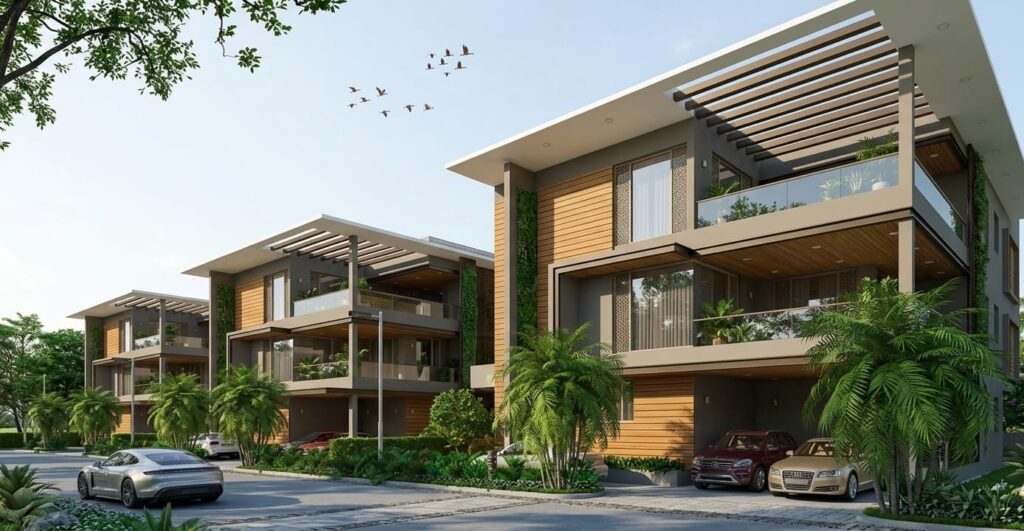
To meet the lifestyle needs of these high-income professionals, regional developers are designing master-planned communities that offer privacy, open green spaces, and high security. Those who value privacy and spacious, low-density living are increasingly attracted to projects like an exclusive residential community in Delhi NCR, which provides the perfect balance of peaceful living and easy access to top-tier hospitals. Senior medical specialists and corporate healthcare executives are also actively investing in luxury independent villas in Noida and Greater Noida, seeking customized living spaces that match their professional standing.
Which sectors in Greater Noida offer the best access to emergency healthcare?
Sectors near Pari Chowk, Sector Omega II, Sector Chi, and the early stretches of the Yamuna Expressway offer excellent access to emergency healthcare. These sectors are connected by wide, multi-lane arterial roads that allow emergency vehicles to reach hospitals quickly without facing heavy traffic. These locations are highly popular with working professionals who want suburban tranquility combined with quick access to healthcare.
Infrastructure Synergy: Connectivity, Smart City Initiatives, and Healthcare Access
The growth of healthcare in Greater Noida does not happen in isolation. It is supported by massive investments in physical infrastructure. The integration of the Noida Metro Aqua Line, the expansion of the Noida-Greater Noida Expressway, and the construction of the Yamuna Expressway have collectively improved regional connectivity. This makes it easy for residents living in distant sectors to reach major medical centers in under twenty minutes.
Additionally, Greater Noida’s designation as a smart city has led to better urban management. Advanced traffic management systems prioritize emergency vehicle corridors, while extensive green belts and parks help improve air quality, creating a healthier environment for recovery. This combination of modern infrastructure, efficient transport, and clean air makes the city highly appealing to health-conscious homebuyers.
How does Metro connectivity improve medical accessibility in Greater Noida?
The Aqua Line metro network connects key residential sectors with commercial and medical hubs like Knowledge Park and Sector Delta. This reliable transit option is essential for hospital staff, medical students, and outpatients who need a cost-effective, dependable way to commute daily. It also reduces on-road traffic, keeping emergency lanes clear for ambulances and critical care services.
Economic Indicators: Data-Driven Impact of Healthcare on Property Values
An analysis of market data over the past five years shows a clear link between healthcare expansion and real estate performance. Sectors located within a five-kilometer radius of active super-speciality hospitals show higher rental yields and lower vacancy rates compared to areas without nearby medical facilities. Below is a detailed comparison of market indicators across different residential zones:
| Market Metric | Healthcare-Adjacent Sectors (Within 3-5 km) | Standard Residential Sectors (Over 8 km) |
|---|---|---|
| Average Annual Price Growth | 11% to 14.5% | 7% to 9% |
| Average Rental Yields | 3.8% to 4.5% per annum | 2.5% to 3.2% per annum |
| Average Tenant Lease Duration | 24 to 36 months | 11 to 18 months |
| Primary Tenant Profiles | Medical Doctors, Corporate Hospital Staff, Researchers | General IT Professionals, Industrial Employees |
What are the average rental yields in sectors adjacent to major hospital zones?
The presence of medical professionals stabilizes rental yields. Unlike young entry-level workers who may change jobs and relocate frequently, medical personnel prefer long-term leases near their hospitals. This professional demographic provides landlords with stable rental payments and well-maintained properties, leading to consistent annual returns of around four percent.
Future Outlook: Upcoming Healthcare Projects and Real Estate Horizon
The outlook for Greater Noida’s healthcare-driven real estate remains highly positive. Several major public and private health facilities are currently in the planning or construction phases. Key upcoming projects include specialized children’s hospitals, advanced cancer research centers, and wellness-focused senior living communities. The local government’s master plan also includes space for a dedicated medical city, designed to co-locate research institutes, medical manufacturers, and specialized clinics in one centralized hub.
This continuous influx of institutional capital will help maintain strong demand for housing in neighboring sectors. Investors who buy properties early near these planned medical corridors stand to benefit from significant capital appreciation. To identify the most promising opportunities in these fast-developing zones, buyers should contact seasoned property experts who can provide detailed, localized advice and access to off-market properties.
What upcoming hospital developments will shape the property market by 2030?
Proposed medical developments near the Yamuna Expressway and Noida International Airport are set to reshape the local property market over the next decade. These facilities are designed to support a growing population and cater to international medical tourism. The combination of state-of-the-art hospitals and global transit links will make these southern sectors of Greater Noida prime areas for residential and commercial real estate investment.
Data Protection and Privacy in Modern Real Estate Transactions
As the real estate sector becomes increasingly digitized, security has become a priority for buyers and investors. Exploring premium properties, arranging virtual viewings, and submitting financial documents online requires reliable data security. Reputable real estate consultancies and digital platforms prioritize client security by using advanced encryption and secure storage systems. To understand how your personal and financial information is handled during these transactions, you can review our strict user data protection guidelines, which detail how we protect consumer privacy across all digital platforms.
Frequently Asked Questions
How does the presence of a super-speciality hospital affect nearby residential rental yields?
The presence of a super-speciality hospital increases local housing demand from high-income medical professionals, hospital administrators, and technicians. This steady demand reduces vacancy rates and allows property owners to secure stable, long-term rental leases, resulting in higher average rental yields than in standard residential sectors.
Which sectors in Greater Noida are currently considered the most prominent healthcare hubs?
Knowledge Park III, Sector Omega II, Sector Alpha, and the sectors adjacent to the Noida-Greater Noida Expressway are the primary healthcare hubs in the region. These areas host established institutions such as Sharda Hospital, Yatharth Super Speciality Hospital, and GIMS, making them highly desirable locations for residential property buyers.
Is there a specific demand trend for luxury villas among medical professionals in the region?
Yes, senior doctors, clinical directors, and healthcare executives show a strong preference for spacious, low-density housing. Gated villa communities offer these busy professionals the privacy, comfort, and security they need after long shifts, while remaining within easy commuting distance of major local hospitals.
How will the upcoming Jewar Airport impact medical tourism and related real estate in Greater Noida?
The upcoming Noida International Airport at Jewar will make Greater Noida much more accessible to international patients seeking specialized care. This growth in medical tourism is expected to increase demand for commercial real estate, hotels, serviced apartments, and premium residential projects along the connected transport corridors.