
Quick Summary
This comprehensive analysis explores the shifting dynamics of end-user demand in modern real estate markets. Unlike speculative investors, end-users focus on functionality, spatial utility, construction quality, and neighborhood infrastructure. This article details the primary factors shaping end-user behavior, including post-pandemic spatial requirements, the emergence of hybrid work schedules, financial considerations, and the rising demand for green spaces. By examining these structural elements, industry observers gain a clearer perspective on why self-occupancy trends drive modern development patterns and market resilience.
Decoding the End-User: Who is the Genuine Homebuyer?
What defines an end-user in real estate?
An end-user is a homebuyer whose primary objective is to occupy the property as their principal residence. Unlike institutional or retail investors who purchase real estate assets to generate rental yields or capital appreciation, the end-user views a home through the lens of utility, security, and long-term stability. The buying decision of an end-user is highly personal and deeply influenced by household size, lifestyle choices, proximity to workplace hubs, educational institutions, and healthcare systems. Market analysts at Heritage Prime observe that this consumer segment approaches property acquisition with a meticulous level of detail, scrutinizing features that direct-impact daily living comfort rather than focusing purely on short-term market fluctuations.
This category of buyers forms the structural foundation of any stable real estate market. When a housing market is dominated by end-users, it exhibits greater resilience against economic downturns and speculative bubbles. This resilience exists because end-users do not rapidly liquidate their primary residences during market corrections. They prioritize the intrinsic value of shelter, community, and personal security, keeping the market anchored even during macroeconomic shifts. Their presence ensures a steady, non-volatile appreciation of property values, creating a predictable environment for urban planners, municipal bodies, and quality developers alike.
How do end-user buyers differ from speculative investors?
The primary distinction between an end-user and a speculative investor lies in the motivation behind the purchase and the timeline of ownership. Speculative investors assess properties based on pure financial metrics: return on equity, cap rates, rental yield potential, and short-to-medium-term capital gains. They are often indifferent to specific qualitative aspects of a home, provided the property meets their return thresholds. Investors also tend to exit the market quickly if property appreciation slows down, which can sometimes lead to artificial price inflation followed by sharp corrections when investor sentiment shifts.
Conversely, end-users prioritize liveability, safety, and physical comfort. They examine structural elements, thermal efficiency, noise pollution levels, and the quality of local civic governance. While an investor might accept a property on a busy highway due to high commercial visibility, an end-user will reject it in favor of a quiet, low-density neighborhood. End-users typically hold their properties for decades, creating a low-turnover environment that stabilizes property values and supports a robust neighborhood culture. Their decision-making process is longer, involving extensive consultations with family members and detailed financial planning, which naturally filters out impulsive or high-risk investments.
The Core Drivers of End-User Real Estate Demand
Why has the prioritization of larger living spaces increased?
In recent years, the global housing landscape has witnessed a significant shift toward larger, more versatile living spaces. The historical trend of compromising on square footage in exchange for inner-city proximity has lost momentum. Modern households demand homes that can accommodate multi-generational living, dedicated workspaces, and private recreational areas. This behavior reflects a fundamental revaluation of what a home represents, transitioning from a simple nocturnal retreat to a comprehensive lifestyle hub.
This demand for space is not merely about prestige: it is driven by functional necessity. Homebuyers seek configurations that offer flexibility, such as study rooms that can transition into guest bedrooms or home offices. The desire for separate, quiet areas has become paramount as multiple family members simultaneously manage remote work, online education, and personal wellness routines within the same household footprint. Consequently, properties offering open-plan layouts with customizable divisions, spacious balconies, and private terraces are commanding premium valuations in contemporary residential markets.
What role does location and infrastructure play for actual residents?
While the physical attributes of a residence are critical, the external infrastructure determines its long-term viability for an end-user. Access to arterial roads, reliable public transit systems, reputable hospitals, and high-quality schools remains a non-negotiable criterion. End-users evaluate the micro-market based on daily convenience: how much time is spent on commutes, the ease of sourcing daily goods, and the safety of the neighborhood after dark. This practical orientation means that master-planned developments with integrated utilities are highly prized.
In addition, the quality of municipal infrastructure, such as uninterrupted electricity, municipal water connections, and efficient sewage management systems, heavily weights the buyer decision process. Neighborhoods that possess well-planned civic layouts, storm-water drainage systems, and minimal congestion consistently command premium prices because they directly enhance the daily quality of life for the people living there. Buyers are increasingly willing to pay a premium for neighborhoods that demonstrate strong civic maintenance and forward-looking urban planning.
Structural Shifts in Urban and Suburban Housing Preferences
How has hybrid work altered commuter buying behavior?
The widespread adoption of hybrid and remote work models has fundamentally altered the relationship between employment hubs and residential locations. Historically, commuters were constrained to live within a tight radius of their downtown offices to avoid lengthy daily commutes. Today, the flexibility of working from home multiple days a week has expanded the acceptable commuting distance. This dynamic has opened up geographical sub-markets that were previously considered too remote for daily commuters.
This shift has led to a decentralization of demand, with suburban areas experiencing a significant influx of end-user interest. Buyers are willing to relocate further from the city center where they can purchase larger, high-quality homes with private lawns and lower population density. This transition has revitalized suburban markets, turning once-quiet peripheral areas into highly self-sufficient residential zones. Local retail, entertainment, and educational facilities have rapidly expanded to meet the needs of these incoming resident populations, further reducing their dependence on traditional city centers.
Why are gated townships and integrated communities gaining traction?
Integrated gated communities have become the preferred residential format for modern homebuyers. The reason for this preference is the comprehensive ecosystem these developments offer. Inside a gated community, residents have access to managed parks, security services, community centers, and athletic complexes. This self-contained structure provides a safe environment for children and elderly family members, creating a strong sense of security and belonging. It shields residents from the chaos of rapid urban expansion while providing a structured lifestyle.
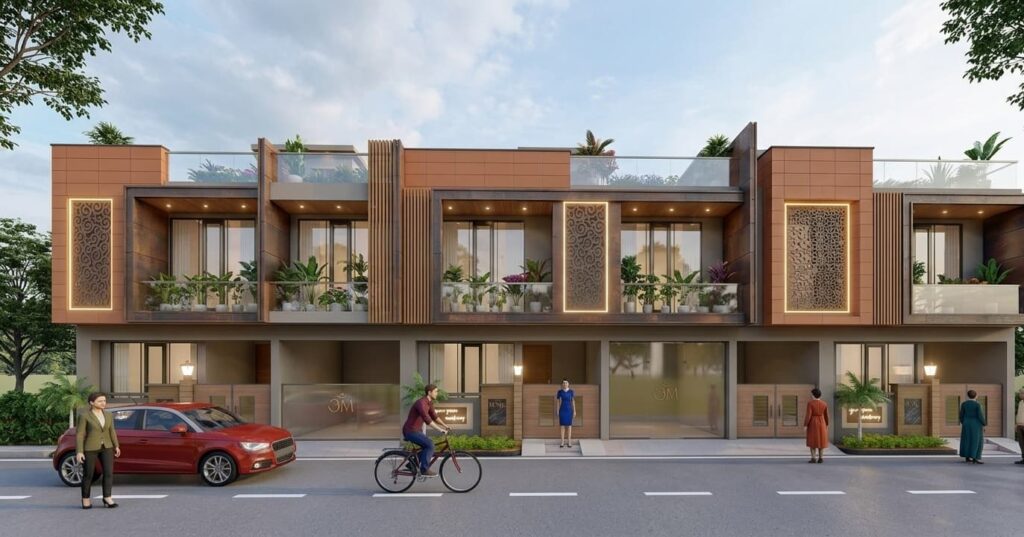
For individuals seeking premium living arrangements, options like the ultra-luxury homes in Noida represent the ideal combination of individual privacy and communal convenience. Such developments are meticulously planned to minimize vehicular traffic inside residential pathways, optimize green spaces, and provide robust backup power and security infrastructure. This comprehensive approach to estate management reduces the stress of property maintenance, allowing families to focus on their personal and professional lives.
Similarly, many buyers prefer the structural freedom of low-density layouts that offer independent plots or customizable villas. Investing in a project like the independent homes with modern amenities allows families to secure their personal space while remaining connected to a well-serviced community network. This balanced approach to urban living satisfies the contemporary buyer’s need for personal space without isolating them from necessary urban amenities, representing a logical progression in modern residential development standards.
Financial and Economic Dynamics of End-User Markets
How do interest rate fluctuations affect end-user buying power?
Because end-user purchases are predominantly funded through mortgages, changes in interest rates directly influence market demand. When home loan rates rise, the cost of borrowing increases, which effectively reduces the purchasing power of mid-income families. Some buyers may delay their plans, while others look for smaller properties or cheaper locations to stay within budget. This financial sensitivity means that the volume of transactions in end-user markets can show immediate reactions to monetary policy changes.
Conversely, during periods of stable or declining interest rates, end-users are encouraged to upgrade to premium categories or accelerate their home-buying timelines. Because home buying is a long-term financial commitment, end-users usually focus on the stability of interest rates rather than temporary fluctuations. They look for predictable financial terms that protect their household budgets over 15 to 25 years. Financial institutions often respond by offering flexible repayment structures, fixed-floating hybrid loans, and tailored financial products to accommodate this structured approach to long-term debt management.
What legal protections and regulatory reforms influence end-user trust?
The formalization of real estate markets has played a critical role in restoring trust among self-occupying homebuyers. For many years, project delays, non-delivery of promised amenities, and unclear titles made buyers cautious about under-construction properties. Regulatory reforms, such as the Real Estate (Regulation and Development) Act (RERA) in India, have changed this dynamic by introducing transparency and accountability. Developers are now legally bound to deliver what they advertise, creating a much safer transaction environment.
These regulations require developers to keep buyer deposits in escrow accounts, obtain all environmental and municipal permits before selling, and deliver projects on schedule. Clear legal terms and service conditions in transaction documents now protect the buyer’s capital, giving consumers the confidence to buy pre-launch and under-construction properties without fear of losing their lifetime savings. This structural transparency has shifted buyer preference back toward reputable, institutional developers who possess the financial capacity to meet regulatory timelines and structural benchmarks.
Comparing End-User Preferences vs Investor Objectives
What are the primary differences between user-occupiers and investors?
To fully understand market trends, it is essential to compare the preferences of user-occupiers and investors. While investors prioritize financial returns and quick exits, end-users focus on the long-term liveability of the home. These different goals shape their behavior at every stage of the buying process, from searching for properties to selecting amenities, negotiating payment plans, and determining tenure lengths. Identifying these contrasting drivers helps developers tailor their inventory to match the prevailing market absorption trends.
The following table highlights the key differences between end-users and real estate investors:
| Feature or Metric | End-User (User-Occupier) | Real Estate Investor |
|---|---|---|
| Holding Period | Long-term (usually 10 to 30 years) | Short to medium-term (usually 3 to 7 years) |
| Primary Motivating Factor | Quality of life, safety, and personal utility | Rental yields, tax benefits, and capital gains |
| Price Sensitivity | Highly sensitive to monthly EMI affordability | Sensitive to acquisition costs and cap rates |
| Key Amenity Focus | Parks, schools, hospitals, and community security | Maintenance costs, scalability, and tenant appeal |
As illustrated in the table, the structural approach of an end-user is defensive and long-term, focused on preserving capital and maximizing utility. An investor, by contrast, adopts an offensive strategy aimed at capital growth and financial liquidity. Developers who balance these requirements within their residential communities often enjoy stable sales velocity, using investor participation to kick-start early-stage funding while relying on end-users to occupy the completed structures and establish a thriving local community.
The Growing Influence of Sustainability and Modern Lifestyle Amenities
Why are green building standards becoming non-negotiable for buyers?
Environmental awareness has shifted from a niche interest to a major driver of modern real estate demand. Today’s end-users are increasingly aware of their carbon footprint and the rising cost of utilities. As a result, home buyers actively seek properties built using sustainable materials, energy-efficient designs, and environment-friendly construction methods. Developers who incorporate these elements into their builds find themselves at a significant competitive advantage.
Green buildings that feature solar panels, rainwater harvesting systems, waste management units, and thermal insulation help buyers reduce their energy consumption. This lower usage leads to lower monthly utility bills, making eco-friendly homes financially attractive over the long term. Beyond financial savings, green buildings also offer healthier indoor environments with better air quality, ample natural light, and biophilic design elements. These features align perfectly with the health and wellness goals of modern families, ensuring that sustainable developments hold their appeal and value for decades.
How do recreational amenities impact long-term property valuation?
In modern residential developments, recreational amenities are no longer optional extras; they are vital parts of the overall housing package. Buyers want facilities that improve their physical health, mental wellness, and social life. Well-maintained clubhouses, swimming pools, walking tracks, and multi-purpose sports courts help create a highly active and engaging community environment. These features are particularly attractive to urban professionals seeking to balance intense careers with an active, healthy home life.
For readers interested in learning how these factors shape different property markets, checking out the NCR real estate blog and market insights offers valuable context on shifting buyer behavior and localized demand trends. These insights show that properties featuring high-quality common amenities consistently maintain their value better than older, less-equipped developments. Over time, the quality of communal facilities and estate management becomes a critical factor in protecting the property against depreciation, ensuring that the original investment remains secure and continues to appreciate.
Ultimately, understanding end-user demand requires recognizing that a home is more than just a physical building. It is a space where people live, grow, and build communities. Developers who focus on these practical, human-centered needs are best positioned to build lasting trust and succeed in today’s changing real estate market, ensuring that their portfolios remain resilient across all economic cycles.
Frequently Asked Questions
Why is end-user demand considered more stable than investor demand?
End-user demand is driven by the fundamental need for personal shelter, security, and lifestyle stability. Because these buyers purchase properties to live in rather than to trade, they do not panic-sell during temporary market corrections. This behavior creates a stable market with steady pricing, protecting the local real estate ecosystem from high volatility and speculative bubbles.
How does infrastructure impact property choices for self-occupiers?
Infrastructure directly affects daily quality of life. Self-occupiers prioritize locations with reliable municipal services like water, electricity, and waste management. Close proximity to reputable schools, healthcare facilities, and major transit networks minimizes daily travel times and ensures long-term comfort, making these areas highly attractive for long-term residency.
Why is there a growing preference for gated communities among modern buyers?
Gated communities offer a safe, secure, and self-contained residential environment. By integrating modern amenities such as parks, athletic facilities, 24-hour security, and backup power, they provide a convenient and structured lifestyle that is difficult to find in stand-alone developments, making them highly desirable for families.
What role do sustainable features play in long-term home ownership costs?
Sustainable features like solar panels, efficient waste systems, and rainwater harvesting systems significantly lower the operational costs of a residential building. This efficiency reduces monthly community maintenance fees and household electricity costs, leading to substantial financial savings for homeowners over their period of occupancy.