
Quick Summary
Land appreciation behaves differently from structural property markets. This guide details the four distinct phases of plot appreciation cycles, explaining how infrastructural execution, legal governance, and physical utility combine to drive long-term capital appreciation. Discover metrics, compare raw land to master-planned luxury developments, and learn how to identify entry and exit points to maximize real estate investment yields.
Understanding Land Value Dynamics
Investing in raw plots or organized land structures requires a solid comprehension of real estate economics. Unlike residential apartments or office units, land is a finite resource with a zero rate of structural depreciation. A built structure begins losing physical value from the day it is constructed, requiring periodic capital expenditures for maintenance, renovation, and eventual reconstruction. Land, by contrast, undergoes a permanent evolution in its intrinsic value based on surrounding developments, utility changes, and population density shifts.
The appreciation of plots does not occur in a uniform linear trajectory. Instead, it moves through highly distinct cycles that align with regulatory announcements, physical transit installations, and demographic saturation. Recognizing these patterns allows wealth managers and private investors to secure assets at optimal valuation points before secondary growth waves drive price levels beyond reach.
Why does land appreciate differently than apartments?
The fundamental divergence lies in the ratio of land value to total property value. In an urban apartment complex, a significant percentage of your initial investment is allocated to the concrete structure, interior fittings, construction materials, and developer margins. Over a fifteen-year cycle, these physical elements degrade in quality, while the undivided share of land (UDS) remains the sole appreciating component. When you buy a plotted asset, one hundred percent of your capital is deployed directly into the appreciating component itself.
Additionally, land offers absolute structural flexibility. An apartment buyer is locked into a predefined layout, ceiling height, and structural limitation. Plot owners maintain complete control over the timing of construction, architectural styling, and spatial division, allowing them to adapt the final build to match the specific market demands of the future era in which they choose to build. This flexibility acts as an appreciation accelerator as municipal zones mature.
The Four Phases of a Plot Appreciation Cycle
A standard plot cycle spans anywhere from seven to fifteen years, transitioning through structural shifts. Each phase presents unique risk-return profiles, capital requirements, and investment horizons. Successful property acquisition strategies rely on identifying which stage a particular micro-market is navigating.
Phase 1: Speculative and Announcement Stage
This initial phase begins when municipal authorities announce major regional master plans, economic zones, transit corridors, or airport expansions. Prior to this, the targeted region is typically characterized by agricultural activity or low-density rural use. The moment formal zoning notifications or government acquisitions are made public, speculative capital enters the market.
During this period, price growth is fueled entirely by anticipation rather than utility. Transactions are dominated by high-risk investment syndicates and early-stage capital. While price increases can be rapid, liquidity remains low, and the risk of regulatory delays, litigation, or plan alterations remains high. Investors in this stage must possess long-term horizons and a high capacity to withstand administrative delays.
Phase 2: Infrastructural Development Stage
The second phase begins when heavy machinery moves into the region. This is when abstract blueprints translate into visible physical reality. Arterial roadways are carved out, electrical grids are mapped, sewage lines are laid, and public transportation links begin construction. This physical conversion acts as a validation trigger for institutional developers and retail buyers alike.
As utility access becomes a reality, risk factors drop substantially. Land values experience their most sustainable and steep appreciation curve during this phase. This is because the market transitions from pricing speculative ideas to valuing tangible, accessible physical infrastructure. Heritage Prime market analysts observe that transactions during this period are characterized by higher capital volumes and shorter transaction settlement times.
Phase 3: Habitability and Community Growth Stage
The third stage is marked by the construction of actual residential units, commercial offices, healthcare facilities, and educational institutions. Early settlers begin moving into the zone, driving the demand for local retail stores, grocery chains, and service providers. The land is no longer just a physical space; it is now an integrated, functional neighborhood.
As the community populates, the demand for remaining open plots rises exponentially. Families look to build customized homes, and developers bid for remaining commercial plots. Land values continue to grow, supported by actual rental yields, commercial activity, and residential demand rather than mere developmental progress. Liquidity reaches its absolute peak during this phase.
Phase 4: Maturity and Stabilization Stage
In the final phase, the micro-market reaches physical saturation. Open, vacant land becomes a scarce luxury, with almost all parcels fully developed. The local infrastructure operates at maximum capacity, and the demographic profile of the area stabilizes. At this point, the exponential double-digit growth rates slow down to match or slightly exceed standard inflation metrics.
Investors holding land at this stage transition their focus from capital gains to wealth preservation and yielding structures. The land is now valued for its premier location, historical stability, and high barrier to entry for any new competing products in the surrounding area. Exit options remain stable, but the rapid multiplication of capital shifts to newer, emerging peripheral corridors.
Quantitative Metrics for Measuring Plot Value Gains
To accurately forecast potential returns, professional investors rely on objective metrics rather than developer brochures. These criteria evaluate spatial demand, infrastructural investment, and regional pricing velocity. Analyzing these numbers systematically minimizes speculative errors.
| Appreciation Phase | Typical Duration | Risk Profile | Primary Value Driver |
|---|---|---|---|
| Phase 1: Speculative | 2 to 4 Years | High (Regulatory/Delay) | Government announcements and policy shifts |
| Phase 2: Infrastructural | 3 to 5 Years | Moderate (Execution speeds) | Physical laying of transit, roads, and utilities |
| Phase 3: Habitability | 2 to 4 Years | Low (End-user traction) | Retail convenience, schools, and safety indices |
| Phase 4: Maturity | Ongoing | Minimal (Preservation) | Absolute land scarcity and prestige premium |
By mapping targeted micro-markets to this matrix, investors can evaluate whether the price per square foot matches the actual maturity level of the local area. Buying at Phase 3 prices in a Phase 1 location remains a common mistake among unguided retail buyers, leading to capital stagnation.
Factors and Catalysts Driving Land Price Surges
While general market forces lift all property assets during economic expansions, specific local triggers act as multipliers for plot values. Understanding these elements can help you predict which specific sectors are set to experience an upward adjustment in price.
How do local governance policies impact land valuation?
Local municipal zoning laws are the ultimate arbiters of land appreciation. A policy adjustment that increases the Floor Area Ratio (FAR) or Floor Space Index (FSI) instantly makes a plot more valuable because it permits more buildable square footage on the same geographical footprint. Similarly, when agricultural land undergoes official conversion to residential or commercial use, its economic value scales dramatically overnight.
In addition, municipal performance indices play a vital role. Towns with efficient, proactive administrative bodies that maintain stable power supply, water distribution frameworks, and clean public parks attract premium residential developers. High-earning end-users will consistently pay a premium to reside in well-governed districts, directly boosting the value of raw plots in those administrative jurisdictions.
What role does connectivity play in plot valuation?
Physical accessibility is the lifeline of land appreciation. A plot of land that is geographically close to an employment hub but lacks direct arterial road access will remain undervalued. Conversely, land located further away but directly connected via an active expressway, high-speed rail line, or metro link will appreciate rapidly.
Transit-Oriented Development (TOD) frameworks are an excellent example of this dynamic. Municipalities that actively plan high-density commercial and residential development near major transit interchanges create hyper-pockets of capital appreciation. Securing plots near planned multi-modal transport hubs before their official operations commence remains one of the most reliable investment strategies in modern real estate.
Spotting Opportunities in the Current Regional Landscape
To find security and capital growth in today’s changing economic climate, modern buyers are moving away from unmanaged agricultural parcels towards structured communities. Raw land on the city outskirts often carries physical risks, such as boundary disputes, encroachment issues, and slow local development. In contrast, investing in professionally master-planned communities offers a safer, more predictable way to build equity over time.
How do master-planned gated villa developments compare to raw land plots?
Raw land investments often lack security, leaving them vulnerable to ownership disputes and illegal encroachment. These issues can drag on for years in municipal courts, tying up valuable capital. Modern master-planned developments, however, offer built-in security, perimeter fencing, professional management, and pre-cleared legal titles. This structured setup removes the typical worries associated with land ownership, allowing you to focus on planning your future home.
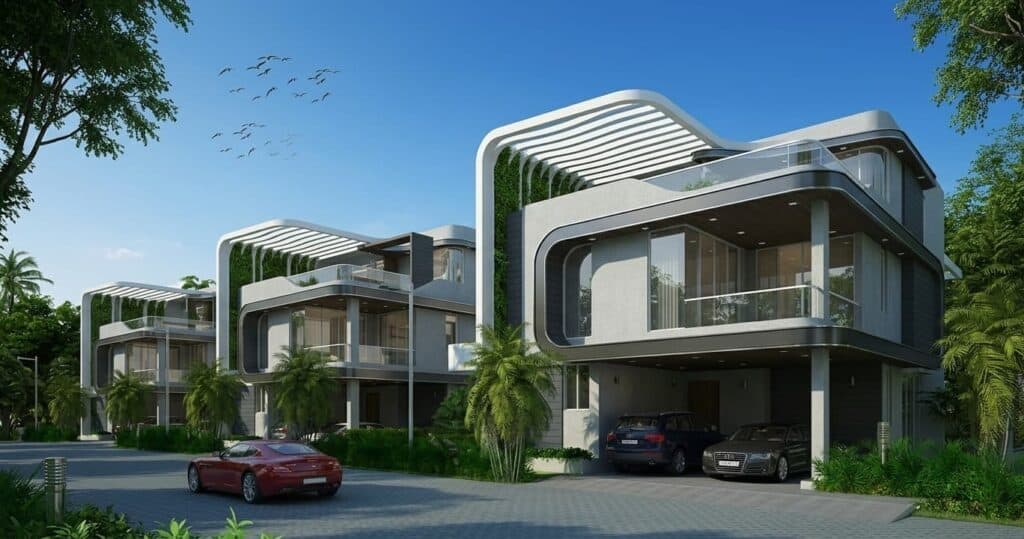
For buyers seeking this structural security and high-end living options, exploring a private enclave like the Palm Villas Noida gated community provides an excellent combination of controlled planning and premium amenities. These layouts combine the benefits of buying a plot with the security, shared utilities, and luxury clubhouse features of an elite residential development.
Additionally, modern buyers want spaces that are ready for immediate use. Raw plots often require you to arrange water connections, secure power approvals, and build approach roads independently. When you select highly integrated developments, you gain access to completed luxury homes built on secure, fully serviced land parcels. For those looking to secure a modern, spacious home in Noida’s most promising expansion zones, browsing the available options for luxury independent villas in Noida offers a direct route to premium residential real estate.
Mitigation of Risks and Regulatory Safeguards
While plot investments offer outstanding capital growth potential, the segment is historically prone to legal disputes, structural challenges, and transaction errors. Protecting your capital requires strict compliance, thorough due diligence, and a clear understanding of legal processes.
What legal parameters govern risk-free land investments?
First-time buyers must pay close attention to the chain of title. A title search spanning at least thirty years is essential to confirm that the seller holds clear, marketable ownership rights with no outstanding legal claims. This involves cross-checking physical registry records, verifying non-encumbrance certificates, and checking for municipal tax clearances. Working with professional legal counsel prevents costly ownership disputes down the road.
Additionally, every modern real estate transaction must comply with the local Real Estate Regulatory Authority (RERA) mandates and state-specific laws. This structural framework ensures that developers deliver promised infrastructure on time and maintain transparent pricing schedules. Understanding our real estate transaction terms is crucial for clarifying buyer and seller responsibilities, payment timelines, and legal safety nets before signing any formal agreements.
Where can investors access continuous market data?
Because real estate trends shift rapidly, keeping up with local market data, planning authority notices, and regional expansion updates is vital. Relying on outdated advice can lead to poorly timed market entries or missed opportunities in high-potential growth zones.
To track these local trends, review transaction volumes, and read expert policy analysis, following a dedicated NCR real estate blog and market insights platform is highly beneficial. These regular industry reports help property owners and potential buyers make confident, data-driven decisions based on verified physical developments and market realities.
Frequently Asked Questions
What is the safest phase to invest in a plot appreciation cycle?
The safest entry point is at the beginning of Phase 2, the Infrastructural Development Stage. At this point, initial speculative risk is removed because municipal planning is confirmed, and heavy infrastructure works have begun physically. This phase offers a well-balanced combination of lower risk and substantial room for capital growth before the community reaches maturity.
How does the Real Estate Regulatory Authority (RERA) protect plot buyers?
RERA protects buyers by requiring developers to register their projects, place customer funds in secure escrow accounts, and commit to strict completion schedules for roads, water supply, and electricity. It prevents developers from changing project plans without buyer consent and offers clear legal paths for handling delays or structural defects.
Can a plot value decrease, or does land always appreciate?
While land is a limited resource that generally rises in value over time, local plot prices can decline due to shifting municipal master plans, natural disasters, environmental changes, or legal disputes. Economic recessions and high interest rates can also temporarily reduce market demand, making careful research essential before buying.
How do I verify that a plot is free of legal disputes?
To verify a plot is legally clear, you must check its non-encumbrance certificate for the last thirty years to confirm there are no active mortgages or claims. Additionally, review the land records (Khata or Patta) to verify current ownership, and ensure the local planning authority has approved the layout before making any payments.