
Quick Summary
Corner plots consistently command premium prices across global and local real estate markets due to their dual frontage, superior natural light, enhanced privacy, and architectural flexibility. While they carry specific maintenance duties and municipal guidelines, their long-term value appreciation and lifestyle advantages make them a highly sought-after commodity for discerning homebuyers and investors alike.
The Structural and Geometric Advantage of Corner Plots
What makes the physical positioning of corner plots so valuable?
The premium attached to corner plots is rooted in physical geography and urban planning. Unlike standard intermediate plots which are flanked by immediate neighbors on both sides, a corner plot occupies the intersection of two distinct roads or pathways. This positioning fundamentally alters the spatial dynamics of the property. The immediately obvious benefit is the reduction of immediate physical neighbors, which instantly creates a feeling of openness. By removing at least one shared boundary line, the property owner gains a sense of visual relief that intermediate lots simply cannot replicate.
Furthermore, the physical geometry of a corner plot often results in unique shapes and dimensions. While standard lots are rectangular and uniform, corner sites can sometimes feature wider frontages or tapered rear boundaries. This extra space along the outer perimeter gives owners a broader canvas upon which to construct their residence. The physical isolation from multiple adjoining structures reduces the transmission of structural vibrations and sound, providing a calmer, more self-contained living environment that is highly prized in dense urban areas.
How does the extra frontage affect the aesthetic appeal of a home?
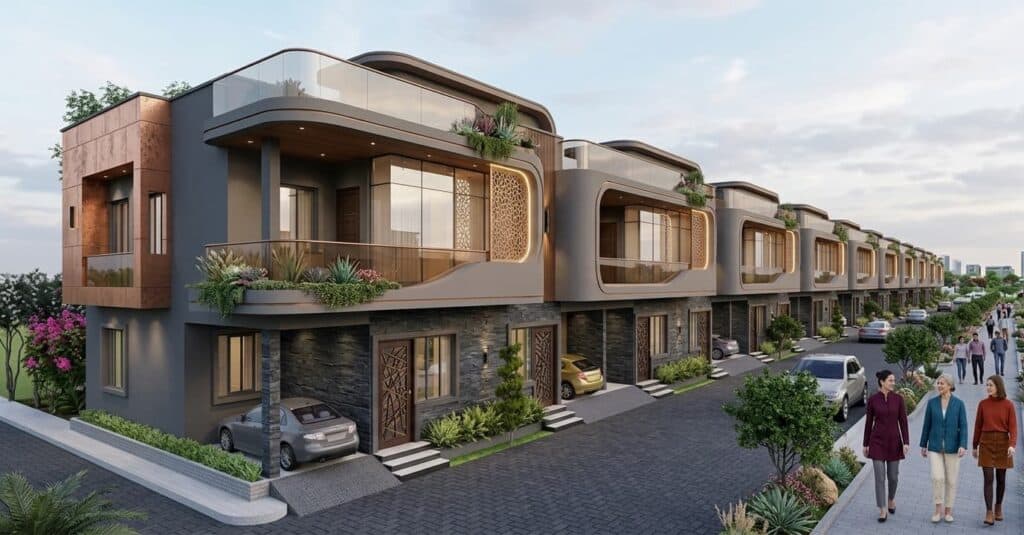
Curb appeal is a primary driver of real estate valuation, and corner plots possess an innate advantage in this category. With two distinct outward-facing facades, a home built on a corner plot presents a grander, more imposing presence to the streetscape. Architects can design multi-dimensional exteriors that present visually striking angles from different viewpoints. Instead of focusing aesthetic investment solely on a single narrow front facade, homeowners can distribute high-quality materials, grand windows, and landscaped perimeters across two prominent sides.
This double frontage allows for creative landscaping opportunities. Wrap-around gardens, expansive lawns, and tiered shrubbery can line the property boundary, softening the transition between public pavement and private domain. The increased visibility means that architectural details, such as wrap-around porches, dual balconies, or custom masonry, are showcased to their full potential, contributing to a stately neighborhood appearance that naturally elevates the surrounding property values.
Light, Ventilation, and Architectural Freedom
Why do corner lots receive superior natural light and air circulation?
In standard housing layouts, intermediate plots are prone to shadowed areas due to the close proximity of adjacent structures. The walls of neighboring houses block low-angle sunlight, leaving central and ground-level rooms dependent on artificial lighting during major parts of the day. Corner plots overcome this limitation by securing open channels on two sides. This openness ensures that sunlight can penetrate deep into the interior spaces throughout the morning and afternoon, depending on the orientation of the roads.
Airflow follows a similar pattern. Wind currents that are normally blocked by continuous rows of houses can easily circulate around a corner property. By placing windows and ventilation shafts along both exposed facades, architects can facilitate natural cross-ventilation. This steady movement of air helps regulate indoor temperatures organically, reducing the reliance on mechanical heating, ventilation, and air conditioning systems. The result is a healthier living climate characterized by abundant natural light and fresh air, factors that directly translate into premium market listings.
How does having two open sides enhance architectural design options?
Standard plots impose rigid constraints on internal floor plans, forcing designers to place services, utilities, and dark rooms along the shared side walls while saving the front and back for living zones. A corner plot breaks these constraints. With two open sides, architects have the freedom to place large, floor-to-ceiling windows, patio doors, and private balconies in multiple rooms, regardless of where they sit in the floor plan. This flexibility is particularly visible in projects like the Ayodhya Enclave luxury villa project, where spatial layout and open vistas are key design elements.
This architectural liberty allows for more creative internal zones. Courtyards can be placed to capture light from the open side, and master bedrooms can be positioned to enjoy double-exposure views. Services such as kitchens, stairwells, and bathrooms can have functional windows for natural light and exhaust, rather than relying on dark shafts. The ability to design a home that feels open, customizable, and unconstrained by neighboring walls is a major luxury that buyers are willing to pay extra for during the initial purchase phase.
Financial Performance and Market Valuation of Corner Properties
Why do appraisers and financial institutions assign higher value to corner locations?
Property appraisers use comparative market analysis to determine the value of a plot, and corner locations consistently receive positive adjustments. Financial institutions view corner plots as lower-risk assets because they are highly liquid. Should a lender ever need to liquidate a property portfolio, corner plots tend to sell much faster than standard mid-row options due to their broad appeal. Appraisers account for the scarcity factor; in any given subdivision, corner plots constitute only a small percentage of the total available inventory, creating a natural supply-demand imbalance that keeps prices elevated.
Furthermore, analysts at Heritage Prime observe that the premium is not merely a subjective preference but is supported by tangible valuation metrics. The dual access, potential for commercial conversion, and reduced boundary disputes all contribute to a highly favorable risk profile. When banks evaluate the collateral value of land, the intrinsic advantages of a corner position provide a solid buffer against market downturns, making these properties highly resilient assets over multi-decade cycles.
What is the historical resale premium of corner plots compared to standard lots?
Historical market data demonstrates that corner plots trade at a premium ranging from 10 to 25 percent over neighboring mid-block properties of similar size. This premium remains stable even during real estate corrections, as buyers prioritize premium placement when options are abundant. In high-density urban areas, the price gap can widen even further, driven by the absolute scarcity of open space and natural light.
To illustrate the specific factors that influence this price differential, consider the comparative breakdown below:
| Valuation Attribute | Standard Intermediate Plot | Corner Plot Advantage |
|---|---|---|
| Road Exposure | Single front-facing road | Dual road frontage (front and side) |
| Natural Illumination | Limited to front and rear windows | Multidirectional sun exposure throughout the day |
| Privacy Level | Two immediate side neighbors sharing walls/boundaries | Only one immediate side neighbor, reducing sound transmission |
| Parking & Access | Single driveway entry option | Multiple entry points, ease of guest parking along side road |
| Resale Premium | Baseline market price | Typically 10% to 25% above baseline |
Privacy, Access, and Land Use Versatility
Do corner plots provide better privacy for modern homeowners?
Privacy is a rare commodity in modern residential layouts, where homes are often built close together to optimize land use. Standard plots subject residents to the sights and sounds of two immediate neighbors, whose windows often look directly onto their side pathways and yard spaces. A corner plot dramatically changes this dynamic by eliminating one of these neighbors. The side of the house that would normally face another residence now faces an open street, sidewalk, or green buffer zone.
This layout gives homeowners the freedom to position private areas, such as swimming pools, outdoor decks, and master bedrooms, away from neighboring eyes. By using strategic design choices such as high boundary walls, dense hedge rows, or smart window placements, corner lot owners can create highly secluded sanctuaries. This is a primary reason why high-net-worth individuals look for corner locations when building custom residences with a legacy of trust in home construction, ensuring long-term utility and personal comfort.
How do multiple access points improve convenience and parking options?
One of the most practical everyday advantages of a corner plot is the ease of vehicle access. Intermediate plots restrict driveways to the front facade, which can limit the width of the entrance and reduce options for multiple vehicle parking. A corner plot allows for the construction of multiple driveways or separate entrances on different streets. For instance, a homeowner can place a grand, formal entrance on the main road while directing a secondary, daily-use driveway to the quieter side street.
This dual-access setup is incredibly helpful for multi-generational families or homes with separate guest wings. It allows visitors to enter and park without disrupting the main household routines. Additionally, guest parking is vastly improved; because the property lines run along two streets, there is naturally more curb space available for temporary parking. This minimizes congestion and ensures that hosting large gatherings does not create parking issues in the immediate neighborhood.
Zoning Advantages and Commercial Viability
Can corner plots be utilized for mixed-use or home-based businesses?
In many urban areas, municipal zoning laws grant special allowances to corner plots due to their high visibility and ease of access. For owners who wish to run a home-based office, consulting firm, or boutique business, a corner plot is highly advantageous. It allows clients to access the office directly from the side street through a dedicated entrance, keeping the main residential entryway completely private and quiet.
In areas where mixed-use zoning is permitted, the commercial potential of a corner plot rises dramatically. Corner locations are highly sought after by retail stores, cafes, and professional practices because they offer double the signage space and capture pedestrian traffic from two separate directions. Even if the current owner has no immediate plans to run a commercial venture, the potential for future rezoning or commercial redevelopment adds a substantial layer of value to the land, keeping its long-term investment yield high.
How do local municipal authorities treat setbacks and building regulations for corner properties?
While corner plots offer massive benefits, they also require careful attention to local building regulations and municipal bylaws. Municipalities often enforce specific setbacks on both road-facing sides to maintain clear lines of sight for drivers at intersections. This means that a builder cannot build right up to the property line on either street side, which sometimes reduces the total buildable footprint on the ground level compared to a mid-row plot of the exact same size.
Prospective buyers must review these local zoning laws and setbacks before purchasing a plot. High-quality developers and professional consultancies ensure that all layout plans align with local rules, safeguarding buyers from unexpected regulatory setbacks. Modern developments prioritize transparency and adhere to strict user data protection guidelines during pre-sales queries, helping buyers feel secure about their investments.
Potential Drawbacks and Mitigation Strategies
What are the hidden costs associated with corner plot ownership?
While the benefits of corner plots are extensive, buyers should also be aware of the unique responsibilities that come with them. Because corner properties have twice the street exposure, they feature much longer boundary lines. This means that building and maintaining perimeter walls, fences, and sidewalks can cost significantly more than it would for an intermediate plot. Additionally, in regions that experience heavy snowfall or require sidewalk upkeep, the homeowner is legally responsible for clearing a much larger public pathway, which can lead to higher maintenance fees or physical effort.
Furthermore, landscaping costs are generally higher. Owners must maintain two visible garden areas to ensure the property meets neighborhood standards. Property taxes can also reflect the premium placement, as some tax authorities assess corner parcels at a higher rate due to their enhanced market value and development potential. Recognizing these costs early on allows buyers to plan their budgets effectively, ensuring that the long-term enjoyment of the home remains uncompromised.
How can owners address security and traffic noise concerns?
By their very nature, corner plots are exposed to more vehicular traffic and pedestrian movement. This increased exposure can lead to higher noise levels, especially if the plot sits at a busy junction. To mitigate this, homeowners can use modern soundproofing materials, such as double-glazed windows, insulated walls, and thick exterior gates. Strategic landscaping, like planting a row of dense trees or tall shrubs along the secondary road, acts as a natural sound barrier, absorbing street noise while enhancing the property’s privacy.
Security is another area that requires careful planning. Since the property is accessible from two sides, it has a larger perimeter to monitor. Installing smart security systems, including motion-activated lighting, high-definition security cameras, and automated gates, provides comprehensive coverage. Working with experienced builders ensures these security measures are seamlessly integrated into the home’s design from day one. To explore tailored solutions for premium plot selection, buyers can contact seasoned property experts who can guide them through the entire acquisition process.
Frequently Asked Questions
Are corner plots always more expensive than middle plots?
In most residential developments, corner plots do carry a premium price tag, usually ranging from 10 to 25 percent above standard plots. However, this is not an absolute rule. If a corner plot is located on a very busy main road with heavy commercial traffic, or if it has highly restrictive municipal setbacks that severely limit the buildable area, its value might be comparable to or even lower than a quieter intermediate plot. The premium depends on the balance between residential quietness, structural usability, and local demand.
How do setback rules affect the actual building size on a corner plot?
Setback rules require a building to be set back a certain distance from the property boundaries. For a corner plot, because it faces two roads, the municipality typically enforces front setback rules on both of those street-facing sides. This can reduce the ground-floor footprint of the house. However, clever architectural design can offset this by using upper levels for cantilevered balconies or designing a multi-story home that maximizes vertical space, turning the setback areas into beautiful gardens or driveways.
Do corner plots have higher maintenance requirements?
Yes, corner plots generally require more maintenance than standard lots. The owner is responsible for keeping a longer stretch of public sidewalk clean and safe, managing larger boundary walls, and maintaining landscaping along two visible fronts. While this does require more time and financial resources, the payoff is a significantly more attractive, open, and valuable property that retains its appeal and market premium over time.
Is a corner plot a good choice for long-term investment?
From an investment perspective, corner plots are highly lucrative assets. They benefit from consistent demand due to their scarcity, and they tend to appreciate faster than standard intermediate plots. Their dual-access points, potential for commercial or mixed-use conversion, and outstanding curb appeal make them highly liquid. Even during slow real estate markets, a well-positioned corner plot remains an appealing option for buyers, making it an excellent choice for long-term capital appreciation.