
Quick Summary
Private parking has transitioned from a minor convenience to a premium residential asset that significantly drives property valuation, secures valuable automotive investments, and streamlines daily logistics. This article details the financial, safety, and architectural advantages of private residential parking, providing actionable insights for prospective homebuyers and developers.
The Evolution of Residential Parking Solutions
How did private parking become a premium residential feature?
Historically, residential architecture focused primarily on indoor living spaces, while vehicles were left on public carriage paths or simple street curbs. As personal automobile ownership surged throughout the mid-to-late twentieth century, urban centers grew increasingly congested, transforming the street curb from a public utility into a highly contested space. Today, the availability of a dedicated parking space has transitioned from a minor convenience to a primary driver of real estate desirability. In dense metropolitan regions, securing a dedicated area for personal vehicles is now considered a fundamental asset. Industry assessments, including observations shared by Heritage Prime, indicate that modern property search parameters prioritize designated parking as a non-negotiable facility. Homebuyers recognize that street parking exposes vehicles to unpredictable municipal regulations, rising permit costs, and the daily anxiety of searching for an open curb space. This shift has forced developers to reconsider how parking is integrated into residential blueprints from the very beginning of the design phase.
What is the difference between deeded, assigned, and private driveway parking?
Prospective homeowners must distinguish between different legal and physical parking arrangements to avoid future disputes or unexpected financial obligations. A private driveway represents the most direct form of ownership, giving the resident exclusive rights to a specific, unobstructed path on their deeded land. Deeded parking spaces, common in multi-family buildings or condominium complexes, are legally tied to the property title, meaning they can be sold or transferred alongside the home. Assigned spaces, on the other hand, are designated by a homeowners association or property management board, granting exclusive usage rights without transferring actual ownership of the physical land. Understanding these distinctions is critical for buyers navigating property transactions, as each arrangement carries unique maintenance responsibilities, tax implications, and usage rules. For instance, deeded spaces are subject to property taxes, whereas assigned spaces are typically maintained through monthly association dues.
Financial Advantages: Boosting Property Valuation and Resale Potential
How much value does a private parking spot add to a home?
In modern real estate markets, a private parking space acts as an immediate multiplier of property value. Numerical analyses suggest that homes equipped with private garages or dedicated driveways command premiums ranging from five to twenty percent higher than comparable properties lacking these facilities. In dense urban quarters, the presence of a single deeded space can add tens of thousands of dollars to the final transaction price. Homeowners who invest in properties with secure parking structures enjoy faster resale times and a wider pool of qualified buyers. For regular updates on how parking availability influences local property appreciation rates, consulting an active NCR real estate blog and market insights source provides valuable local context. This financial benefit is not static: it compounds over time as public street parking options continue to dwindle due to municipal zoning updates and pedestrian-friendly urban planning initiatives.
Why do lenders and appraisers favor properties with secure parking?
Mortgage lenders and independent appraisers evaluate properties based on risk reduction and long-term marketability. A home with integrated, private parking represents a stable asset with highly predictable market demand. Appraisers adjust property valuations upward when dedicated parking is present, recognizing that it mitigates the depreciation risk associated with urban congestion. Lenders view these homes as safer collateral because they appeal to a broader demographic, including families, elderly buyers, and car owners, ensuring the property remains highly liquid even during market downturns. Consequently, securing financing for properties with integrated parking is often more straightforward, with underwriters offering more favorable terms due to the lower perceived risk of the asset.
Vehicle Security and Physical Asset Protection
How does private parking reduce auto theft and vandalism rates?
Leaving a vehicle parked on a public street exposes it to substantial security hazards, including hit-and-run collisions, opportunistic vandalism, and targeted auto theft. Private parking, particularly within enclosed garages or secure gated perimeters, establishes a physical barrier that deters criminals. Modern residential developments often pair private parking bays with automated access controls, smart surveillance systems, and physical barriers. When configuring these digital access systems, community associations must manage access credentials carefully, adhering to strict user data protection guidelines to ensure resident telemetry and vehicle entry logs remain secure and confidential. This security integration drastically lowers insurance premiums, as underwriters recognize the reduced risk of theft or damage when vehicles are kept in monitored, private enclosures rather than public spaces.
What are the environmental protection benefits of covered private parking?
Beyond security from human threats, private covered parking shields vehicles from destructive weather patterns. Direct exposure to solar radiation degrades vehicle paint, cracks dashboard materials, and accelerates the wear of interior upholstery. Similarly, severe winter conditions, including hail, heavy snowfall, and sub-zero temperatures, place severe mechanical strain on engines, batteries, and braking systems. A covered garage or carport maintains a more stable microclimate, reducing vehicle maintenance costs, preserving mechanical integrity, and extending the operational lifespan of the vehicle. By preventing oxidation and paint fading, covered parking directly preserves the resale value of the automobile itself, making it a double benefit for the homeowner’s overall household balance sheet.
Convenience, Daily Comfort, and Lifestyle Integration
How does dedicated parking eliminate urban commuting stress?
The psychological toll of hunting for parking at the end of a long workday is a well-documented urban stressor. Dedicated private parking guarantees immediate access to one’s home without the delays associated with searching surrounding blocks for a vacancy. This predictability streamlines daily routines, allowing homeowners to plan schedules with precision. It also simplifies everyday activities such as unloading groceries, transporting young children, or managing heavy equipment, transforming the return home into a seamless, stress-free experience. Additionally, residents avoid the risk of municipal parking fines, towing fees, and the physical fatigue associated with walking long distances from a distant parking spot to their front door.
In what ways does private parking facilitate electric vehicle charging setup?
The global transition toward electric vehicles has made private parking a vital prerequisite for modern transit. Installing a dedicated Level 2 or Level 3 EV smart charger is virtually impossible without a designated, privately controlled parking bay connected to the homeowner’s electrical panel. Public charging infrastructure remains inconsistent, expensive, and time-consuming. Homeowners with private garages can charge vehicles overnight during off-peak utility hours, securing significant savings on energy tariffs while ensuring their vehicle is fully charged each morning. This capability future-proofs the home, making it highly attractive to the next generation of environmentally conscious buyers who view home-based charging as an absolute requirement.
Comparative Analysis of Parking Configurations
To assist buyers in assessing different parking structures, the following table compares key attributes across common residential parking formats, highlighting how each setup impacts asset protection, valuation, and convenience:
| Parking Type | Security Level | EV Charging Viability | Weather Protection | Impact on Property Value |
|---|---|---|---|---|
| Private Enclosed Garage | Maximum (Locked door, walls) | High (Direct panel connection) | Complete (All seasons) | Significant Premium (10-20%) |
| Private Driveway / Carport | Moderate (Open but on-property) | High (Wall mount chargers) | Partial (Overhead cover only) | Moderate Premium (5-12%) |
| Assigned / Deeded Lot Space | Low to Moderate (Shared area) | Medium (Subject to HOA approval) | None (Unless canopy added) | Stable baseline asset value |
| On-Street Permitted Parking | Minimal (Public access) | Negligible (Rarely allowed) | None (Fully exposed) | No value addition / Can depress value |
As shown in the comparison, enclosed private garages offer the most comprehensive protection and value addition, while public street options present significant risks and long-term costs. Homeowners must balance these factors against their personal budget and local real estate availability to make an informed purchasing decision.
Architectural Integration and Design Considerations
How does parking design influence modern home layouts?
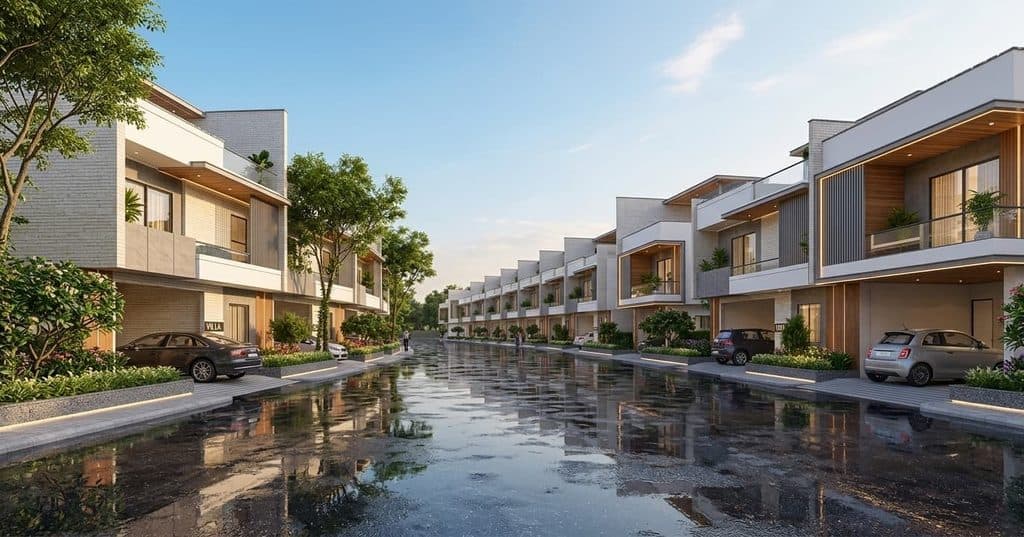
Modern architecture seamlessly integrates vehicle housing into the primary structural blueprint of residential estates. Instead of viewing parking as an isolated concrete pad, contemporary design houses cars within basement garages or sleek subterranean bays that preserve the aesthetic continuity of the property. This structural harmony is particularly evident in high-end developments, such as luxury independent villas in Noida, where spacious multi-car garages are integrated directly into the foundational plan, offering direct indoor access to the main living quarters. Such integration ensures that vehicles are sheltered while maximizing the remaining outdoor square footage for landscaped gardens, private courtyards, and open-air recreation spaces. This approach ensures that utility does not compromise the visual appeal of the estate.
What spatial trends are redefining residential parking?
As vehicle sizes evolve and families accumulate multiple modes of transport, spatial flexibility has become a key design objective. Dual-height garages capable of accommodating car-stackers are rising in popularity, enabling homeowners to double their parking capacity without expanding the physical footprint of the home. Additionally, designers are incorporating wider turning radiuses, smart entryways with sensor-activated automatic doors, and integrated drainage channels to manage water runoff from wet vehicles, keeping the parking environment clean and dry. These innovations ensure that residential parking spaces remain adaptable to future automotive designs, including larger electric SUVs and semi-autonomous vehicles.
Buyer Guidelines: Evaluating Parking Assets During a Property Search
What specific checks should buyers conduct regarding parking spaces?
When touring potential homes, buyers often overlook critical details of the parking arrangements. It is essential to measure the physical dimensions of the space to ensure it accommodates larger utility vehicles or SUVs comfortably without scraping doors on columns. Furthermore, buyers must review the local municipal bylaws and homeowner association guidelines to verify any restrictions on commercial vehicle parking, external modifications, or guest usage. Checking for water stains, structural cracks, and the positioning of support pillars in shared garages can prevent expensive maintenance surprises down the line. It is also wise to test the cellular or Wi-Fi signal strength in underground garages, as modern vehicles rely on continuous connectivity for software updates and smart navigation services.
How can buyers secure professional advice on parking-related property acquisitions?
Given the significant financial impact that parking facilities have on long-term property values, working with experienced market advisors is a prudent step during the acquisition process. Interested buyers should look to get in touch with our real estate consultants to analyze local market trends, verify deed designations, and ensure that any selected residential property features optimal, secure, and legally sound parking structures that align with their personal vehicle requirements and future investment goals. Professional guidance helps avoid common pitfalls such as purchasing a home only to find out the deeded parking spot is restricted to compact cars or is subject to separate, exorbitant monthly maintenance fees.
Frequently Asked Questions
Does adding a carport increase property value as much as a fully enclosed garage?
While a carport provides excellent protection against solar radiation and light rain, it does not add as much value to a property as a fully enclosed garage. Enclosed garages offer complete physical security from theft, absolute protection from severe weather conditions, and additional storage options. Typically, an enclosed garage yields a significantly higher return on investment and is highly favored by property appraisers and mortgage lenders alike.
How do municipal zoning laws affect the construction of private driveways?
Municipal zoning laws dictate the placement, width, and setbacks of private driveways to ensure safety and streetscape consistency. Property owners must obtain permits before lowering curbs or extending driveways, as unauthorized modifications can result in steep municipal fines and compulsory restoration orders. It is vital to consult local building regulations or professional real estate consultants before initiating any modifications to on-property parking features.
Can a homeowner sell their deeded parking space independently from their house?
Whether a deeded parking space can be sold independently depends on the specific rules of the local homeowners association and the municipal deed registry. In some urban developments, deeded spots can be sold or leased to other residents within the same building structure. However, many associations restrict sales to external buyers to maintain building security and ensure adequate parking remains available for the primary residences.
What is the average return on investment for installing an EV charger in a private garage?
Installing an EV charger in a private garage offers an exceptional return on investment, often recovering its costs through increased home value and energy savings. Homeowners save substantially by charging during low-cost overnight hours compared to using public charging stations. Furthermore, as EV adoption rises, properties with pre-installed charging infrastructure attract premium buyers, making it a highly profitable upgrade for long-term valuation.