
Quick Summary
Acquiring a premium villa does not have to be a drawn-out, multi-month process. By following this systematic, seven-day roadmap, sophisticated buyers can outline their financial and location parameters, conduct thorough digital due diligence, schedule high-yield site visits, and perform structural audits to make a confident, data-backed purchase decision without analysis paralysis.
The search for a private home is one of the most significant financial and lifestyle commitments an individual can make. Unlike purchasing a typical high-rise apartment, buying a luxury villa involves analyzing unique elements such as plot ownership rights, independent structural boundaries, custom layout flexibility, and long-term land appreciation potential. Historically, buyers have spent months wandering through scattered listings, visiting poorly matched sites, and suffering from information overload. However, a compressed, highly organized approach can yield superior results in a fraction of the time.
This guide outlines a clear, daily schedule designed to help buyers shortlist and select the perfect residential project in exactly seven days. By applying analytical frameworks, utilizing public verification records, and structuring site inspections, you can convert what is typically a chaotic process into a streamlined, stress-free transaction. Whether you are looking for an investment-grade asset or a permanent family estate, this structured timeline ensures no critical detail is overlooked.
The Framework of an Accelerated Real Estate Search
Is it realistically possible to select a villa development in seven days?
Many buyers wonder if a single week is sufficient to make such an important decision. The answer is yes, provided the process is treated with structural discipline. The traditional real estate search is prolonged not by the physical act of viewing properties, but by vague criteria, emotional decision-making, and poor communication with market intermediaries. When you establish a daily operational plan, you eliminate unproductive activities, allowing you to focus your attention on properties that meet your standards.
An accelerated search prevents decision fatigue. When a search drags on for months, early options are forgotten, market dynamics shift, and initial enthusiasm wanes. Heritage Prime research suggests that buyers who make a decision within a focused window are generally more satisfied with their purchase because they compare properties under identical market conditions, leading to clearer, more objective comparisons.
Establishing the non-negotiables before day one
Before starting your search, you must define your non-negotiables. These are the absolute requirements that a property must meet to remain on your list. These parameters typically fall into three categories: space, location, and utility. For instance, you must decide if you require a minimum carpet area, a private basement for a home office, a multi-car garage, or a dedicated private garden space. Security protocols, such as three-tier gated access and smart surveillance networks, are also common requirements.
Establishing these boundaries early helps filter out mismatched properties. If a project cannot accommodate a private elevator or does not provide independent power backup systems, it is immediately discarded. This step saves you from visiting unsuitable projects and ensures you focus only on properties that match your lifestyle.
Day 1 to Day 2: Defining Parameters and Financial Planning
Calculating the true cost of villa ownership
The first day of your search should be dedicated to financial planning. Many buyers look only at the basic sale price, ignoring additional expenses that impact the total cost of ownership. When buying a premium independent home, you must account for external development charges, preferential location charges for corner or park-facing plots, electricity substation installation costs, and advanced maintenance deposits.
Buyers seeking premium residential properties in Delhi NCR should also plan for localized circle rates, registration fees, and state-specific stamp duties. It is also wise to set aside a budget for custom interior design, landscaping, and smart home installations, which can add ten to fifteen percent to your initial purchase cost. Knowing these numbers early prevents financial strain and helps you target projects within your true budget.
Selecting geographical corridors that match lifestyle priorities
On day two, focus on choosing the right geographical areas. Location dictates more than just property appreciation; it shapes your daily routine. Evaluate travel times to business districts, international schools, healthcare facilities, and major transit hubs like expressways and airports. Look for clean air, low noise levels, and reliable local infrastructure.
Consider the growth potential of the area. A region with planned infrastructure projects, such as new metro lines, commercial hubs, or high-speed arterial roads, is likely to see higher capital appreciation. By the end of day two, you should have identified two or three specific micro-markets that offer the right balance of daily convenience and long-term value, narrowing your search area significantly.
Day 3 to Day 4: Desktop Research and Developer Vetting
How to analyze builder track records and legal clearances
Days three and four are dedicated to desktop research and verification. Start by checking your shortlisted projects on the state Real Estate Regulatory Authority (RERA) portal. This public portal provides detailed information on land titles, environmental clearances, approved site plans, and scheduled delivery dates. A developer’s past performance is often the best indicator of their reliability.
Research the developer’s financial health, debt levels, and past delivery timelines. Reviewing the legal paperwork early protects you from future delays and disputes. Buyers should also review the legal terms and service conditions of the builder-buyer agreement, focusing on clauses related to construction delays, compensation rates, and payment schedules, to ensure a transparent transaction.
Utilizing digital tools and interactive property maps
Use modern digital tools to evaluate properties from your home. High-resolution satellite maps can help you inspect the surroundings of a project, checking for nearby industrial areas, open drainage systems, or high-voltage power lines that might not be visible in marketing brochures. Many luxury developers offer virtual 3D walk-throughs and interactive site plans, allowing you to examine the layout of the community virtually.
Check how different villa plots are positioned relative to the sun, wind, and common amenities. For instance, you can identify which plots offer the best privacy, which face the central green parks, and which might experience noise from nearby clubhouses or entrance gates. This digital screening helps you trim your list of potential projects down to three or four highly viable options.
Day 5: Curating and Scheduling Ground Visits
Why a pre-visit checklist is mandatory for site inspections
Physical site visits are most effective when they are structured and comparative. On day five, create a detailed checklist for your upcoming site visits. This list should include structural quality indicators, such as wall thickness, basement waterproofing, window insulation, and electrical systems. It should also cover community infrastructure, such as water treatment systems, power backups, and emergency access routes.
Without a standard checklist, site visits can become overwhelming. The impressive design of model homes can easily distract you from identifying potential issues in construction quality or community layout. A structured checklist keeps your evaluations objective and ensures you gather comparable data from every project you visit.
Comparing community layouts and structural specifications
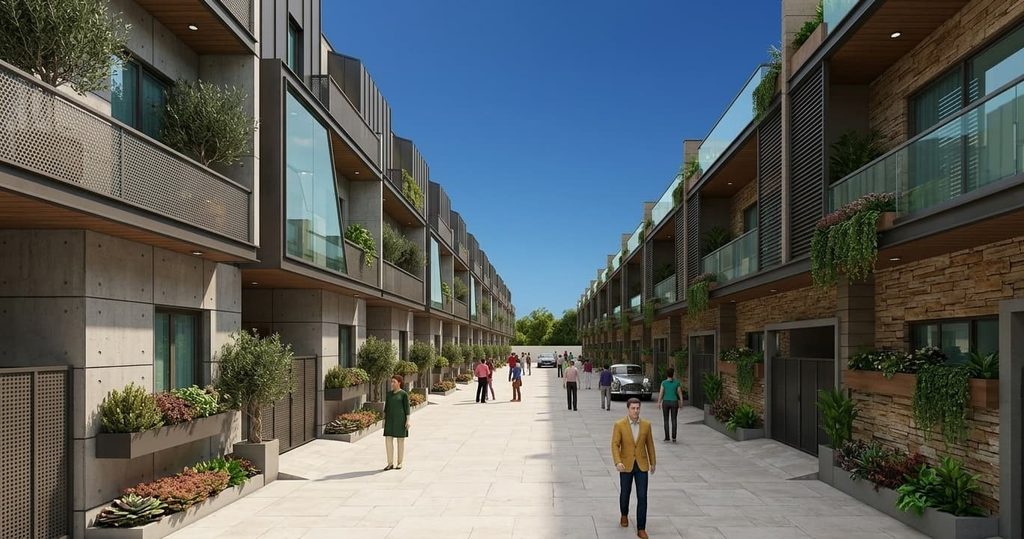
Take a close look at the master plans of your shortlisted projects. For example, the Palm Villas Noida gated community shows how low-density planning can be integrated with modern amenities and wide green buffers. Pay attention to the spacing between independent homes, the width of internal roads, and the location of pedestrian pathways.
High-end developments prioritize resident privacy by creating natural separation between homes. Look for projects that use clever landscaping and strategic placement to ensure that private backyards, balconies, and swimming pools are not overlooked by neighboring units. Review the ratio of open green spaces to built-up concrete to gauge the overall density of the community.
Day 6: On-Site Evaluation and Community Audits
What key factors should you look for during a physical site visit?
On day six, perform your physical site inspections. Visit your shortlisted projects during different times of the day to evaluate traffic patterns, light exposure, and noise levels. Walk around the entire property rather than just visiting the model home. Check the quality of the concrete work, the alignment of the plumbing, and the materials used in the window and door frames.
If the community is already partially occupied, try to speak with current residents. They can offer practical, first-hand details about water quality, power grid reliability, security effectiveness, and the quality of property management. Observe how well the shared spaces, such as the clubhouse, swimming pools, and parks, are maintained, as this reflects the long-term standards of the association.
Analyzing the immediate micro-market and long-term livability
Drive around the neighborhood outside the project gates. Check the quality of the access roads, street lighting, and the presence of local police or security patrols. Note the distance to everyday conveniences such as grocery stores, pharmacies, and basic service providers. A beautiful home can feel isolating if simple daily errands require long drives through undeveloped areas.
A healthy micro-market with active commercial and retail growth ensures your property will continue to appreciate in value. It also guarantees that local municipal services, such as waste management and road repairs, will remain a priority for local authorities, safeguarding both your quality of life and your investment.
Day 7: Comparative Analysis and the Final Selection
Constructing a custom evaluation matrix for objective scoring
On the final day, organize all the data, photos, and price quotes you have collected during the week. Create an evaluation matrix that scores each project across key categories, such as location convenience, building quality, spatial design, community amenities, and developer reputation. Assign weight to these categories based on what matters most to you.
This scoring process removes emotional bias from your decision. A project that seemed appealing because of an elegant lobby might score lower once you analyze its high maintenance costs or narrow internal roads. The matrix provides an objective, logical winner that fits your lifestyle requirements and long-term goals.
Moving from selection to booking secure transactions
Once you have identified your top-performing project, prepare to finalize the selection. Review the booking process and payment schedule with a professional legal advisor to ensure all documentation is in order. Make sure that any verbal promises made by sales representatives are clearly documented in writing within the official agreement.
Before signing, it is highly recommended to get in touch with our real estate consultants to confirm active inventory, explore flexible payment structures, and secure the best available unit in the development. A quick, systematic approach ensures you secure the best home in your chosen project before other buyers do.
Structural Differences: Villas vs. Group Housing Apartments
To help clarify the differences between independent homes and typical high-rise apartments, the table below highlights key structural and lifestyle variations:
| Feature | Luxury Villa Community | High-Rise Apartment |
|---|---|---|
| Land Ownership | Complete ownership of the underlying land plot. | Undivided share of interest in common land. |
| Privacy Levels | Maximum privacy with independent walls and yards. | Shared common walls, corridors, and elevators. |
| Customization | High flexibility to modify interiors and facade. | Highly restricted to interior modifications only. |
| Population Density | Low density, resulting in quieter communal spaces. | High density, with shared high-traffic clubhouses. |
Frequently Asked Questions
How can I verify the legal validity of a villa development in India?
To confirm a project is legally sound, check its registration details on the state RERA portal. This registry lists approved site plans, land ownership details, encumbrance certificates, and environmental clearances. You should also hire a qualified legal advisor to review the title deeds and confirm the developer has the legal right to build on and sell the land, protecting you from future ownership disputes.
What is the ideal ratio of open-to-built space in a premium villa project?
High-end projects typically feature a low-density design, with fifty to seventy percent of the total area dedicated to open green spaces, parks, wide roads, and community facilities. This open design ensures lower resident density, less traffic inside the gates, and a quieter, more private living environment for your family.
Are maintenance charges significantly higher for independent villas compared to apartments?
Villa communities often have higher maintenance fees because they cover private services like personal gardening, roof upkeep, independent water systems, and private security alongside the shared amenities. However, these fees cover highly personalized, direct services that preserve the long-term value and comfort of your individual property.
How does the choice of villa orientation impact energy efficiency and livability?
The orientation of your home determines how much natural light and heat it receives. For instance, north-facing or east-facing properties are popular because they receive gentle morning light while staying cooler during the hot afternoon. Proper orientation improves ventilation, reduces the need for artificial cooling, and creates a more comfortable, energy-efficient living environment year-round.