
Quick Summary
Long-term value in residential real estate is determined by a combination of immutable factors like location and connectivity, alongside evolving variables such as construction quality, legal transparency, and sustainable design. While market cycles fluctuate, properties that offer superior infrastructure access, clear legal standing, and robust community management consistently outperform the broader market. Understanding the interplay between micro-location benefits and macro-economic shifts is fundamental for securing wealth through property ownership.
The Enduring Dominance of Strategic Location and Connectivity
Location remains the primary driver of property appreciation, yet the definition of a prime location has evolved significantly over the last decade. Historically, proximity to a central business district was the sole metric of value. Today, value is increasingly defined by the concept of the 15-minute city, where residential zones are integrated with workplaces, schools, healthcare, and leisure facilities. A property situated within a well-planned urban ecosystem maintains its desirability even during economic downturns because it offers a fundamental reduction in commute times and an increase in quality of life.
Micro-location factors often outweigh regional trends. For instance, a house located on a wide, well-lit street with minimal through-traffic but immediate access to a major arterial road will command a premium over a similar house just two blocks away in a congested alley. Investors must analyze the scarcity of land in a specific pocket. When land supply is exhausted in a high-demand area, the existing residential units gain an inherent scarcity value that protects them from price depreciation. Heritage Prime observes that consistent capital appreciation is usually found in areas where commercial expansion follows residential settlement, creating a self-sustaining local economy.
How does transport infrastructure influence residential property prices?
Transport infrastructure serves as the lifeblood of real estate value. The announcement and subsequent completion of metro lines, expressways, or international airports can trigger multiple waves of price appreciation. The first wave occurs during the planning phase, driven by speculative investment. However, the most stable long-term value is realized once the infrastructure becomes operational. Improved connectivity expands the commuter belt, making previously peripheral areas viable for high-end residential development. This shift often leads to a demographic change in the neighborhood, attracting higher-income residents and leading to further improvements in local amenities and retail options.
Public Infrastructure and Urban Planning as Value Catalysts
Beyond simple transport links, the broader public infrastructure of a region dictates the ceiling for residential prices. This includes the reliability of the electrical grid, water supply systems, sewage treatment, and the presence of green lungs such as public parks. Areas with planned underground cabling and advanced drainage systems are less prone to the physical deterioration that often plagues older, unplanned urban settlements. Proper urban planning prevents the encroachment of industrial units into residential zones, ensuring that the peaceful nature of a neighborhood is preserved for decades.
The role of social infrastructure cannot be overlooked. The presence of reputable educational institutions and multi-specialty hospitals within a five-kilometer radius creates a permanent demand floor. Families are often willing to pay a premium for residences that simplify their children’s education and ensure rapid medical response. This demand is relatively inelastic, meaning it remains steady regardless of broader financial market volatility. When evaluating a potential investment, examining the municipal development plan for the next ten years is a fundamental step in identifying future growth nodes.
| Value Driver | Impact Type | Duration of Effect |
|---|---|---|
| Metro/Rail Proximity | High Accessibility | Permanent |
| Smart Grid Integration | Operational Efficiency | Long-Term |
| Public Green Spaces | Lifestyle/Health | Permanent |
| Commercial Clusters | Rental Demand | Cyclical/Stable |
Structural Integrity and the Shift Toward Sustainable Design
The physical quality of a building determines its rate of depreciation. While land appreciates, the structure itself begins to age from the moment it is completed. However, Grade-A construction standards can significantly slow this process. Using high-quality materials, superior waterproofing techniques, and advanced structural engineering ensures that the building remains aesthetically pleasing and safe for several generations. This reduces the long-term cost of ownership, as homeowners spend less on frequent repairs and structural maintenance. Properties built by developers with a track record of quality often see higher resale values because the second-hand buyer has confidence in the longevity of the asset.
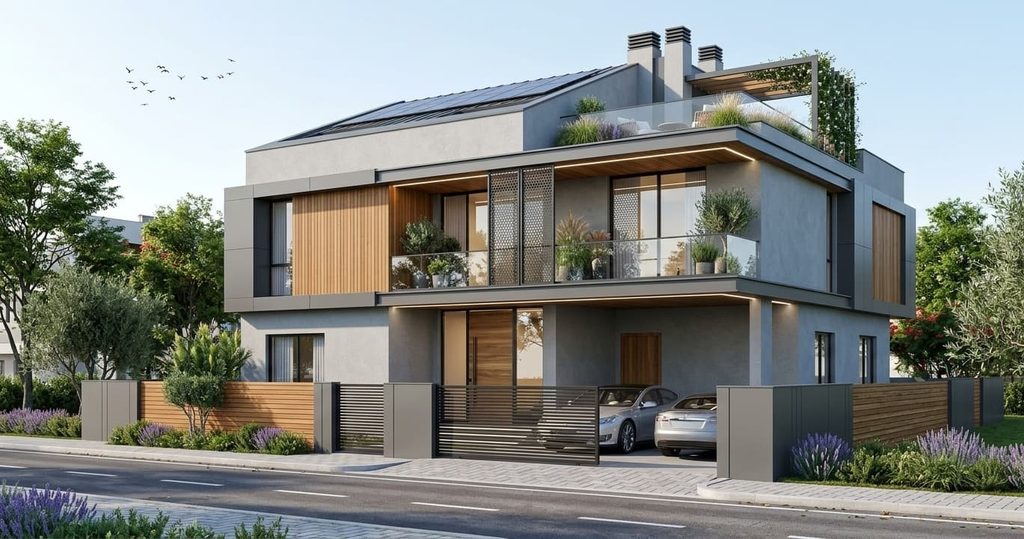
Modern buyers are also placing a heavy emphasis on sustainability. Features such as rainwater harvesting, solar power integration, and waste management systems are no longer luxury additions: they are necessary components of a future-proof home. Energy-efficient buildings reduce monthly utility bills, making them more attractive to both tenants and future buyers. Furthermore, as environmental regulations tighten, buildings that already meet high green standards will avoid the expensive retrofitting costs that older structures will eventually face. Smart home technology also plays a role in value retention. When integrating advanced automation, it is vital to follow strict user data protection guidelines to ensure that the convenience of a connected home does not compromise the security or privacy of its occupants.
Does smart technology increase the long-term resale value of a home?
Smart technology increases value by improving operational efficiency and security, which are two major concerns for modern homeowners. Automated lighting, climate control, and security systems make a property more marketable. However, the true long-term value lies in the infrastructure of the home: the wiring and the compatibility of the systems with future upgrades. A home that is designed to adapt to new technological standards will maintain a higher price point than one with obsolete, hard-wired gadgets. Additionally, smart water management and energy monitoring help in reducing the overall carbon footprint, aligning the property with the increasing global demand for eco-friendly living solutions.
Legal Transparency and Developer Credibility
A property is only as valuable as the clarity of its title. In the residential real estate market, legal disputes can freeze the value of an asset for years, making it impossible to sell or leverage. Ensuring that a project is fully compliant with local regulations, such as RERA in India, is a fundamental step in risk mitigation. This includes verifying land titles, building plan approvals, and environmental clearances. A clean legal history ensures that the property can be easily financed by banks, which is a major factor in liquidity. If a buyer cannot get a mortgage for a property due to legal inconsistencies, the pool of potential future buyers shrinks dramatically, dragging down the price.
Developer reputation acts as an informal guarantee of value. Established developers often provide better post-possession services and maintain the common areas of a project more effectively. This ongoing management is what prevents a premium project from turning into a dilapidated building over two decades. Prospective buyers should always review our real estate transaction terms to understand the standard legal protections and obligations involved in high-stakes property acquisitions. Transparency in documentation and adherence to promised timelines are indicators of a developer’s commitment to the long-term success of their projects, which directly translates to the appreciation of the individual units within those developments.
The Value of Gated Communities and Asset Management
The trend toward gated communities has accelerated because they offer a controlled environment that maintains its standards better than independent houses on public streets. Within these communities, the management of amenities such as swimming pools, clubhouses, and gymnasiums is funded by collective maintenance fees. This ensures that the lifestyle promised at the time of purchase is preserved over time. A well-managed community creates a sense of belonging and security, which are significant emotional drivers for property value. The presence of professional security personnel and perimeter surveillance adds a layer of safety that is highly valued in urban settings.
Exceptional examples of this can be seen in specialized developments. For instance, the Ayodhya Enclave luxury villa project demonstrates how meticulously planned landscaping and dedicated community spaces can create a unique micro-market where prices remain resilient regardless of broader city-wide trends. When a project offers a specific lifestyle, such as a golf-themed estate or a wellness-centric community, it attracts a specific demographic that is often less sensitive to price and more focused on the unique value proposition. This niche positioning is a powerful tool for long-term wealth preservation in real estate.
Why is the maintenance of common areas vital for resale value?
The first impression a property makes on a potential buyer is usually formed by the state of the common areas. If the lobby is well-maintained, the elevators are functional, and the gardens are manicured, the buyer perceives the entire building as being of high quality. Conversely, even a beautiful apartment will struggle to sell at a premium price if the building’s exterior is crumbling or the common corridors are poorly lit. Effective asset management by a Resident Welfare Association or a professional facility management company ensures that the physical asset does not enter a cycle of neglect. This proactive upkeep is a significant contributor to the compound annual growth rate of the property’s price.
Understanding Market Cycles and Economic Drivers
Real estate value does not move in a straight line. It is influenced by macro-economic factors such as interest rates, inflation, and GDP growth. In a low-interest-rate environment, the cost of borrowing decreases, leading to higher demand and rising prices. Conversely, when inflation is high, real estate often serves as a hedge, as property prices and rents typically rise alongside the general cost of living. Successful investors look past short-term market noise and focus on the underlying economic strength of the region. Is the city attracting new industries? Is there a net migration of talent into the area? These are the real questions that determine long-term demand.
Staying informed about these shifts is necessary for any property owner. Regularly checking the latest property market updates can provide insights into emerging trends, such as the rise of co-living spaces or the impact of remote work on suburban property demand. The ability to distinguish between a temporary price bubble and a genuine increase in value based on economic fundamentals is what separates successful investors from the rest. Wealth in real estate is rarely made overnight: it is the result of holding high-quality assets through multiple market cycles, allowing the compounding effect of appreciation and rental income to work over decades.
The Role of Demographics and Evolving Buyer Preferences
The demographic profile of a city significantly impacts the types of properties that will appreciate in value. A city with a young, professional population will see high demand for compact, tech-enabled apartments near employment hubs. On the other hand, a region with an aging population may see a rise in demand for senior living communities with integrated healthcare facilities. Understanding these shifts allows investors to align their portfolios with the future needs of the market. The rise of the millennial homebuyer has brought about a shift in focus toward experiential living, where the quality of the surrounding neighborhood and the community’s social fabric are just as important as the square footage of the home.
Walkability is another factor gaining traction. As urban congestion worsens, neighborhoods that allow residents to perform their daily errands on foot are seeing a surge in value. This trend is linked to a broader global move toward healthier lifestyles and reduced carbon footprints. Properties that offer pedestrian-friendly paths, proximity to public transit, and a mix of residential and retail spaces are positioned to become the most sought-after assets in the coming years. This shift represents a return to traditional urban forms, where the street was a place of social interaction rather than just a conduit for vehicles.
A Strategic Approach to Real Estate Value
In summary, long-term value in residential real estate is a product of deliberate choices and environmental factors. While the initial purchase price is important, it is the secondary factors: infrastructure growth, construction quality, legal safety, and community management: that determine the ultimate return on investment. Real estate should be viewed as a long-term asset class that requires patience and due diligence. By focusing on areas with strong economic fundamentals and selecting properties that meet high standards of design and sustainability, investors can build a portfolio that not only grows in financial value but also provides a high quality of life for its residents.
The integration of technology and the focus on environmental responsibility will continue to reshape the market. Those who adapt to these changes by choosing forward-thinking developments will find themselves well-positioned for the future. Heritage Prime remains a silent observer of these trends, noting that the most successful property owners are those who treat their real estate not just as a shelter, but as a dynamic asset that requires constant awareness of the changing urban landscape. The path to real estate wealth is paved with data, research, and a clear understanding of what makes a place truly livable for the long haul.
Frequently Asked Questions
1. How much does a developer’s past performance affect the resale value of a project?
A developer’s reputation is a major factor in resale value. Buyers often pay a premium for projects completed by developers known for high construction quality and timely delivery. This is because past performance is a reliable indicator of how well the building will age and how the developer will handle structural or legal issues after possession. Projects by reputable firms generally have better maintenance and a more organized Resident Welfare Association, both of which support higher price points in the secondary market.
2. Is it better to invest in an emerging area or an established neighborhood for long-term value?
Both have advantages depending on your risk appetite. Established neighborhoods offer stability and immediate rental income but may have a lower ceiling for capital appreciation because prices are already high. Emerging areas offer the potential for much higher percentage gains as infrastructure develops, but they carry the risk of project delays or slower-than-expected growth. For long-term value, the best approach is often an emerging area that has already seen the commencement of major public infrastructure projects.
3. What role does air quality and noise pollution play in property appreciation?
Environmental factors are becoming critical drivers of real estate value. As urban areas become more congested, properties in quieter, greener zones with better air quality are commanding higher premiums. This is no longer just a lifestyle choice but a health-driven decision for many buyers. Long-term value will increasingly migrate toward developments that incorporate large green belts, noise-canceling architectural features, and locations away from heavy industrial or high-traffic zones.
4. How do changes in local zoning laws impact my residential property value?
Zoning laws can significantly increase or decrease property value. If an area is rezoned from purely residential to mixed-use, your property value might increase due to commercial potential, though this might decrease the quality of life due to increased noise and traffic. Conversely, if a nearby area is zoned for a major public utility or a park, your property value could see a significant boost. It is vital to monitor municipal master plans to stay ahead of these regulatory changes.