
Quick Summary
This article provides a deep, expert analysis contrasting duplex villas and independent villas. While both offer upscale residential living, they diverge significantly regarding land ownership titles, structural dependencies, customizability, and capital requirements. A duplex villa features a double-storey layout built on a single plot with shared structural walls or common areas, while an independent villa represents an entirely detached structure constructed on an exclusive plot of land, offering absolute sovereignty over the physical building and surrounding yard.
Architectural Distinctions in Modern Housing
The search for upscale housing in urban centers frequently leads buyers to choose between different configurations of low-rise structures. Understanding the architectural differences between property classifications is necessary to align your property investment with long-term lifestyle requirements. In modern residential design, terms are sometimes used interchangeably by marketing agencies, which can create confusion for prospective homeowners trying to evaluate different property listings. Clear structural definitions are required to understand what you are buying, both in terms of physical brick and mortar and the legal land rights associated with the property.
A primary point of differentiation in residential architecture is how structural load is distributed and how property boundaries are drawn. Some configurations rely on shared walls and shared utility structures, while others represent standalone structural entities. These differences affect everything from daily living conditions, such as noise transmission, to long-term property decisions, such as rebuilding, expanding, or renovating the external facade. Analyzing these differences systematically helps buyers avoid purchasing properties that do not match their expectations for privacy, spatial control, or maintenance responsibilities.
Why Modern Homebuyers Seek Specialized Layouts
Changing lifestyle preferences have reshaped the residential real estate market, with buyers prioritizing spacious layouts that support multi-generational living and remote work. Standard apartments often fail to deliver the desired level of privacy, outdoor access, and design flexibility. Consequently, buyers are turning to duplex configurations and standalone villas. These formats offer distinct benefits, but they serve different buyers based on budget, location preferences, and the desired level of involvement in property maintenance.
Understanding the Duplex Villa Concept
A duplex villa is a residential unit spread across two consecutive floors, connected by an internal staircase or lift. Architecturally, it is designed as a single dwelling unit for one family, though it may feature multiple living zones. In some contexts, a duplex can also refer to a building containing two separate living units, either side-by-side or stacked on top of each other, often sharing a common wall, floor, or ceiling. The defining feature of a duplex remains its dual-level configuration under a single roof structure, functioning as a cohesive unit.
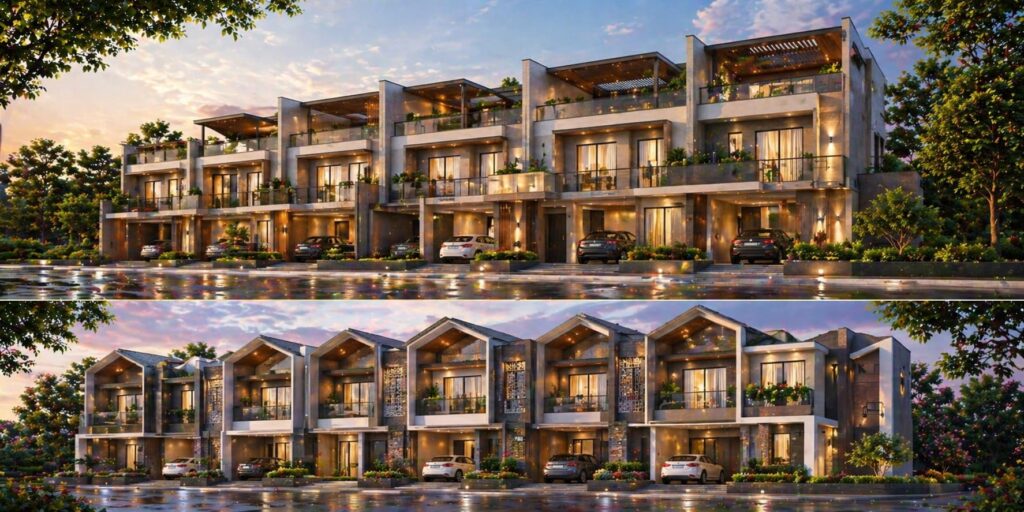
In most residential developments, duplex villas are constructed as part of a row of houses or a larger housing society. This setup means they share common partition walls with neighboring units. The structure is designed to maximize vertical space on a smaller plot footprint, making it a space-efficient option in high-density urban areas. The internal layout usually places the active social areas, such as the kitchen, living room, and guest quarters, on the lower floor, while reserving the upper level for private bedrooms and family lounges. This division of space offers a clear boundary between social areas and private family quarters.
Spatial Distribution and Staircase Configurations
The central staircase is a defining feature of a duplex villa, serving as both a functional connector and an architectural focal point. Designers often place these staircases in the central foyer or living room, using materials like premium hardwood, tempered glass, or wrought iron. Depending on the available floor area, the staircase can be configured as a straight run, a L-shaped return, or a spiral structure. A well-designed internal staircase ensures smooth movement between the active ground floor and the quiet upper floor, helping to create a cohesive living experience across both levels.
Common Misconceptions Around Double Storey Units
A common misconception is that any two-storey house is a duplex. In structural engineering and municipal planning, a true duplex must function as a single unit with a shared internal connection, or be legally designated as a two-family dwelling with shared structural elements. If a two-storey building has separate external entrances for each floor, with no internal physical connection, it is classified as two independent apartments built on top of each other, rather than a duplex villa. Understanding this difference is vital when assessing utility systems, municipal tax structures, and rental potential.
Defining the Independent Villa
An independent villa is a completely detached, standalone residential structure built on an exclusive plot of land. It does not share any common walls, foundations, roofs, or structural elements with neighboring properties. The owner of an independent villa holds the title to both the physical building and the underlying land parcel, subject to municipal building guidelines. This format offers high levels of privacy, architectural freedom, and long-term land value appreciation.
Unlike duplex units built within dense residential projects, independent villas are surrounded by their own private open space. This land can be used for gardens, private driveways, swimming pools, or personal courtyards. The structural design can be customized to match the owner’s aesthetic and functional preferences, including exterior finishes, window placement, roof styles, and overall height, provided these designs comply with local building regulations. Independent villas represent a premium segment of the housing market, attracting buyers who prioritize complete control over their living environment.
Absolute Ownership of Land and Structure
The defining financial and legal aspect of an independent villa is the outright ownership of the underlying land plot. In shared residential buildings, land ownership is distributed among all owners as an Undivided Share of Land. With an independent villa, the owner holds exclusive title deeds to the entire plot boundary. This exclusive ownership makes the property highly secure in terms of asset value, as land tends to appreciate in value over time, while physical structures depreciate. The landowner has the authority to demolish, rebuild, or expand the structure within the limits of local building codes.
Boundary Control and Structural Detachment
Structural detachment means there is no transmission of noise, vibration, or dampness from neighboring buildings. In row houses or duplex setups, a shared wall can lead to issues with noise transmission or shared utility leaks. An independent villa operates on its own self-contained structural foundation, with dedicated utility connections and independent drainage channels. This physical separation prevents common neighbor disputes regarding structural repairs, shared walls, and drainage blockages, providing a peaceful living experience.
Direct Comparison of Structural and Design Parameters
To understand the differences between these housing formats, it is helpful to analyze their structural, financial, and spatial characteristics. The following table provides a detailed comparison of the key parameters that define duplex villas and independent villas.
| Parameter | Duplex Villa | Independent Villa |
|---|---|---|
| Structural Autonomy | Shared foundation or common partition walls. | Fully detached with independent foundations. |
| Land Ownership | Shared land title or Undivided Share of Land. | Exclusive, sole title deed for the entire plot. |
| Customizability | Limited to interiors; external facade is fixed. | High; full control over exterior and interior designs. |
| Privacy Levels | Moderate; common walls may transmit minor sounds. | High; complete physical separation from neighbors. |
| Construction Cost | Lower; shared structural elements reduce costs. | Higher; requires private foundation and boundary walls. |
| Open Spaces | Usually shared community gardens or balconies. | Private lawns, courtyards, and dedicated driveway. |
| Maintenance Setup | Managed by home association or developer. | Managed entirely by the individual owner. |
Plumbing, Load Bearing, and Utility Distribution
From a structural engineering perspective, the infrastructure of a duplex villa is designed as a single, integrated network. Plumbing lines, vertical drainage pipes, electrical conduits, and load-bearing columns are shared between the two floors and, in some cases, with the adjacent property. A problem in one part of the system, like a pipe leak on the upper floor, can directly affect the lower floor or the adjoining house. Independent villas, in contrast, use dedicated utility entries, private septic systems, separate water storage, and independent electrical meters, making utility management simpler and reducing the risk of shared damage.
Financial Implications: Cost, Maintenance, and Resale Value
Buying premium residential real estate requires a clear understanding of both initial costs and ongoing expenses. Duplex villas generally offer a lower entry cost, as builders can construct multiple units on a single large parcel of land, sharing excavation, foundation, and structural costs. This shared development model makes duplexes an attractive option for middle and upper-middle-income buyers who want a multi-level home without paying the premium prices associated with buying a private land plot.
An independent villa, by contrast, is a more capital-intensive purchase. The buyer must pay for the entire land plot, which can represent a significant portion of the total property value in prime metropolitan areas. Additionally, building a standalone structure with private foundation work, boundary walls, and customized utility connections increases construction costs per square foot. However, the long-term investment dynamics often favor the independent villa, as sole ownership of the land can lead to higher capital appreciation over time.
Capital Expenditure and Investment Yields
Analyzing historical property valuation trends shows that land values tend to drive long-term real estate returns. While physical buildings lose value over time due to wear and tear, land parcels in growing urban corridors typically appreciate. Gated communities, such as the Ayodhya Enclave luxury villa project, combine the benefits of private land ownership with structured infrastructure, helping to support strong long-term property values. This setup appeals to buyers who want the security of land ownership along with the convenience of shared estate management.
Maintenance Costs and Structural Upkeep
Ongoing maintenance responsibilities differ significantly between these two property types. In a duplex villa situated within a managed community, exterior painting, roof repairs, common lighting, landscaping, and security are handled by the resident welfare association or a professional management firm. This shared model distributes costs among all residents, making upkeep convenient and predictable. For an independent villa, the homeowner is solely responsible for all maintenance, including roof waterproofing, structural repairs, exterior painting, landscaping, and private security systems. While this offers complete control over scheduling and material quality, it can result in higher, less predictable maintenance costs.
Legal Frameworks, Zoning Laws, and Compliance
Before finalizing a real estate transaction, buyers must carefully examine the property’s legal structure, zoning designations, and ownership titles. Navigating local land registry records and building regulations is essential to ensure the transaction is secure. Reviewing the legal terms and service conditions of the transaction helps verify that the seller has clear title deeds and that the property has received all necessary municipal approvals, protecting your investment from potential title disputes.
Zoning laws dictate how land can be developed, including maximum height limits, boundary setbacks, and building footprints. In some areas, municipal codes restrict the construction of detached independent structures but allow semi-detached or row housing formats like duplexes. Understanding these zoning differences helps buyers evaluate what can be built on the plot and avoid future issues with local building authorities.
Floor Area Ratio (FAR) and Ground Coverage
Floor Area Ratio (FAR) is a key metric used by municipal planning departments to control building density. It determines the total indoor floor space that can be built relative to the size of the plot. Independent villas must comply with strict FAR and ground coverage limits, which require a portion of the plot to remain unbuilt as open space or yard area. In duplex developments, developers often pool the FAR of a larger land parcel, allowing for more efficient use of space across multiple units while maintaining compliance with local zoning rules.
Independent Titles vs Shared Undivided Share of Land
The legal title structure of a property affects its future saleability and its suitability for mortgage financing. An independent villa comes with an independent title deed for both the land and the building, giving the owner sole control over the asset. In a duplex villa project, the owner typically receives an undivided share of the total land plot, along with ownership of the physical unit. While this arrangement is fully recognized for bank financing, it does limit the owner’s ability to rebuild or modify the structure without the consent of the co-owners or the housing association.
Choosing Your Ideal Home: Key Selection Criteria
The choice between a duplex villa and an independent villa ultimately depends on your budget, lifestyle preferences, and long-term financial plans. For buyers who want spacious living and high privacy within a managed community environment, luxury independent villas in Noida offer an appealing option, combining private land ownership with upscale community amenities. These properties cater to families seeking a balance of private space, security, and structured neighborhood management.
To stay informed about changing property regulations, local price trends, and emerging infrastructure corridors, buyers should monitor reliable industry sources. Consulting the NCR real estate blog and market insights can help you track demand trends and make informed investment decisions based on current market data. Here are the primary factors to consider when choosing between a duplex and an independent villa:
- Budget and Financial Goals: Determine if your budget can cover the higher land and construction costs of an independent villa, or if a duplex fits your financial plans better.
- Privacy and Separation: Consider how important complete structural detachment and private outdoor spaces are to your family.
- Maintenance Support: Decide if you prefer a shared maintenance setup managed by an association, or if you are willing to manage all home repairs and security independently.
- Customization Needs: Evaluate whether you want the freedom to alter the home’s external architecture and expand the structure in the future.
Privacy Requirements versus Community Infrastructure
Your daily lifestyle can help guide your choice between these formats. Duplex villas are often part of larger, master-planned developments, giving residents easy access to shared amenities like clubhouses, swimming pools, gymnasiums, and children’s play areas. This communal setup is popular with young families and retirees who enjoy social connection and shared recreational spaces. Independent villas appeal to buyers who prioritize privacy, quiet surroundings, and dedicated, non-communal spaces like private home offices, personal home theaters, or private swimming pools.
Freedom of Architectural Expression
For some homeowners, the ability to customize their living space is a top priority. Independent villas offer high levels of design flexibility, allowing you to choose your own architectural styles, color schemes, interior layouts, and garden designs. In a duplex villa development, the external facade and color scheme must typically remain uniform to preserve the community’s overall design aesthetic. This restriction means modifications are limited to the interior spaces, which may not suit buyers who want to express their personal style through the home’s exterior design.
Frequently Asked Questions
Is a duplex villa cheaper than an independent villa?
Yes, a duplex villa is generally more affordable than an independent villa. This cost difference is because duplexes are built on shared land parcels and share structural walls, foundations, and utility systems, which reduces overall construction costs per unit. Independent villas require the purchase of an entire private plot and a completely separate foundation, which increases both land acquisition and construction costs.
Can a duplex villa be converted into two separate flats?
Conversion depends on the structural design and local building regulations. A duplex designed as a single family home with shared plumbing and electrical networks is difficult and expensive to convert. Additionally, municipal zoning laws and housing society rules often prohibit splitting a single-family duplex into two separate rental units with independent utility connections.
Do independent villas have higher maintenance costs?
Generally, yes. The owner of an independent villa is solely responsible for all maintenance costs, including structural upkeep, exterior painting, waterproofing, gardening, and private security systems. In a duplex villa development, many of these maintenance costs are shared among community residents, which makes ongoing upkeep more predictable and cost-effective.
How does resale value differ between these two properties?
Both formats can hold their value well, but independent villas often enjoy higher long-term capital appreciation because the buyer owns the entire underlying land plot. Since land values drive long-term real estate returns, sole land ownership can make independent villas a more resilient financial asset. Duplex villas offer good liquidity in the resale market because of their lower price point, which attracts a larger pool of potential buyers.