
Quick Summary
Buying a first home in Greater Noida requires a clear understanding of its planned layout, micro-market pricing, and legal safeguards. This guide details key residential sectors, compares modern apartments with independent villas, outlines the critical role of UP RERA, and highlights how mega infrastructure projects like the Noida International Airport are shaping property values. Designed as an objective, step-by-step roadmap, this resource helps new buyers navigate financial planning, identify hidden costs, and select communities that match their personal lifestyle and long-term investment goals.
Introduction to Greater Noida’s Real Estate Landscape
Why is Greater Noida attracting first-time home buyers?
Greater Noida has grown into one of the most organized urban zones in Northern India. Originally conceived to ease the population density of Delhi, the city was built using modern town planning principles. This organized approach translates to wide roads, large sector layouts, and dedicated green belts that run parallel to residential neighborhoods. First-time buyers are drawn to the region because it offers high-quality housing at prices that remain competitive compared to neighboring Delhi and central Noida, allowing middle-income families to acquire larger spaces without exceeding their financial boundaries.
The post-pandemic shift in consumer preferences has also fueled interest in this region. Home buyers today prioritize larger, well-ventilated spaces, dedicated home offices, and healthy environments. Greater Noida fulfills these expectations with its vast open spaces, low population density per sector, and modern infrastructure systems, including underground cabling and advanced drainage networks. It represents a practical choice for buyers who want a balanced lifestyle that combines urban convenience with quiet, suburban living.
How does the master plan of Greater Noida compare to other parts of National Capital Region?
The Master Plan developed by the Greater Noida Industrial Development Authority (GNIDA) differs significantly from the organic growth seen in older cities. The entire region is divided into specific zones: residential, industrial, commercial, and institutional. This systematic division prevents industrial activity or heavy commercial traffic from spilling into residential sectors. Neighborhoods remain quiet and pollution-free, a stark contrast to many chaotic areas of the National Capital Region.
Furthermore, GNIDA has integrated green spaces directly into the city design. Large-scale parks, such as the prominent City Park in Alpha sector, act as green lungs for the community. The roads are designed with broad configurations, ranging from 24 meters to 130 meters in width, which reduces traffic congestion even during peak hours. This forward-looking urban design ensures that the utility infrastructure, water supply, and waste management systems can accommodate future population growth without strain, making it a reliable destination for long-term home ownership.
Mapping the Key Residential Micro-Markets
What are the primary sectors for residential real estate in Greater Noida?
The city is split into several distinct residential zones, each offering unique lifestyle benefits. Greater Noida West, previously known as Noida Extension, is a major center for affordable and mid-segment housing. It features high-density high-rise projects with extensive shared amenities. Because of its direct connectivity to central Noida and Ghaziabad, this zone is highly favored by young professionals and families seeking modern, budgeted housing options.
In contrast, central Greater Noida, which includes historical sectors such as Alpha, Beta, Gamma, Delta, and Chi, offers a more mature residential environment. These areas feature lower-density housing, independent homes, and low-rise apartments. The surrounding streets are lined with mature trees, and local markets are fully established, providing immediate access to daily requirements. Sectors along the Noida-Greater Noida Expressway, such as Sector 150 and the Chi sectors, are increasingly popular for upscale residential developments due to their open views and rapid connectivity to commercial office hubs.
Where can buyers find the best balance of affordability and future appreciation?
For buyers focused on long-term value, balancing entry costs with future appreciation potential is a key strategy. Emerging sectors situated along the Yamuna Expressway and the peripheral areas of Greater Noida West present excellent entry-level prices. These areas are currently undergoing major infrastructural development, which historically indicates a high potential for capital appreciation over the next five to ten years.
Reviewing the latest real estate projects in Delhi NCR helps buyers compare sector-wise price trends and identify upcoming developments that align with regional master plans. Investing in projects located in growth corridors ensures that as municipal services, commercial complexes, and retail centers expand, the underlying property value increases steadily. This makes these emerging sectors highly suitable for first-time buyers who are willing to hold their investment for a few years to maximize their financial returns.
Comparing Property Types: Apartments, Plots, and Villas
Should first-time buyers choose high-rise apartments or independent villas?
The choice between high-rise apartments and independent properties involves balancing daily convenience, space, and budget. High-rise apartments are popular because they offer a move-in ready lifestyle with immediate access to shared services like swimming pools, gymnasiums, round-the-clock security, and dedicated maintenance teams. These complexes foster community living, which is highly appreciated by young families and working professionals who prefer a hands-off approach to property maintenance.
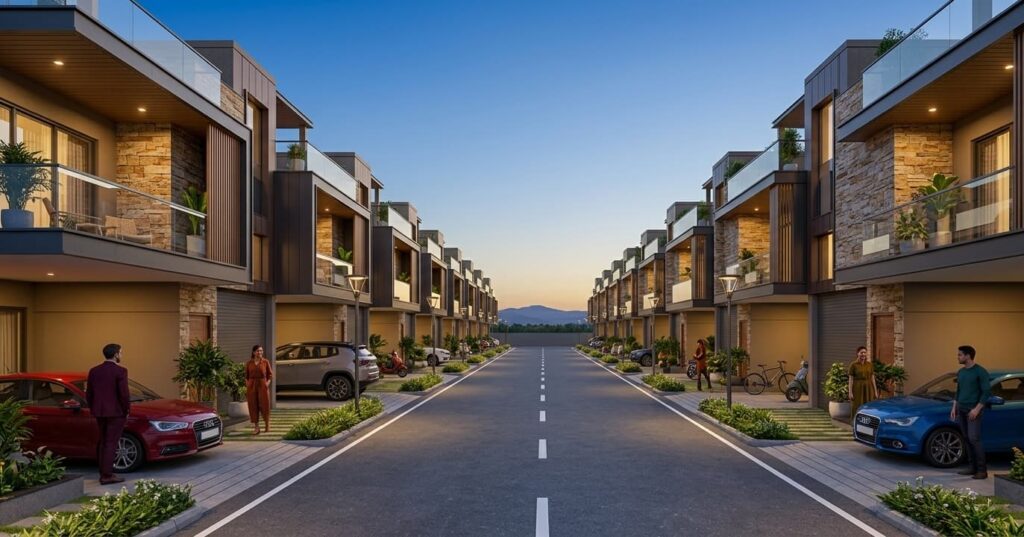
Conversely, independent properties provide long-term flexibility, private green spaces, and land ownership. The Shyam Kunj Villas luxury township represents an excellent model of independent homes with modern amenities, combining the freedom of a private house with the security and maintenance services of a gated community. For buyers looking at premium options in adjacent areas, researching luxury independent villas in Noida can provide valuable reference points on architectural design, layout optimization, and the lifestyle benefits associated with high-end independent living.
Comparative Matrix of Residential Options in Greater Noida
To help first-time buyers choose the correct property type, this table compares key characteristics across apartments, plots, and independent villas:
| Feature / Metric | High-Rise Apartments | Residential Plots | Independent Villas |
|---|---|---|---|
| Entry Price Point | Moderate to High | Low to Moderate | High |
| Maintenance Effort | Low (Managed by Facility Team) | Very Low (Self-managed land) | Medium to High (Self or Society managed) |
| Privacy & Autonomy | Shared walls, limited customization | Absolute freedom to construct | High privacy with private yards |
| Amenities Access | Shared club, gym, and pool included | Dependent on township developers | Private or premium shared amenities |
| Resale Liquidity | High due to broad consumer demand | Moderate (Slower transaction times) | Moderate (Niche buyer market) |
Legal and Financial Frameworks for Buyers
What is the role of UP RERA in safeguarding property buyers?
The introduction of the Uttar Pradesh Real Estate Regulatory Authority (UP RERA) has brought significant accountability and transparency to the regional property market. Previously, buyers faced challenges such as project delays, unilateral changes in layout designs, and diverted funds. Today, UP RERA makes it mandatory for developers to register every residential project before marketing or selling units. This registration requires developers to disclose project layouts, completion timelines, and legal approvals on the public portal.
For first-time buyers, UP RERA serves as a primary tool for due diligence. Before transferring any booking amount, buyers should verify the project’s RERA registration number online. This portal provides details regarding land ownership, litigation history, and quarterly construction progress. Furthermore, RERA mandates that developers deposit 70 percent of project collections into a dedicated escrow account used only for construction, ensuring that projects are completed on schedule and protecting buyers’ hard-earned capital.
How should first-time buyers structure their financing and home loan eligibility?
Structuring finances is a vital step in the property buying process. Buyers should evaluate their debt-to-income ratio to ensure that monthly home loan installments do not exceed 40 percent of their net monthly take-home income. Gathering a substantial down payment, ideally 20 percent of the property cost, reduces the overall loan burden and helps secure better interest rates from leading financial institutions.
Additionally, choosing projects that are pre-approved by major public and private banks simplifies the verification process. Banks conduct deep legal and technical assessments of projects before approving them for home loans. Working with a reputable real estate developer in NCR who has a clear track record of transparent documentation ensures a smooth loan approval process. It minimizes legal risks and speeds up the transition from booking a property to receiving home ownership papers.
Infrastructure and Future Growth Catalysts
How does the Noida International Airport impact real estate values?
The construction of the Noida International Airport at Jewar is a major driver of real estate growth in Greater Noida. This mega-infrastructure project is transforming the entire region into a key commercial and logistics hub. The upcoming airport is attracting global corporations, manufacturing units, and service sectors to establish facilities along the Yamuna Expressway, creating significant local employment opportunities.
This surge in employment is driving demand for high-quality residential properties in nearby sectors. As more professionals move to the area, rental yields and property prices are projected to rise steadily. For first-time buyers, acquiring a home in Greater Noida now offers the advantage of buying before the airport becomes fully operational, allowing them to benefit from capital appreciation as the region’s economic importance increases.
What connectivity upgrades are transforming daily commutes?
Daily commuting in Greater Noida has been significantly improved by strategic road and transit projects. The Noida-Greater Noida Expressway links the city directly with central Noida and Delhi, handling large volumes of traffic smoothly. Additionally, the operational Aqua Line of the metro system links key residential sectors of Greater Noida to the wider Delhi Metro network, offering a reliable, eco-friendly transit option for daily commuters.
Future expansion plans for the Aqua Line include connecting Greater Noida West with Noida Sector 51, which will further improve accessibility. Major road initiatives, such as the Faridabad-Noida-Ghaziabad (FNG) Expressway and the widening of internal sector roads, ensure smooth inter-city travel. This highly developed connectivity reduces travel times to business hubs and makes Greater Noida a highly practical choice for suburban home buyers.
Step-by-Step Buying Process in Greater Noida
What are the key stages of a real estate transaction?
Purchasing a home involves several distinct stages, starting with systematic research and budgeting. Buyers must define their requirements, such as size, proximity to schools, and preferred sector locations. Once potential projects are shortlisted, visiting the sites in person is highly recommended. This allows buyers to assess construction quality, evaluate the surrounding area, and measure travel times to workplace hubs and essential retail centers.
After selecting a property, the formal transaction begins with signing the booking agreement and paying the initial booking amount, which is typically 10 percent of the total cost. The developer then issues an allotment letter, which details the specific unit number, floor plan, and payment schedule. Next, the builder-buyer agreement is registered under RERA guidelines. This legal contract outlines the terms of sale, penalty clauses for delays, and payment milestones. Once construction is complete and the developer receives the occupancy certificate (OC), the buyer pays the final balance and proceeds with the registration and stamp duty payment to gain legal possession.
What hidden costs should buyers prepare for beyond the base price?
First-time buyers often focus solely on the Basic Sale Price (BSP) of a property, which can lead to unexpected budget challenges later on. A property transaction includes several additional charges that must be accounted for from the start. These include:
- Preferential Location Charges (PLC): Additional charges for units with park-facing views, corner locations, or those located on lower floors.
- External Development Charges (EDC): Municipal fees collected by developers on behalf of local authorities for regional infrastructure development.
- Power Backup and Meter Installation: Fixed costs for setting up electrical connections and dual-meter systems in high-rise societies.
- Clubhouse Membership Fees: One-time charges to access community facilities, sports courts, and recreational spaces.
- Interest-Free Maintenance Security (IFMS): A security deposit held in trust to cover long-term upkeep and maintenance of the common areas.
- Stamp Duty and Registration Fees: State taxes that usually range between 5 percent and 7 percent of the property value, plus administrative fees.
By factoring in these additional expenses during the budgeting phase, buyers can secure adequate financing and avoid sudden financial strain during the final stages of the purchase.
Demographics and Lifestyle Alignments
Which sectors offer the best educational and healthcare infrastructure?
Greater Noida’s social infrastructure is designed to support families at all stages of life. Knowledge Park is a major education hub, home to several top international schools, engineering colleges, and management institutes. Having these educational facilities nearby is highly convenient for families with school-aged children, saving travel time and providing excellent local educational opportunities.
Healthcare infrastructure is equally robust, with multiple multi-specialty hospitals operating across key sectors. Facilities such as Sharda Hospital and Yatharth Hospital offer advanced medical services, emergency care, and specialized treatments. Having these high-quality healthcare options nearby provides peace of mind to residents, particularly families with young children or elderly dependents, and enhances the overall livability of the city.
How is the retail and entertainment segment evolving in the region?
The retail and entertainment landscape in Greater Noida has grown rapidly, transforming the city into a self-sustaining urban center. Modern shopping malls, including Gaur City Mall and The Grand Venice Mall, offer a wide variety of national and international retail brands, multiplex cinemas, and diverse dining options. Additionally, local sector markets provide convenient, daily access to fresh produce, pharmacies, and essential household services.
For leisure and recreation, residents enjoy world-class sports facilities, including the Buddh International Circuit and the Greater Noida Sports Complex. The city’s master plan includes extensive green parks, well-maintained jogging tracks, and open-air community plazas. This focus on recreation and wellness ensures that residents have access to a rich social life and active outdoor spaces, making Greater Noida an appealing and complete residential destination.
Frequently Asked Questions (FAQs)
Is Greater Noida safe for families moving from other metropolitan areas?
Yes, Greater Noida is planned with a focus on safety. The city features wide, well-lit roads, dedicated police patrols, and a network of security cameras. Most modern residential communities are gated and offer round-the-clock professional security, visitor management systems, and restricted access points. The presence of reputable schools and active neighborhood associations further contributes to a safe, family-friendly environment.
What is the difference between leasehold and freehold properties in Greater Noida?
Most land in Greater Noida is allotted by the Greater Noida Industrial Development Authority (GNIDA) on a 90-year leasehold basis. Home owners pay an annual lease rent to the authority. While leasehold properties require periodic lease renewals, the process is highly standardized and legally secure. Freehold properties, which are less common, grant absolute ownership of both the building and the underlying land. Heritage Prime advises buyers to review lease documents and verify that all dues to GNIDA have been cleared before finalizing any property purchase.
How does the circle rate in Greater Noida affect my registration costs?
The circle rate is the minimum valuation at which a property can be registered with the local government. Stamp duty and registration fees are calculated based on either the circle rate or the actual market value of the property, whichever is higher. Circle rates vary by sector, road width, and property type. Understanding these rates helps buyers calculate the exact registration costs and prepare their budgets accurately.
How much time does it take to get a home loan approved for properties in this region?
The time required for a home loan approval typically ranges from 7 to 15 working days, provided all necessary documentation is in order. If the residential project is pre-approved by the lending bank, the technical and legal verification of the property is already complete, which significantly speeds up the process. First-time buyers can ensure quick approval by maintaining a healthy credit score, preparing their tax returns, and choosing developers with clear, undisputed land titles.