
Quick Summary
The Indian residential real estate market is undergoing a structural transition. Modern buyers are shifting focus from basic convenience to holistic lifestyle quality. This comprehensive analysis details the rising demand for larger homes, integrated smart automation, ecological architectural practices, and wellness-focused communities. We also look at how evolving demographics, financial perspectives, and infrastructure expansions are redefining what makes a property desirable in the primary urban hubs of India.
Evolution of the Indian Homebuyer: From Basic Shelter to Lifestyle Statement
For decades, the Indian residential real estate market operated under a traditional framework. Purchasing a house was viewed as a late-career milestone, typically completed near retirement. Properties were assessed predominantly on location convenience, square footage, and basic utility. However, a significant cultural and economic shift has occurred over the past decade, reshaping buyer demographics and purchasing motivations across major metropolitan areas.
According to market analytics reviewed by Heritage Prime, the average age of Indian homebuyers has dropped from mid-forties to early-thirties. This younger cohort consists of professionals from technology, finance, e-commerce, and specialized consultancy sectors. Armed with higher disposable incomes and global lifestyle exposure, these modern buyers view real estate not simply as a financial security net, but as an immediate expression of personal identity, health, and social standing.
What are the demographic shifts driving the Indian housing market?
The primary catalyst behind these changing preferences is the rise of double-income, nuclear households. Unlike earlier generations who preferred compact urban apartments near traditional business districts, current buyers seek multi-generational adaptability. They prioritize residences that can comfortably accommodate remote work, elderly parents, and child development, leading to a structural demand shift toward larger, highly customized spaces.
Why is homeownership prioritized earlier in life today?
The stability of owning physical property has become increasingly attractive to younger families who wish to avoid the volatility of rental markets. This shift is accompanied by a strong focus on asset accumulation during early productive years. Furthermore, favorable financial environments, structured banking products, and long-term asset security have combined to encourage early investments in premium residential units.
The Shift Towards High-End and Spacious Living
The demand for standard, compact urban apartments has experienced a notable decline, giving way to an era that prioritizes generous spatial configurations. The necessity for dedicated functional zones, such as home offices, private gyms, study spaces for children, and open outdoor decks, has transitioned from a premium option to a basic expectation. Consequently, developers are revising their architectural floor plans to meet these expansive lifestyle expectations.
How has the demand for larger configurations like 3BHK and 4BHK changed?
Data across major metropolitan cities shows a pronounced spike in sales for 3BHK and 4BHK apartments, alongside semi-detached structures. Homebuyers are actively avoiding cluttered, over-congested high-rises in favor of developments that feature lower density per acre. They show a clear preference for projects that offer wider corridors, higher ceilings, and multiple balconies, ensuring optimal ventilation and abundance of natural light.
Why are luxury villa projects witnessing unprecedented demand?
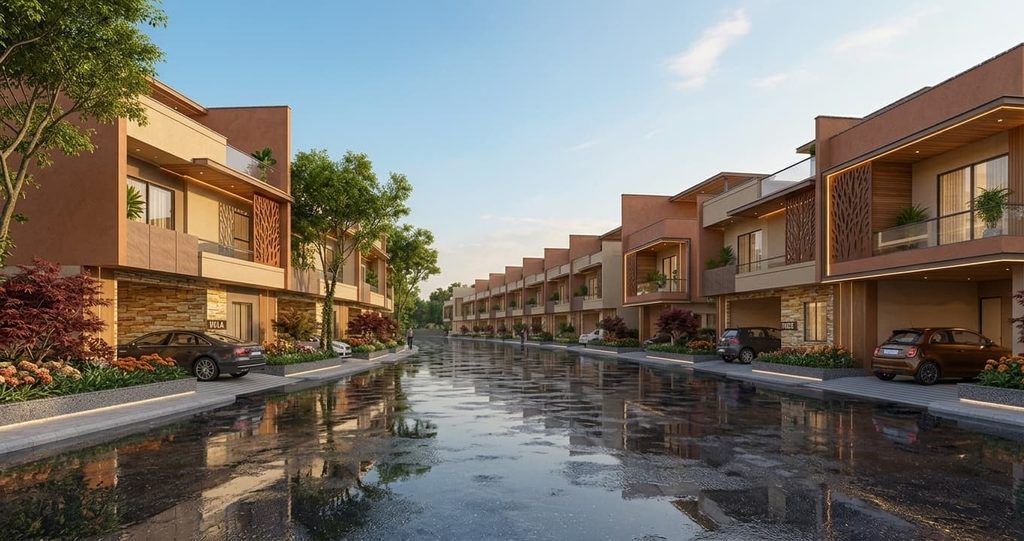
Buyers seeking absolute privacy coupled with premium amenities are choosing detached layouts. This has generated substantial interest in developments such as the Ayodhya Enclave luxury villa project, which blends individual property ownership with top-tier community facilities. Such properties satisfy the dual requirement of independent, private plots and secure, shared master-planned spaces, a design philosophy that is currently highly valued in the Delhi NCR landscape.
Emerging Micro-Markets and Regional Growth Corridors
Rapid infrastructure expansion, including metro corridors, high-speed expressways, and airport hubs, has decentralized the traditional boundaries of major Indian cities. Homebuyers are looking beyond congested central business districts to well-planned suburban micro-markets that offer a better quality of life and superior community facilities.
Which regions are emerging as the new residential hotspots in India?
In northern India, regions along the Yamuna Expressway, the Dwarka Expressway, and Noida Extension have emerged as major development zones. These micro-markets are characterized by wide roads, larger green covers, and systematic land allocations for civic infrastructure. Modern master-planned developments in these regions are highly attractive to individuals seeking premium options, such as ultra-luxury homes in Noida, which balance ease of commute with high-end security and wellness services.
How does infrastructure development influence buyer decisions?
Modern buyers evaluate location viability based on travel times rather than mere geographical distances. A property situated thirty kilometers from the central hub but connected via a high-speed transit network is often preferred over an urban-core flat suffering from severe traffic congestion. Infrastructure reliability in terms of continuous water supply, municipal waste management, and uninterrupted power grids forms a core part of the buyer checklist during modern site visits.
Technological Integration and Green Building Practices
The modern Indian home is no longer just a structural brick-and-mortar assembly; it is an intelligent, connected, and sustainable ecosystem. Advancements in IoT (Internet of Things) devices, home automation, and energy efficiency have shifted the definition of what constitutes a modern dwelling. This tech-first design is matching a parallel demand for ecological responsibility, with buyers recognizing the long-term cost benefits of sustainable housing.
What smart home automation features do modern buyers look for?
Seamless integration of automated daily schedules is a key requirement. Future-ready homes must feature centralized systems for ambient lighting, automated climate control, smart safety sensors, biometric door locks, and hands-free control mechanisms. Smart home setups are designed to deliver dual benefits: enhancing domestic comfort while minimizing overall electricity utilization through automated, occupancy-based power cycles.
How is sustainability shaping the future of residential design?
Environmental sustainability is no longer merely an academic concern but a highly practical investment parameter. Future developments are expected to feature advanced rainwater harvesting systems, on-site solar energy generation, organic waste converters, and graywater treatment facilities. Additionally, electric vehicle charging infrastructure has shifted from being a luxury option to an essential requirement for buyers investing in premium properties.
Amenities and Community Living Preferences
The definition of luxury has moved away from purely aesthetic details toward lifestyle convenience and personal health services. Homeowners want their residential complexes to act as fully integrated self-sustaining neighborhoods. This minimizes the need to step out for daily recreation, wellness, and basic personal needs.
What type of community amenities are non-negotiable for future buyers?
Modern buyers look for multi-level, multi-generational clubhouses equipped with high-speed working lounges, private meeting rooms, Olympic-sized swimming pools, pet parks, and dedicated zones for physical wellness. To review these evolving concepts, prospective buyers often track the upcoming premium housing developments across prime zones, which are incorporating micro-retail markets, outpatient medical facilities, and organic farming spots directly within their master-planned boundaries.
How has wellness-focused architecture gained ground?
The emphasis on personal well-being has driven interest in wellness-centric designs. Features such as reflexology pathways, zero-traffic zones on the ground level, multi-layered security gates, indoor sports arenas, and dedicated meditation pavillions are highly sought after. Air and water purification systems integrated at the community level have also emerged as highly valued premium features.
Comparison: Traditional vs. Future Homebuyer Preferences
To understand the significant shift in expectations, it is useful to evaluate key parameters that demonstrate how purchasing parameters have evolved over the last decade in the Indian real estate market.
| Parameter | Traditional Preferences (Pre-2015) | Future Preferences (Post-2025) |
|---|---|---|
| Average Buyer Age | 42 to 50 Years Old | 30 to 38 Years Old |
| Layout Focus | Maximum rooms in compact space (1BHK/2BHK) | Spacious, open plans (3BHK/4BHK/Villas) |
| Work-from-Home Needs | Not considered or deemed irrelevant | Dedicated studies and high-speed working zones |
| Technology Integration | Basic manual switches and wiring | Integrated IoT, smart locks, automation systems |
| Sustainability | Optional green patches | Solar micro-grids, EV charging ports, water-recycling |
| Location Preference | Congested central business districts | Suburban growth corridors with seamless connectivity |
Navigating the Purchasing Decisions in a Dynamic Market
Selecting a property in today’s sophisticated real estate climate requires a balance of current financial pragmatism and forward-looking lifestyle planning. With multiple emerging developer brands, micro-markets, and smart technologies competing for attention, buyers must look beyond marketing materials and focus on developer track records, structural quality, and real connectivity.
Evaluating financial structures, title deeds, regulatory clearances, and municipal integration plans ensures that a residential asset retains and increases its value over time. Partnering with seasoned industry professionals can streamline this complex evaluation process, ensuring a secure and informed path toward purchasing premium real estate assets. For personalized assistance and portfolio reviews, prospective buyers can contact seasoned property experts who are equipped with deep market intelligence across high-growth corridors.
Frequently Asked Questions
What is the most significant change in Indian homebuyer preferences post-pandemic?
The most significant change is the strong preference for spatial generosity and layout versatility. The traditional focus on small, low-maintenance urban flats has transitioned toward larger apartments and independent villas. This shift is driven by the rise of remote and hybrid work models, requiring dedicated work study zones, private outdoor areas, and multi-functional open spaces.
Are younger Indian buyers choosing suburban locations over urban centers?
Yes, younger Indian buyers are increasingly selecting master-planned suburban micro-markets. These developing corridors offer modern infrastructure, wider roads, lower congestion, cleaner air, and larger residential formats at more viable prices. Advanced transport links like high-speed expressways and metro systems make these suburban zones a practical choice for modern professionals.
How important is environmental sustainability for future property investments?
Environmental sustainability has become a core consideration for future property investments. Features such as solar energy integration, rainwater harvesting, efficient graywater treatment systems, and dedicated electric vehicle charging ports are highly valued. These ecological features not only reduce environmental impact but also lower monthly operational costs for homeowners.
What tech features are considered essential in modern Indian premium housing?
Essential tech features include integrated smart home automation systems that manage lighting, climate, security, and home entertainment. High-speed fiber connectivity, automated guest entry applications, and robust multi-tiered smart security systems with biometric access controls are now baseline expectations for modern premium residential projects.