
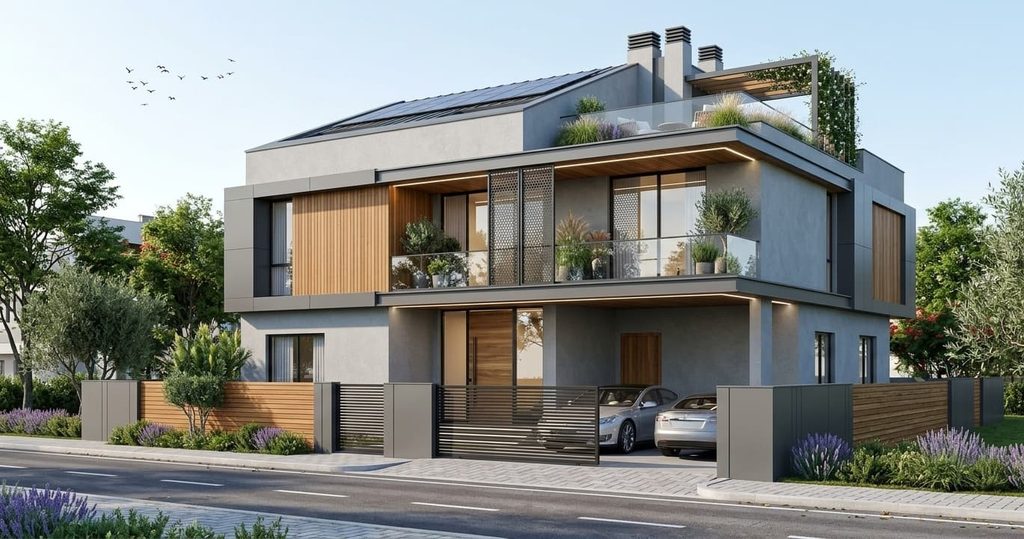
Quick Summary
Sustainable residential properties secure notable price premiums over conventional buildings due to reduced operational overheads, minimal utility requirements, and improved long-term structural durability. This detailed analysis outlines how recognized green certifications, advanced resources conservation systems, and eco-conscious engineering practices raise asset values, decrease maintenance liabilities, and attract motivated purchasers in today’s property market.
What Defines a Certified Green Home in Today’s Market?
The contemporary definition of a sustainable residence goes far beyond aesthetic landscaping or basic recycling facilities. A certified green home represents a carefully engineered structure designed to optimize resource utility, minimize ecological waste, and raise the standard of living for occupants throughout its functional lifecycle. These residential properties utilize energy, water, and construction materials with maximum efficiency, ensuring that the overall carbon footprint of the household is minimized.
To secure formal validation, builders must conform to strict architectural parameters established by international and regional monitoring bodies. Organizations like the Indian Green Building Council (IGBC), Green Rating for Integrated Habitat Assessment (GRIHA), and Leadership in Energy and Environmental Design (LEED) evaluate properties on rigorous performance criteria. These variables include architectural design, structural materials, insulation performance, water cycle efficiency, and indoor environmental wellness.
When selecting a home that aligns with these forward-looking values, partnering with a developer that holds a proven history of high-caliber construction is vital. Opting for a builder with a demonstrated legacy of trust in home construction ensures that the architectural standards, sustainable resources, and engineering processes utilized are authentic, verified, and constructed to endure for decades.
How Do Certification Levels Influence Market Perception?
Certified ratings act as an objective baseline of build quality for prospective home buyers. Homes containing Gold or Platinum ratings consistently attract a premium pool of interest. Buyers recognize that a certified structure is a guarantee of reduced electricity consumption, better indoor air quality, and superior resilience against weathering, protecting their initial capital outlay from early depreciation.
In addition, these certifications provide clear documentation of structural safety, environmental compatibility, and long-term operating efficiency. Properties holding such credentials avoid the typical structural risks associated with older, uncertified construction methods. Consequently, these homes retain their value far better than buildings constructed without energy-efficient planning.
How Do Sustainable Features Directly Impact Property Appraisal?
The connection between eco-conscious architecture and asset valuation has become highly direct. Historically, sustainable upgrades were viewed as personal, non-recoverable modifications. Today, modern real estate appraisal guidelines explicitly evaluate resource efficiency, utility savings, and structural longevity when computing the fair market value of a property.
Valuers rely on advanced calculation techniques to assess the financial benefits of eco-friendly systems. One primary method is the cost-capitalization technique, which converts predictable monthly utility savings into permanent asset valuation. If a solar panel array and high-efficiency insulation reduce a home’s electricity expenditures by a reliable margin, that saved capital is capitalized, reflecting a direct increase in the overall property valuation.
Furthermore, demand-driven premiums significantly shape overall pricing. Buyers are willing to pay upfront premiums for homes that promise minimal future overheads. Because of this shifting preference, many upcoming premium housing developments are planning and integrating resource-efficient features from the initial design phase, ensuring that the built assets command premium rates and sell quickly.
| Performance Metric | Traditional Residential Property | Certified Green Property |
|---|---|---|
| Monthly Utility Expenses | Standard Market Pricing | 30% to 50% Lower Costs |
| Climate Control Dependence | High reliance on active HVAC systems | Passive cooling and thermal insulation |
| Resale Premium | Standard baseline appreciation | 5% to 15% higher resale premium |
| Depreciation Cycle | Standard wear-and-tear pattern | Slower degradation due to durable materials |
Do Eco-Conscious Properties Experience Shorter Market Times?
Studies reveal that green-certified properties sell significantly faster than conventional houses. Home buyers view green homes as low-risk assets because their monthly upkeep costs are highly predictable. The promise of insulating oneself from rising electricity and water tariffs makes these residences highly attractive to middle and upper-tier property buyers alike.
This increased speed of transaction reduces holding costs for sellers. When a home spends less time listed on the market, the seller avoids prolonged mortgage interest payments, advertising expenses, and continuous upkeep charges, which indirectly increases the net financial return on the sale.
What Are the Key Eco-Friendly Technologies Driving Valuation?
Identifying the specific technologies driving this valuation premium is important for buyers and builders alike. It is not a single element that drives the higher market valuation, but rather an ecosystem of systems working together to maximize energy, water, and structural efficiency.
Solar energy systems represent one of the most visible and financially rewarding improvements. Rooftop solar arrays allow homeowners to generate their own clean electricity, often sending excess power back to the municipal grid via net-metering structures. This transitions the property from an expense-heavy structure into a utility-independent unit, which increases the financial appeal of the asset.
Additionally, modern waste management systems are highly prioritized. Rainwater collection infrastructure, greywater filtration systems, and low-flow sanitary fixtures reduce municipal water dependency. In fast-growing metropolitan centers facing seasonal water scarcity, a home equipped with secure, self-sustaining water systems holds a massive competitive edge. Reviewing the latest property market updates reveals how regional municipal bodies are actively rewarding properties that implement these integrated water conservation designs.
How Does Thermal Insulation Impact Home Valuation?
High-performance wall insulation, double-paned windows, and aerated concrete wall panels protect the indoor living spaces from harsh external elements. This thermal buffer reduces the workload on HVAC heating and cooling systems, keeping them operating at lower, more efficient thresholds.
As a result, the life expectancy of home air-conditioning and heating plants is significantly prolonged. Buyers pay a premium for homes where these expensive mechanical installations do not require frequent repairs or early replacement, directly strengthening the home’s resale position.
The Financial Return on Investment (ROI) of Sustainable Retrofitting
For individuals owning older, traditional real estate, the choice to execute green retrofitting projects offers a secure route to property enhancement. While the initial investment for upgrades like premium window glazing, smart thermostats, and solar installations requires careful planning, the long-term returns remain highly dependable.
Retrofitting should be approached systematically, starting with low-cost, high-impact modifications. Simple improvements such as draftproofing, upgrading to smart LED fixtures, and integrating low-flow aerators on water taps require minimal capital but provide immediate reductions in monthly operational expenses. Once these initial enhancements are in place, owners can confidently plan major integrations like solar panels or energy-saving heating and cooling systems.
Industry research indicates that comprehensive green retrofits routinely recover their installation costs within five to eight years, depending on local energy costs and water tariffs. Past this payback period, the continuous utility savings function as pure financial profit, while the modernized infrastructure shields the property from obsolescence, securing its value against shifting real estate cycles.
What is the Average Payback Period for Rooftop Solar Upgrades?
Typically, residential solar system installations pay for themselves in four to six years through accumulated utility bill savings. As energy tariffs continue to rise, this payback window is expected to shorten even further, making solar retrofits one of the most reliable and secure home investments available today.
Regulatory Support and Green Home Incentives
Governments and modern financial organizations are offering attractive financial incentives to support sustainable housing development. This regulatory framework has introduced helpful financial benefits to the sustainable housing market, making it easier for buyers to finance and profit from green real estate.
In various regions, municipal corporations provide direct property tax discounts ranging from five to fifteen percent for certified green buildings. Furthermore, real estate developers who build verified green projects are often granted priority clearances and extra floor area ratios (FAR), which reduces overall development timelines and construction overheads.
Financial institutions have also entered the green space by introducing dedicated green home loan products. These specialized mortgages offer reduced interest rates and lower processing fees for buyers purchasing verified green residences. By lowering the cost of capital, green mortgages make sustainable properties accessible to a wider demographic, driving up demand and maintaining strong resale values across the market.
Are Green Mortgages Readily Available to Average Buyers?
Yes, major public and private banking networks now offer dedicated green loan programs with preferential terms. These programs support eco-friendly choices by reducing interest rates by several basis points, resulting in major savings over a standard twenty-year mortgage timeline.
The Intangible Values: Health, Comfort, and Peace of Mind
While the financial advantages of green homes are clear, the intangible qualities are equally powerful in driving long-term property values. A residence is ultimately a sanctuary for its occupants, and sustainable designs directly improve the physical comfort and mental well-being of the family living inside.
Indoor air quality is a prominent feature of green architecture. By using low-emission paints, certified adhesives, and non-toxic interior materials that do not release volatile organic compounds (VOCs), eco-conscious homes maintain a clean indoor air environment. Advanced ventilation systems with HEPA filtration ensure that dust, pollen, and outdoor pollution are filtered out before entering the home.
Additionally, modern green homes utilize automated systems to monitor energy use, track water quality, and manage security networks. When maintaining these automated, data-linked home management systems, smart buyers prioritize complete data protection and security. Reputable development firms maintain strict user data protection guidelines to ensure that smart home sensors, automated meters, and security networks collect information securely, respecting user privacy while keeping resource management running optimally. Heritage Prime observes that green investments yield consistent financial and lifestyle advantages over the long term.
How Do Natural Lighting and Acoustics Affect Lifestyle Comfort?
Sustainable design principles maximize daylight harvesting through strategic room layouts and building orientations. This limits the reliance on artificial lighting during daytime hours, which positively impacts natural sleep cycles and occupant focus. Similarly, high-quality wall insulation and double-paned windows act as excellent sound barriers, insulating residents from external urban noise and providing a peaceful home environment.
Frequently Asked Questions
Are green homes significantly more expensive to build or purchase?
While the initial cost to construct or buy a certified green home can be three to eight percent higher than a standard home due to specialized materials and advanced technology, this initial premium is quickly offset. Lower monthly utility bills, reduced maintenance costs, and preferential green mortgage interest rates ensure that owners recover the initial premium within a few years of occupancy.
Which green certifications should I look for when buying a home?
Buyers should look for certifications from established, recognized bodies such as the Indian Green Building Council (IGBC), GRIHA, or LEED. These ratings confirm that the building has undergone rigorous third-party inspections and meets strict national and international standards for energy efficiency, water conservation, and structural quality.
Do eco-friendly features require high maintenance over time?
No, most green technologies are designed for durability and low maintenance. For example, high-quality solar panels require only occasional cleaning, and durable insulation materials require no regular upkeep. Many green features actually reduce long-term maintenance costs by protecting the structure from dampness, thermal stress, and premature weathering.
How do solar panels affect the structural integrity of a residential roof?
When installed by qualified professionals, solar panel mounting systems do not compromise the structural integrity of a roof. In fact, solar panels can shield the roof membrane from direct sun damage, UV rays, and extreme weather, thereby extending the overall life expectancy of the roofing materials underneath.