
Quick Summary
Commercial real estate projects act as the primary economic engine for residential property appreciation. When office parks, retail corridors, and mixed-use complexes emerge in a region, they establish a self-sustaining cycle of job creation, infrastructure improvement, and housing demand. Understanding this financial interplay allows property investors to identify high-yielding markets early and secure assets that offer sustained capital growth and minimal vacancy rates.
The Interdependence of Commercial and Residential Real Estate
Real estate markets do not operate in isolation. The relationship between commercial and residential sectors is deeply symbiotic, with commercial expansion serving as a leading indicator of residential housing demand and price escalation. When business conglomerates and retail developers deploy capital into a specific geographic territory, they initiate a structural transformation that reshapes the local residential landscape.
Why do commercial developments act as catalysts for housing demand?
Commercial investments function as primary employment generators. The establishment of corporate offices, technology hubs, and retail centers introduces a diverse workforce into the micro-market. This influx of professionals creates an immediate, localized demand for housing solutions, ranging from executive rental apartments to permanent family residences.
As businesses commit to long-term commercial leases, they signal economic stability to the wider market. This security encourages residential developers to acquire land and construct housing units nearby, confident in the knowledge that a captive market of prospective buyers and tenants exists. According to structural market analyses by Heritage Prime, regions that experience balanced commercial activity consistently show stable property absorption rates, insulating them from speculative market volatility.
How does retail presence affect surrounding residential property valuations?
The proximity of retail infrastructure, such as premium shopping malls, hypermarkets, and entertainment complexes, directly influences consumer choice and lifestyle convenience. Residential properties located within easy reach of active retail zones command a substantial valuation premium compared to isolated developments.
Retail integration reduces the necessity for long-distance travel to secure daily essentials and recreational activities. This spatial efficiency creates a strong incentive for end-users, driving up competition for available housing. This increased competition translates directly into accelerated capital appreciation and higher asking prices for property owners, as the neighborhood evolves into a self-contained ecosystem.
Infrastructure and Accessibility: The Dual Engine of Growth
Large-scale commercial developments require high-capacity transport infrastructure and reliable utility grids to function effectively. Consequently, the entry of corporate entities into a region often forces public and private investment into local public works, benefiting the residential developments situated nearby.
What infrastructure improvements typically accompany commercial expansion?
When municipal authorities and private consortia collaborate to build business parks, they prioritize accessibility. This results in the widening of arterial roads, the construction of expressways, and the integration of public transit options such as metro lines and bus rapid transit systems.
Additionally, utility providers upgrade the localized infrastructure to meet commercial standards. This involves installing high-speed telecommunications networks, reliable sewage systems, and stable power distribution grids. Residential projects in the immediate vicinity leverage these institutional upgrades automatically, elevating the quality of life for residents and driving up underlying land valuations.
How do corporate parks impact daily commute times and rental yields?
The strategic positioning of residential units near commercial developments minimizes commute times for office workers. As traffic congestion in metropolitan centers continues to rise, the ability to commute efficiently has become a key metric for tenant acquisition.
Investors who purchase residential assets near major corporate zones enjoy superior rental yields. Professional tenants are regularly willing to pay a rental premium to eliminate hours from their daily transit. This willingness ensures steady cash flows for property owners, low tenant turnover, and a reduced risk of prolonged rental vacancies, securing the overall financial health of the investment portfolio.
Economic Drivers and the Walk-to-Work Concept
Urban planning is shifting away from segregated zoning toward integrated environments that support balanced lifestyles. The walk-to-work concept has emerged as a major driver of modern residential real estate trends, particularly in fast-growing metropolitan centers.
Why is the walk-to-work culture transforming modern housing preferences?
The contemporary workforce values physical and mental well-being, prioritizing developments that support pedestrian access to workplaces, parks, and leisure zones. By eliminating reliance on motorized transport, residents reduce personal stress and contribute to lower regional carbon emissions.
This cultural shift has caused a surge in demand for housing options that sit within integrated townships or mixed-use developments. Investors who align their portfolios with this trend by acquiring properties near employment hubs are positioning themselves to capture a highly resilient segment of the tenant and homebuyer market.
What types of employment hubs drive the highest residential capital appreciation?
While all commercial developments support surrounding housing, high-value sectors such as technology parks, financial districts, and special economic zones (SEZs) generate the most significant residential appreciation. These hubs employ high-income professionals with considerable discretionary spending power.
The concentration of high-paying jobs in these zones drives strong competition for premium housing, causing both purchase prices and monthly rents to rise. Over time, these areas attract supporting services such as international schools, specialized medical centers, and luxury hotels, further enhancing the desirability and value of the local residential properties.
Analyzing the Financial Interplay: Metrics and Value Drivers
Evaluating the relationship between commercial activity and residential price movements requires analyzing key economic metrics that govern these transactions. Investors must track specific indicators to maximize their returns.
How does the commercial-to-residential ratio influence market stability?
A balanced ratio of commercial to residential development prevents a neighborhood from becoming a dormant commuter suburb or an isolated commercial district. An ideal mix maintains active streets throughout the day, supporting local businesses and maintaining residential property values.
When a market experiences an oversupply of housing without supporting commercial space, prices often stagnate due to high competition among sellers and low local employment opportunities. Conversely, areas with strong commercial fundamentals but limited residential land availability experience rapid appreciation due to the scarcity of housing options nearby.
To illustrate the timeline and financial impact of commercial milestones on surrounding residential assets, consider the following data:
| Commercial Milestone | Estimated Capital Appreciation Impact | Rental Yield Adjustment | Typical Transition Timeline |
|---|---|---|---|
| Business Park Announcement | 5% to 8% speculative rise | Minimal immediate change | 12 to 18 months |
| Infrastructure Groundbreaking | 10% to 15% steady increase | 3% to 5% growth | 18 to 36 months |
| Office Occupancy & Retail Launch | 20% to 35% substantial surge | 15% to 25% premium rise | Ongoing from opening |
Regional Case Study: The National Capital Region (NCR) Dynamic
The Delhi National Capital Region offers a clear example of how planned commercial zoning drives residential value. By studying specific corridors within this region, we can see how commercial infrastructure supports residential performance.
How has rapid retail and office expansion transformed Noida and Greater Noida residential corridors?
Noida and Greater Noida have evolved from agrarian land and low-density manufacturing zones into major corporate destinations. The arrival of multinational technology companies, global consulting firms, and data centers along major arterial routes has altered the residential landscape.
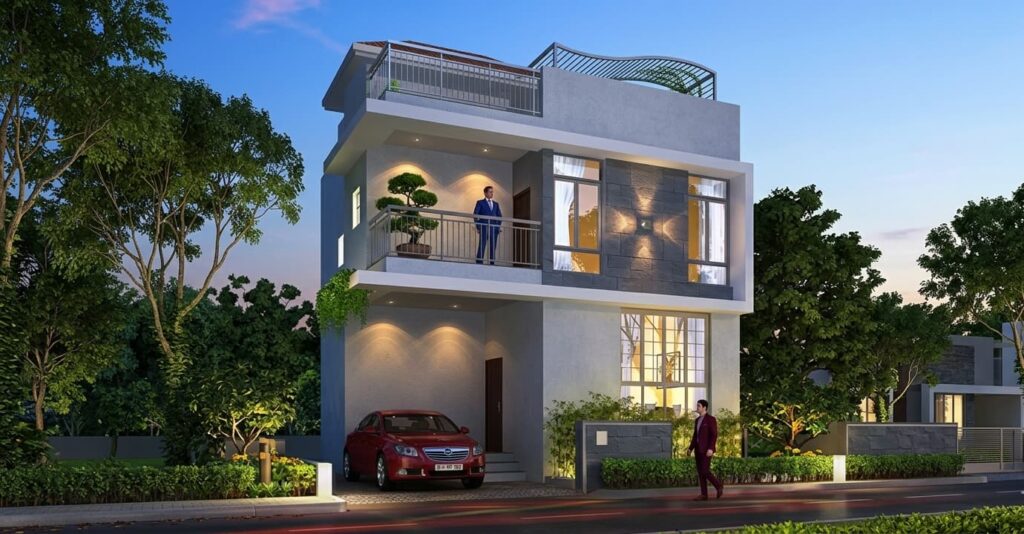
As these corporate offices opened, the demand for high-quality housing increased, encouraging developers to build master-planned projects. Buyers seeking secure, high-end environments are increasingly looking toward luxury independent villas in Noida, which combine private luxury living with close proximity to major corporate hubs, driving strong capital appreciation.
What should long-term investors look for in emerging mixed-use micro-markets?
Long-term investors should target areas where residential layouts are integrated with planned commercial spaces from the start, rather than added as an afterthought. This structured zoning ensures that quiet, green residential pockets exist alongside accessible retail and office districts.
For instance, an exclusive residential community in Delhi NCR that balances privacy with connectivity to nearby business districts is well-positioned to maintain its value. These properties benefit from steady demand because they provide residents with a quiet lifestyle while keeping them close to primary commercial and employment hubs.
Choosing the Right Property in a Commercializing Market
Investing in a market that is undergoing commercialization requires careful planning. Not all residential properties will appreciate at the same rate, and choosing the wrong location or developer can impact your overall returns.
How can buyers identify undervalued residential properties near developing economic zones?
The key to identifying undervalued properties lies in analyzing the gap between commercial investment timelines and residential construction cycles. Often, land and residential housing in a sector neighboring a planned business park remain reasonably priced until the commercial complex is completed. Buying during this window allows investors to acquire assets at competitive rates before the location premium is fully priced in.
Working with a reputable real estate developer in NCR is also an important factor in securing your investment. Experienced developers choose sites with strong future connectivity, use high-quality construction practices, and deliver projects on schedule, ensuring your property is ready to capture demand as the nearby commercial zone opens.
For deeper insights into localized growth corridors, land-use maps, and custom property valuations, investors should get in touch with our real estate consultants. Our team can help you identify high-yield opportunities before they are fully recognized by the broader market.
Why do high-end developments outperform standard housings near commercial hubs?
Corporate parks and high-value business centers attract management-level professionals and executives who expect a high standard of living. These buyers and tenants prioritize secure, well-designed developments with modern amenities over basic housing options.
Premium residential projects that feature dedicated security systems, clubhouses, power backup, and landscaped open spaces tend to maintain high occupancy rates. They attract reliable, high-income tenants and show strong resilience during market downturns, outperforming standard, high-density residential buildings in both rental income and long-term capital growth.
Frequently Asked Questions
1. Does commercial development always increase nearby residential property values?
In most cases, commercial development supports residential values by bringing jobs, infrastructure, and retail conveniences to the area. However, the type of commercial activity matters. Light commercial spaces, high-end office parks, and retail centers generally have a positive impact. Heavy industrial zones or high-noise commercial operations can have the opposite effect, creating noise and traffic that can lower nearby residential values. Strategic zoning that separates residential pockets from busy commercial zones is essential for maintaining property values.
2. What is a safe distance to invest in residential property near a commercial hub?
The ideal distance is generally between one and three kilometers. This buffer zone is close enough to allow residents to enjoy short commute times and easy access to retail and dining options, while keeping them far enough away to avoid the noise, congestion, and heavy traffic associated with busy commercial centers. Staying within this zone helps ensure a high quality of life for residents while preserving the long-term value and demand of the property.
3. How do commercial lease lengths affect the stability of nearby residential investments?
Commercial leases are typically long-term commitments, often lasting between five and ten years, and are secured by corporate entities. This stability ensures that the local employment base remains consistent over time. For residential property owners nearby, these long-term business commitments translate into steady, predictable demand for rental housing and a lower risk of sudden vacancies, supporting consistent home value growth in the surrounding neighborhood.
4. Can an oversupply of commercial space hurt the residential market?
If commercial vacancy rates rise significantly due to oversupply or shifts in the wider economy, it can lead to slower job growth and reduced rental demand in the area. However, master-planned regions that balance commercial spaces with residential areas are less vulnerable to these shifts. In these balanced markets, steady local demand from residents and retail businesses helps maintain stability, even during broader economic cycles.