
Quick Summary
Owning a plot of land provides the highest degree of autonomy in real estate. Buyers gain the ability to direct every aspect of construction, from the initial architectural footprint to the final finishing touches. This article details the financial benefits, creative freedom, and long-term strategic advantages associated with independent land ownership compared to buying finished housing units.
The Autonomy of Land Ownership
In the current real estate environment, buyers often feel restricted by the standardized layouts of developer-led projects. When you purchase a finished apartment or a townhome, you are essentially adopting someone else’s vision for space, utility, and aesthetic appeal. In contrast, land ownership serves as a blank canvas, allowing the owner to dictate the structural integrity and design philosophy of the residence. This level of control starts from the moment the site plan is drafted. You decide where the foundation sits, how the house interacts with natural light throughout the day, and which areas of the site are prioritized for landscaping versus hardscaping.
Heritage Prime maintains that understanding zoning regulations and local building codes is the first step toward realizing this vision. When you own the plot, you are not bound by the limitations of pre-installed plumbing lines or non-load-bearing walls that were dictated by a mass-market architectural firm. Instead, you can choose to implement sustainable energy solutions, such as geothermal heating or rooftop solar arrays, which might be impossible or prohibitively expensive to retrofit in a completed home. This foundational control ensures the asset matches your functional requirements perfectly, rather than requiring expensive renovations down the line.
Architectural Freedom and Design Flexibility
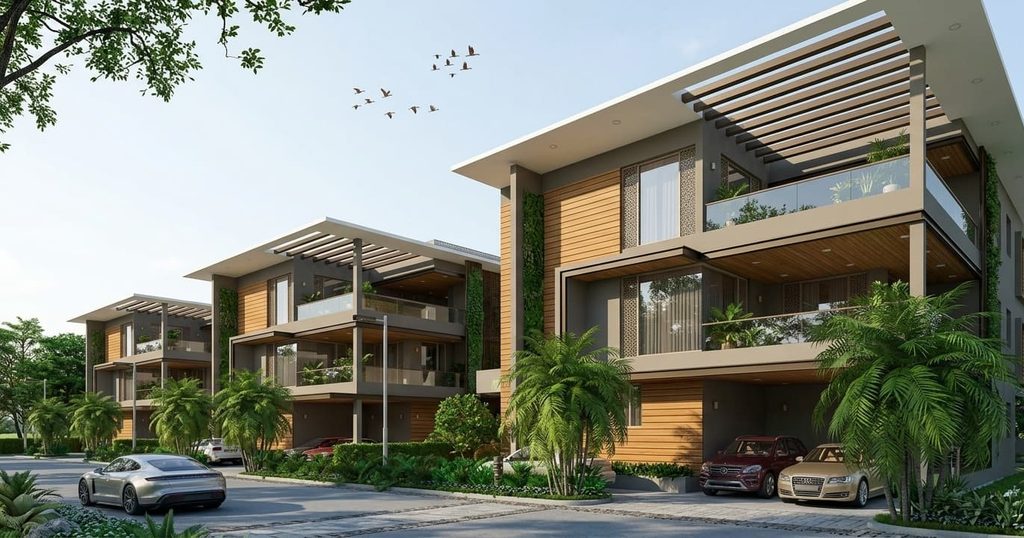
Design freedom remains the primary driver for those choosing land over built structures. With a plot, the architectural narrative is yours to author. You can opt for sprawling open-concept floor plans that optimize cross-ventilation or focus on modular designs that allow for future expansions as your family needs evolve. There is no need to compromise on ceiling heights, window placement, or room sizes. For those interested in exploring how different structures integrate into the landscape, reviewing examples like ultra-luxury homes in Noida provides a clear reference point for how high-end custom building can look when executed with precision on a private plot.
Beyond the structural shell, the interior finishings fall entirely under your purview. Selecting your own flooring materials, wall treatments, and smart home infrastructure allows for a coherent design language that reflects your personal style. You avoid the generic finishes that developers use to appeal to the lowest common denominator, ensuring that every square foot serves a distinct purpose.
Financial and Investment Implications
From an investment perspective, raw land often exhibits a different risk profile compared to residential housing. Land is a finite resource; it does not depreciate in the way buildings do. While the structure on top of the land requires maintenance, the ground beneath it remains a tangible asset that historically appreciates in value. When you purchase a plot, you are insulated from the depreciation of building materials and the potential mismanagement of homeowner associations that can impact the resale value of strata-titled properties.
Investment control also extends to the timing of your capital expenditure. You can choose to purchase the plot now and initiate construction only when your finances and the market environment align. This flexibility allows for better liquidity management. Those seeking to understand their options or needing expert guidance on acquisition strategies should get in touch with our real estate consultants to weigh the risks versus the rewards of land banking versus active development.
Long-Term Capital Appreciation
The scarcity factor of land cannot be overstated. As urban areas densify, the availability of independent plots diminishes, which tends to drive up the value of remaining land assets. Unlike condos, which compete with hundreds of other identical units in the same building, your plot is a unique entity. Its value is determined by its size, location, and the potential utility the owner extracts from it. Investing in land acts as a hedge against inflation because the cost of land has historically kept pace with or outperformed the rate of inflation, whereas the cost of home maintenance generally rises over time.
Managing Construction and Quality Control
One of the most significant advantages of plot ownership is the ability to monitor quality throughout the construction process. With developer projects, you rarely see the sub-surface plumbing, the quality of wiring within the walls, or the mix of concrete used in the foundation. When you manage the build, you handpick the contractors and engineers. You define the standards for every phase of construction. This transparency ensures that you are not paying for hidden substandard workmanship that often leads to maintenance headaches in newly constructed master-planned communities.
Maintaining strict oversight means you can incorporate modern construction technologies that increase the longevity and efficiency of your home. Whether it is soundproofing, advanced insulation, or seismic resistance, you set the threshold for quality. This level of diligence ensures the building serves you for generations, rather than being built for the short-term profit margins often associated with large-scale residential developments.
Navigating Legal and Regulatory Requirements
Owning a plot involves a deep understanding of local laws, environmental regulations, and building codes. While this requires a more proactive approach than buying a turnkey home, it grants you total control over the compliance process. You ensure that the land is properly titled and that all permits align with your vision. Transparency in data and transaction records remains paramount throughout this process, and organizations like ours maintain our customer data privacy policy to ensure your personal and transactional information remains secure while you navigate the complexities of land ownership and legal compliance.
Comparing Plots to Existing Structures
The decision to buy a plot versus an existing structure often comes down to the individual’s tolerance for complexity versus the desire for control. While existing houses offer convenience, they impose limitations. The following table outlines the key differences in control between these two investment paths.
| Feature | Plot Ownership | Pre-built Home |
|---|---|---|
| Architectural Control | Complete | Minimal |
| Quality Assurance | Direct Oversight | Third-party Dependent |
| Customization | Infinite | Cosmetic Only |
| Maintenance Needs | Self-Managed | Managed by HOA/Assoc |
Understanding Market Availability
Market availability for premium plots differs significantly from available home inventory. While many people look for immediate housing solutions, others prefer to secure land in up-and-coming areas before they become saturated. Sometimes, the search for a perfect home ends in disappointment due to compromise, leading many to pivot toward premium villas for sale or similar land-based options where they can still influence the final output. Understanding what the market offers requires an analysis of current infrastructure development plans, municipal zoning shifts, and the long-term desirability of the neighborhood.
Frequently Asked Questions
Does owning a plot require a higher upfront investment compared to a finished home?
Initially, purchasing a plot might appear less expensive than a full-scale residential project, but one must account for the construction costs, permit fees, and utility connections. However, you maintain total control over your budget, allowing you to scale the construction cost to fit your available capital rather than paying a developer’s premium for a pre-built unit.
What are the common legal hurdles when purchasing a plot for building?
Legal due diligence is critical. You must verify land titles, ensure the property has a clear zoning designation for residential use, and confirm that all necessary utility hookups like electricity, water, and sewage are accessible. Working with legal experts helps clear these hurdles before any construction begins.
How does land ownership affect property maintenance responsibilities?
As the owner of both the land and the structure, you are entirely responsible for upkeep. While this means more work, it also ensures you are never reliant on an inefficient building management company. You manage the maintenance schedule and the quality of repairs, which often results in a higher standard of living long-term.
Is it easier to finance a land purchase compared to a completed home?
Financing options vary based on the intended use. Loans for raw land can sometimes carry higher interest rates or require larger down payments than standard residential mortgages. However, once you transition to a construction loan, the financial structures often become more flexible, allowing you to manage cash flow based on the project milestones.