
Quick Summary
This article provides an analysis of the long-term benefits of villa ownership for families. It covers key topics including the security of owning land, the flexibility of customizable spaces, the financial benefits of land appreciation, the safety of gated estates, and the mental health advantages of living in a private space. Discover why independent luxury villas represent the ultimate investment in both family well-being and generational wealth.
The Generational Value of Private Residential Land
Why does owning land under your villa matter for long-term family security?
When analyzing residential real estate, the most significant distinction between apartment living and villa ownership is the acquisition of the physical land parcel. An apartment owner possesses an undivided share of land, which is distributed among dozens or hundreds of other co-owners. Conversely, a villa owner holds the absolute deed to the plot beneath the structure. This ownership represents a permanent tangible asset that is immune to the structural deterioration that affects vertical developments over decades.
As families grow and pass down wealth, having absolute rights over a plot of land ensures that the asset can be adapted to changing societal norms, local municipal guidelines, and evolving architectural trends. A family can choose to demolish and rebuild the entire structure fifty years from now without needing the consensus of hundreds of neighbors or dealing with complex cooperative housing society permissions. It establishes a permanent anchor for the family, offering a reliable sense of stability that cannot be replicated in leasehold or shared-space apartments.
How does independent home ownership compare to high-rise apartments over decades?
Over a span of thirty to fifty years, the physical concrete structure of any residential building naturally degrades, requiring massive capital expenditures for maintenance and structural renovation. In high-rise developments, coordinating these funds among diverse owners often leads to delays, legal disputes, and eventual neglect of the property. For a villa owner, the management of structural integrity lies entirely within their control, allowing for preventative preservation that protects the property value.
Furthermore, the land on which a villa sits is a finite resource that appreciates steadily, whereas the building itself is a depreciating asset. In high-rise apartments, because the land share is minimal, the rapid depreciation of the vertical structure often outpaces land appreciation in older neighborhoods. This dynamic makes independent villas a far safer vehicle for preserving family wealth across generations, acting as an inflation-hedged storage of capital that consistently outperforms urban condominiums in long-term equity growth.
Space and Architectural Freedom for Growing Families
How can a villa accommodate changing family needs across multiple generations?
Family life is dynamic. A young couple starting out may require only a single home office and a bedroom, but as children arrive, pursue higher education, and eventually start families of their own, the demand for space shifts dramatically. A primary benefit of a villa is its spatial adaptability. Multi-generational living requires a delicate balance of shared areas and private quarters to prevent friction and maintain harmony.
Villas naturally offer separate wings, multiple floors, and semi-independent suites that can easily house grandparents, parents, and children under one roof. When considering high-end properties, families often seek out ultra-luxury homes in Noida to secure both ample spatial planning and prestigious neighborhoods. This layout allows elderly members to live comfortably on the ground level, minimizing stairs, while younger adults can occupy the upper stories, providing everyone with their desired level of personal space and daily autonomy.
What design and customization options does an independent structure offer?
In an apartment, structural modifications are strictly limited by shared load-bearing walls, vertical plumbing shafts, and aesthetic guidelines set by the homeowner association. In a villa, the layout is highly customizable. Owners can design bespoke spaces tailored to their specific hobbies, professions, and wellness routines. Whether installing a private home theater, a climate-controlled wine cellar, a double-height library, or a soundproofed creative studio, the independent structure easily accommodates these highly personal additions.
This adaptability also extends to outdoor spaces. A villa owner can modify their private lawns, terrace gardens, and courtyards to suit their aesthetic preferences. This freedom ensures that the residence can evolve visually and functionally, keeping pace with global design trends and ensuring that the family home remains a modern sanctuary rather than an outdated space bound by the rigid templates of mass-produced housing blocks.
Community, Security, and Lifestyle Amenities
What security advantages do gated villa communities provide for children and elders?
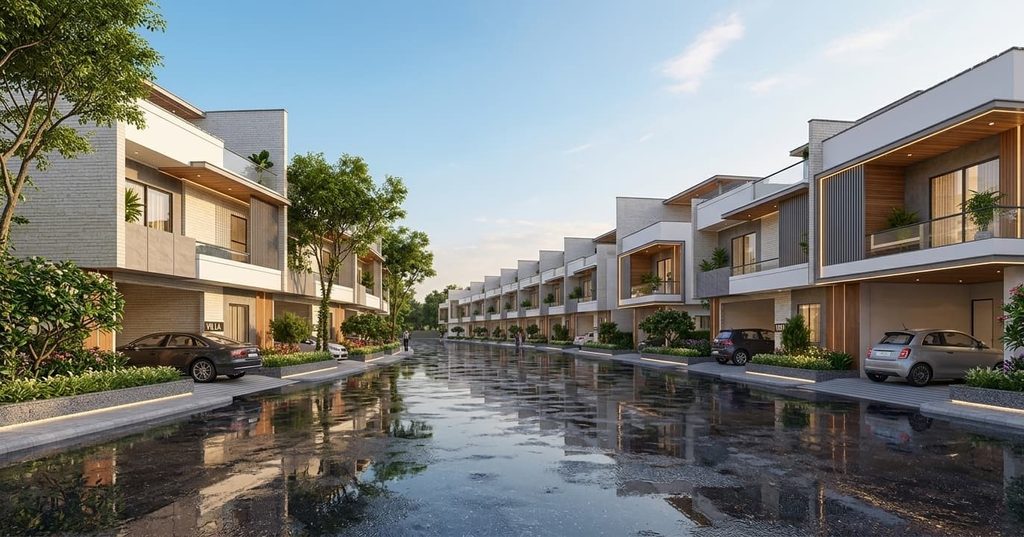
Security is a major factor when choosing a family home, particularly when the household includes young children and aging parents. Modern master-planned villa developments combine the independence of standalone homes with the collective protection of a secured estate. These communities feature multi-tiered security systems, including perimeter patrol, continuous CCTV monitoring, biometric access control, and dedicated visitor management software.
This controlled environment minimizes vehicle traffic within residential zones, creating safe pathways where children can ride bicycles and elders can take evening walks without the stress of urban traffic. This peace of mind allows families to experience an open-door neighborhood lifestyle that is rare in busy city centers, promoting active outdoor routines and fostering a safer, healthier upbringing for children.
How do shared communal facilities enhance the everyday living experience?
Modern families value their privacy, but they also thrive when connected to a larger community of like-minded peers. Living in an organized villa estate grants immediate access to premium recreational spaces right outside one\’s doorstep. Many developers are responding to this demand by offering independent homes with modern amenities within master-planned neighborhoods, ensuring that owners do not sacrifice community advantages for privacy. These areas typically include multi-sports courts, modern fitness clubs, spa facilities, and communal banquet halls for social events.
These facilities encourage a balanced lifestyle by offering easy access to recreation. Instead of spending hours traveling through traffic to reach external fitness or recreational clubs, residents can walk or cycle to premium facilities within their community. This convenience makes it much easier to stay active and healthy, while also helping neighbors build strong connections and friendships.
Financial Asset Appreciation and Wealth Legacy
What makes a villa a superior long-term financial investment?
A primary economic benefit of purchasing a villa is the low depreciation-to-appreciation ratio of the property asset. The physical structure of any building inevitably loses value over time, but the underlying land appreciates as municipal boundaries expand and prime urban space becomes increasingly scarce. Since land represents the vast majority of a villa\’s total market value, the overall investment appreciates much faster than a vertical apartment, where the structure accounts for most of the purchase price.
This investment profile makes villas an ideal option for preserving family wealth, protecting portfolios from inflation, and serving as a key asset for estate planning. Before completing any purchase, buyers should carefully review our real estate transaction terms to understand the legal frameworks governing plot ownership and structural modifications. This careful approach protects the family\’s wealth and ensures the asset can be passed down smoothly to future generations without legal issues.
How do land values appreciate differently compared to vertical properties?
The appreciation of vertical properties is heavily tied to the maintenance levels of the building, the management competence of the homeowners\’ association, and the surrounding competition from newer, more modern high-rises. Once a building is over twenty-five years old, its market appeal can decline, capping its potential for resale profit. Land, however, remains a highly sought-after resource that retains its value regardless of the building\’s age.
In prime locations, older villas are often bought primarily for the value of their plots, proving that land maintains its worth even if the original house is dated. This offers owners a strong financial safety net. To highlight these differences, the table below compares long-term value factors between typical high-rise apartments and independent villas:
| Feature / Factor | High-Rise Apartment | Independent Villa |
|---|---|---|
| Land Ownership Deed | Shared Undivided Share (UDS) | Absolute plot ownership |
| Depreciation Profile | High (structure depreciates rapidly) | Low (land appreciation offsets depreciation) |
| Customization Potential | Highly restricted inside walls | Unlimited structural and layout freedom |
| Privacy Level | Moderate to low (shared walls and floors) | Exceptional (no shared structural walls) |
| Long-term Renovation | Dependent on community approval | Entirely at the owner\’s discretion |
Emotional Well-being, Privacy, and Quality of Life
How does the lack of shared walls impact mental health and family privacy?
Mental well-being is closely linked to our living environments. One major source of stress in high-density urban areas is the constant exposure to environmental noise. Living in an apartment with shared walls, ceilings, and floors means sharing auditory space with neighbors. This can lead to regular disruptions from heavy footsteps, television noise, or late-night conversations. This lack of acoustic control can raise stress hormones, disrupt sleep patterns, and limit authentic self-expression within your own home.
An independent villa solves this issue by creating physical space between households. Without shared walls, families can enjoy their lives without worrying about making noise or being disturbed by others. Children can play freely, family celebrations can be hosted without hesitation, and quiet times are peaceful. This level of privacy creates a calm, supportive living environment that enhances mental wellness and gives every family member a true sense of personal space.
Why are private outdoor spaces crucial for holistic child development?
As cities grow denser, children are spending more time indoors, often substituted by screens. Private gardens, courtyards, and terraces provide safe, accessible spaces for outdoor play, which is key for physical and emotional development. Having a private lawn allows children to connect with nature, play safely, and enjoy outdoor activities, all under the convenient supervision of parents.
Selecting a home in an exclusive residential community in Delhi NCR provides this balance of serenity and urban connectivity, making it an ideal long-term sanctuary for multi-generational families. These green spaces also benefit the wider family. They serve as comfortable areas for morning yoga, outdoor dining, family barbecues, and gardening, helping everyone stay active and connected with nature as part of their daily routine.
Sustainable Living and Energy Independence
How can villa owners transition to eco-friendly, self-sustaining home environments?
Modern environmental changes highlight the importance of living self-sufficiently. Villas offer the structural freedom needed to set up reliable, eco-friendly systems that are rarely possible in shared apartment blocks. Because villa owners have full control over their roofs, plumbing, and yards, they can easily install solar panel arrays, advanced rainwater harvesting systems, and organic composting units.
These systems help reduce a household\’s carbon footprint while making the home more resilient to utility shortages. If local municipal power grids or water systems fail, a self-sustaining villa with solar batteries and deep-well rainwater purification can continue running smoothly. This level of independence keeps families comfortable and prepared, even during regional infrastructure challenges.
What long-term cost savings does sustainable infrastructure yield?
While setting up green technologies requires an initial investment, the long-term utility savings are substantial. Over a ten-year period, a properly designed solar panel array can virtually eliminate monthly electricity bills. Similarly, integrating greywater recycling systems for garden irrigation reduces overall domestic water demand by up to forty percent.
Furthermore, proper insulation, organic roof gardens, and smart ventilation design keep the interior of a villa naturally cool, which significantly lowers air conditioning costs during peak summer months. These features protect families from rising utility costs, ensuring that the home remains cost-effective to run even as conventional energy prices increase. It makes the estate both environmentally responsible and highly cost-efficient over time.
Ultimately, choosing a villa is an investment in both your family\’s future and long-term financial stability. At Heritage Prime, we understand that a home is more than just a place to live: it is a lasting foundation for your family\’s lifestyle, wealth, and memories. By combining absolute land ownership, flexible design options, and excellent private spaces, a luxury villa remains one of the most reliable and rewarding real estate investments for generations to come.
Frequently Asked Questions
1. Why is a villa a better financial investment than a luxury apartment?
A villa is a superior financial investment because it includes absolute ownership of the underlying land parcel. In real estate, structures naturally depreciate over time, while land appreciates due to scarcity. When you buy a luxury apartment, most of your investment goes into the concrete structure, which loses value over the years. With a villa, the land makes up the largest share of the asset\’s value, ensuring steady long-term appreciation and solid wealth protection.
2. How does villa living improve long-term mental health and well-being?
Villas significantly improve mental well-being by providing complete privacy and peace. With no shared walls, floors, or ceilings with neighbors, you are shielded from common building noises that raise stress levels and disrupt sleep. Additionally, having direct access to private gardens and open outdoor spaces offers a calm setting for relaxation, family activities, and connecting with nature, which supports a healthy, balanced lifestyle.
3. Is a gated villa community as secure as a modern high-rise apartment complex?
Yes, modern gated villa communities offer excellent security that matches or exceeds high-rise apartments. These developments use multi-layered security measures, including perimeter fencing, professional patrols, continuous CCTV monitoring, and strict gate access controls. Additionally, because these estates feature lower residential density and less through-traffic, security teams can easily monitor visitors, creating a safer environment for children and seniors.
4. What are the long-term customization advantages of owning an independent villa?
Owning a villa gives you full control over your property, allowing you to modify and adapt the space as your family\’s needs change. Unlike apartments, where structural changes are limited by shared walls and community rules, villa owners can add new rooms, build extra floors, or redesign interior layouts. This flexibility allows you to easily update your home over the years, ensuring it remains comfortable and functional for generations.