
Quick Summary
This article presents an analytical breakdown of the major residential growth corridors within Greater Noida West, highlighting sector-specific developments, key infrastructure programs, and changing market dynamics. Learn how transit extensions, commercial integration, and a clear shift toward premium plotted layouts are shaping this critical micro-market of the National Capital Region.
Evolution of Greater Noida West as a Residential Powerhouse
Greater Noida West, historically identified as Noida Extension, was originally conceptualized as an affordable alternative to the highly dense sectors of central Noida. Over the past decade, systematic planning by the Greater Noida Industrial Development Authority (GNIDA) has transformed this expansive zone into a highly structured urban environment. The initial phase of development was characterized by high-density, high-rise group housing projects designed to accommodate the rapid influx of working professionals. However, a major shift occurred as developers and town planners recognized the need for balanced density, wider arterial corridors, and superior open green areas.
Today, the region operates under Master Plan 2031, which allocates significant land reserves for green buffers, broad roadways, and robust civic infrastructure. The integration of 60-meter and 130-meter wide roads has greatly minimized traffic congestion, which is a common issue in older NCR sectors. Market analyses from Heritage Prime indicate a steady shift in buyer demographics, where demand has moved from basic affordable housing to well-planned integrated townships featuring premium amenities. The region now acts as a key residential hub, drawing both capital appreciation seekers and end-users who value planned space over congested city centers.
Why is Greater Noida West attracting middle-income and premium home buyers?
The attraction lies in a combination of space, comparative affordability, and rapid infrastructure completion. Middle-income buyers find that their capital yields larger carpet areas here than in central Noida or Gurugram. Additionally, premium buyers are drawn to the newer, low-density sectors that offer exclusive luxury complexes, private security, and modern clubhouse facilities. The presence of major corporate offices in adjacent sectors further minimizes commute times, making the micro-market a practical, high-value alternative for modern families.
Key Growth Corridors and Sector Analysis
Greater Noida West is not a single, uniform market. It is composed of multiple distinct sectors, each presenting a unique combination of density, price points, and geographic advantages. Understanding the specific characteristics of these sectors is vital for making an informed real estate decision. The area is broadly divided into the early-development sectors near the Hindon River and the newly emerging premium corridors along the main 130-meter link road.
Sectors 1 and 4 occupy the easternmost edge of Greater Noida West, situated directly adjacent to Noida Sectors 78, 79, and 122. These sectors are highly sought after due to the operational Hindon Bridge, which allows residents to reach Noida’s central commercial hubs within ten minutes. Because of this proximity, land prices and residential values in Sectors 1 and 4 have experienced steady upward movement. On the other hand, Sectors 10 and 12 represent the newer phase of residential planning. These pockets focus heavily on low-density developments, plotted societies, and premium villas, appealing directly to affluent buyers seeking low-density living layouts.
Tech Zone 4 serves as a unique mixed-use corridor, seamlessly blending massive IT parks and commercial office spaces with premium residential towers. This configuration creates a highly efficient walk-to-work culture, making it extremely popular among corporate executives and technology professionals. To understand the subtle differences between these key sectors, the following table outlines their comparative strengths:
| Sector Name | Primary Development Type | Average Price Range (Per Sq. Ft.) | Key Connectivity Advantage |
|---|---|---|---|
| Sector 1 | Mid-to-High Rise Premium Apartments | INR 7,500 – INR 9,500 | Closest to Hindon Bridge and central Noida metro network |
| Sector 4 | Mixed-Use High-Rise and Retail | INR 7,000 – INR 9,000 | Direct access to commercial high streets and retail hubs |
| Sector 10 | Low-Density Plots and Independent Villas | INR 8,500 – INR 12,000 | Positioned along the 130-meter road near future metro line |
| Sector 12 | Low-Density Group Housing | INR 8,000 – INR 10,500 | Surrounded by expansive green belts and luxury developments |
| Tech Zone 4 | IT Parks, Offices, and Luxury Living | INR 7,800 – INR 10,000 | Walk-to-work structure close to major commercial headquarters |
Which sectors offer the highest potential for capital appreciation?
Based on historical performance and planned transit infrastructure, Sectors 10, 12, and Tech Zone 4 show the strongest potential for capital growth. This is due to their lower density, focus on premium construction, and proximity to the planned Aqua Line metro route. As more corporate offices set up in Tech Zone 4, housing demand in nearby sectors is expected to surge, driving rental yields and property prices upward.
Infrastructure Upgrades Driving Residential Demand
The primary catalyst behind the physical development of Greater Noida West is its rapidly improving transit network. Unlike older cities where infrastructure development lags behind residential occupancy, Noida Extension has witnessed a more synchronized development plan. Physical connectivity remains the defining element of success for any residential corridor, and the local authorities have focused heavily on major highway connections, bridges, and mass transit options.
The Faridabad-Noida-Ghaziabad (FNG) Expressway is one such massive project designed to connect three of the most prominent cities of the National Capital Region. The expressway directly aligns with sectors in Greater Noida West, offering seamless long-distance travel to Haryana and Ghaziabad. Additionally, the operational Hindon Bridge has acted as a lifeline, preventing traffic bottlenecks on the older routes. The corridor’s relative ease of access to the upcoming Noida International Airport at Jewar via the Yamuna Expressway is another vital growth factor, drawing major manufacturing, technology, and logistics corporations to the region, which in turn fuels the surrounding housing market.
How will the upcoming Aqua Line metro extension impact property prices?
The proposed Aqua Line metro extension, spanning from Sector 51 in Noida to Knowledge Park V in Greater Noida, will include multiple critical stations directly in the heart of Greater Noida West. Once this route becomes fully operational, it will directly link the micro-market with the wider Delhi Metro Blue Line network. This will drastically reduce daily commute times for officegoers traveling to Noida Sector 62, central Noida, and central Delhi, leading to an anticipated 15% to 20% jump in nearby residential asset valuations. To stay updated on these infrastructural updates and transit-oriented development patterns, reading an authoritative NCR real estate blog and market insights can offer regular property valuation updates and urban planning news.
Shift from Affordable Housing to Premium Communities
A remarkable transformation is taking place in the developer landscape of Greater Noida West. Historically criticized for having a surplus of repetitive, entry-level apartments, the region is now hosting premium, luxury-focused residential communities. This transformation is driven by changing homebuyer priorities, who now demand private spaces, dedicated home offices, secure environments, and top-tier community facilities rather than just basic high-rise living.
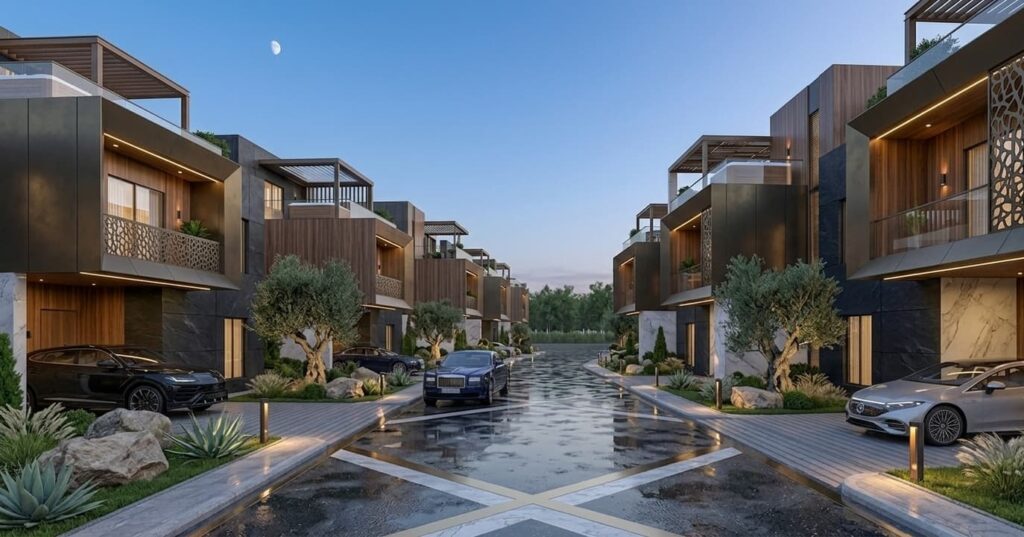
Developers are responding to this trend by launching master-planned low-density projects, modern duplexes, and horizontal residential options. Gated plotted communities have become a highly profitable segment, allowing buyers to custom-design their homes while enjoying shared features such as central parks, modern clubs, and advanced multi-tier security systems. This shift has also brought Tier-1 national developers to the region, bringing with them a higher standard of construction quality, landscape design, and structural longevity that was previously missing in the early phases of Noida Extension.
Are luxury villas becoming a preferred choice over high-rise apartments?
Yes, a significant number of affluent buyers are choosing independent low-rise properties. Homebuyers looking for spacious layouts and customizable private spaces are increasingly redirecting their capital toward luxury independent villas in Noida and its immediate peripheral growth corridors. This trend is highly visible in structured developments such as the exclusive residential community in Delhi NCR, where secure perimeters, green landscaping, and customized architectural freedom define modern living standards. These low-density developments ensure a high degree of privacy, minimal noise disruption, and superior long-term land value appreciation compared to aging high-rise apartments.
Commercial and Lifestyle Ecosystem
A residential zone cannot survive on housing alone; it requires a robust social, institutional, and lifestyle framework. Greater Noida West has rapidly transitioned from a commuter hub into a fully self-sustaining urban center. This means residents no longer need to travel to central Noida or Ghaziabad for standard healthcare, quality education, or weekend entertainment, as a fully functional social ecosystem has developed directly within the micro-market.
The commercial landscape features major shopping complexes, operational multi-screen cinemas, and various retail high streets. Integrated developments such as Gaur City Mall, Galaxy Blue Sapphire, and several neighborhood shopping plazas provide immediate access to popular global fashion brands, daily grocery supermarkets, and diverse dining facilities. Furthermore, the region has attracted prominent corporate office centers and coworking spaces, creating local employment hubs and turning Noida Extension into a highly localized micro-economy.
What social amenities are currently operational in Noida Extension?
- Premium Education: Prominent institutions like Lotus Valley International School, Sarvottam International School, Aster Public School, and Ryan International School are fully operational with modern campuses.
- Healthcare Facilities: Yatharth Super Speciality Hospital, Max Hospital clinics, and other multi-specialty care facilities provide around-the-clock emergency services and advanced medical care.
- Retail & Entertainment: Gaur City Mall, Galaxy Blue Sapphire Plaza, and upcoming commercial spaces in Tech Zone 4 host popular multiplexes, food courts, and hypermarkets.
- Recreation & Greenery: Multiple central parks, wide green corridors, and localized municipal sports grounds offer ample space for daily walking, fitness activities, and outdoor recreation.
Investment Outlook and Future Projections
The investment potential of Greater Noida West remains positive, supported by continuous infrastructural growth, the expansion of corporate office buildings, and solid rental demand. Unlike other parts of the National Capital Region that have reached saturation, Noida Extension still offers a favorable entry-point price bracket, making it highly attractive for first-time investors. The ongoing development of the Jewar International Airport and the Yamuna Expressway corridor will continue to act as macroeconomic drivers, boosting property values over the next decade.
In terms of rental yields, Greater Noida West averages between 3% and 4% annually, which is highly competitive for residential properties in northern India. As more corporate offices and commercial IT parks launch operations along the 130-meter road and Tech Zone 4, the influx of working professionals is expected to drive rental demand even higher. Investors focusing on mid-to-long-term horizons can anticipate healthy capital appreciation, particularly in low-density, well-managed premium developments.
How can investors make informed decisions in the current market cycle?
To navigate the market successfully, buyers must look beyond sticker prices and focus on critical factors such as developer delivery records, structural project quality, proximity to upcoming transit corridors, and municipal services. It is essential to choose projects that are registered with the Real Estate Regulatory Authority (RERA) and feature low-density layouts to ensure sustained resale value. To evaluate customized investment portfolios or identify specific land parcels with high growth potential, individuals should contact seasoned property experts who understand local zoning regulations and developers’ track records.
Frequently Asked Questions
Q1: What is the current average residential price trend in Greater Noida West?
As of 2024, residential property prices in Greater Noida West typically range from INR 7,000 to INR 12,000 per square foot. Sectors located closer to Noida, such as Sector 1 and Sector 4, along with low-density villa zones in Sectors 10 and 12, are positioned at the premium end of this price spectrum.
Q2: How does connectivity from Greater Noida West to Noida Sec 62 and central Delhi look?
Connectivity is excellent. The Hindon Bridge connects Noida Extension directly to Sector 78 and the Sector 79 metro stations. Major road networks like the FNG Expressway, NH-24 (now Delhi-Meerut Expressway), and the Noida-Greater Noida Link Road ensure that traveling to Noida Sector 62 or central Delhi is smooth and convenient.
Q3: Is Noida Extension suitable for long-term real estate investment?
Yes, the area is highly viable for long-term investments. The combination of upcoming infrastructure projects like the Aqua Line metro extension, proximity to the Jewar International Airport, and the growing demand for premium housing projects ensures strong capital appreciation potential over a 5 to 7 year horizon.
Q4: What are the key planning differences between Greater Noida West and central Noida?
Greater Noida West features wider internal road networks, including 60-meter and 130-meter wide roads, compared to central Noida’s older sectors. It is also designed with dedicated green buffer zones running parallel to the main roads, a lower overall density planning model in newer sectors, and a higher proportion of mixed-use commercial developments built directly alongside residential communities.