
Quick Summary
Greater Noida has undergone a structural transformation over the last three decades, evolving from an agricultural perimeter into one of northern India’s most meticulously planned urban centers. Characterized by wide grid road networks, strict sector allocation policies, expansive green belts, and major arterial expressways, the city offers high residential habitability. With upcoming catalyst infrastructure like the Noida International Airport at Jewar, expanding metro linkages, and growing commercial investment, Greater Noida presents a diverse market spanning high-density affordable housing, golf-centric luxury estates, and low-density gated villa developments.
The Genesis of Greater Noida: From Agricultural Heartland to Planned Industrial Center
The urban footprint of the National Capital Region expanded dramatically toward the end of the twentieth century as Delhi faced unprecedented population density and infrastructure stress. In response, regional planners envisioned satellite urban centers capable of absorbing residential and industrial spillover. Greater Noida was formally established under the Uttar Pradesh Industrial Area Development Act of 1976, taking concrete administrative form in the early 1990s under the management of the Greater Noida Industrial Development Authority (GNIDA).
Unlike traditional metropolitan areas that grow organically and often suffer from congested arterial lanes, Greater Noida was designed around a comprehensive Master Plan. Initial layouts prioritized wide road corridors, segregated sector zoning, and underground utility systems. Land acquisition strategies focused on creating dedicated industrial clusters alongside low to medium-density residential sectors. Early planners recognized that long-term habitability depended on balancing industrial employment centers with expansive green open spaces, establishing mandatory green cover ratios that exceed 20 percent of total urban land allocation.
How Did Early Urban Planning Shape Modern Layouts?
The core structural advantage of Greater Noida lies in its gridiron urban layout. Sectors were designated using Greek letters such as Alpha, Beta, Gamma, Delta, Omega, and Pi. Each sector was conceptualized as a self-contained neighborhood equipped with internal green parks, localized shopping plazas, educational facilities, and dedicated utility access. Roadways within these sectors were constructed with generous rights-of-way, featuring broad central verges and pre-planned service lanes. This proactive engineering avoided the traffic choke points typical of older satellite towns across NCR.
Early development phases focused primarily on plot allotments for single-family housing and government employee cooperative societies. This created a low-density baseline in central sectors near Pari Chowk. As industrial policies attracted manufacturing units, electronics assembly plants, and automobile production facilities, workforce immigration expanded rapid housing demand. GNIDA subsequently updated its structural framework to permit high-density group housing zones, laying the groundwork for vertical residential communities across newer sectors.
The Transition from Industrial Hubs to Integrated Suburbs
Throughout the late 1990s and early 2000s, Greater Noida was primarily perceived as an industrial output zone and educational cluster rather than a primary residential destination for corporate professionals. Many early property buyers viewed land allotments as long-term speculative holdings rather than immediate end-user homes. Daily commuters faced transit friction when traveling between central Delhi and peripheral sectors, limiting immediate population absorption.
The structural transformation from industrial suburb to integrated residential destination accelerated as civic infrastructure matured. Power grid stability improved with dedicated sub-stations, municipal water supply networks expanded, and institutional law enforcement presence was strengthened. As local commercial activity expanded near Pari Chowk, social infrastructure followed. Super-specialty hospitals, private universities, and international schools established permanent campuses, converting speculative real estate holdings into owner-occupied housing stock.
Infrastructure Catalysts Transforming Regional Connectivity
Connectivity infrastructure forms the backbone of real estate value appreciation in suburban markets. Greater Noida benefits from some of the most advanced transport corridors in northern India, effectively reducing physical and temporal distances to key employment centers in Noida, Delhi, and Gurugram.
What Impact Does the Noida-Greater Noida Expressway Have on Commute Dynamics?
The commissioning of the 24.5-kilometer, six-lane Noida-Greater Noida Expressway completely altered the real estate dynamics of the region. By providing a high-speed, signal-free conduit between Mahamaya Flyover in Noida and Pari Chowk in Greater Noida, the expressway reduced transit times between central Noida and Greater Noida to under twenty minutes. Corporate entities quickly recognized the efficiency of this corridor, leading to the development of major office parks, IT campuses, and commercial zones along its flanks.
As office spaces along the expressway filled with technology companies, financial service providers, and multinational corporations, employment density along the corridor surged. This corporate growth generated direct residential demand for housing developments in sectors immediately accessible from expressway exit ramps. Housing developments in Greater Noida transformed overnight from peripheral options into convenient suburban residences for professionals working in South Delhi and Noida corporate hubs.
How Will Noida International Airport (Jewar) Reshape Long-term Property Values?
The construction of the Noida International Airport at Jewar represents a structural shift for the entire Yamuna Expressway and Greater Noida real estate market. Positioned as a multi-runway international aviation gateway, Jewar Airport is designed to process millions of passengers annually alongside significant air cargo volumes. Beyond direct aviation services, the airport acts as an economic engine for an expansive aerotropolis, bringing maintenance, repair, and overhaul (MRO) facilities, hospitality clusters, global logistics hubs, and industrial parks.
Residential demand in Greater Noida is directly tied to this aviation ecosystem. Institutional investors and individual buyers view proximity to an international airport as a strong defense against capital depreciation. Yamuna Expressway and central Greater Noida sectors are experiencing increased attention from non-resident Indian (NRI) buyers and corporate entities seeking long-term exposure to high-growth infrastructure corridors. The airport project has effectively anchored Greater Noida as an international logistics and residential node rather than merely a regional satellite city.
Aqua Line Expansion and Public Transit Connectivity
Public transit expansion has mirrored roadway development. The Noida Metro Rail Corporation (NMRC) operationalized the Aqua Line, connecting Sector 51 in Noida directly to Depot Station in Greater Noida via Pari Chowk. This 29.7-kilometer mass rapid transit line integrated peripheral residential neighborhoods into the regional rail network.
Future planned expansions include multi-modal transport hubs connecting Bodaki with rail and bus terminals, along with direct rapid rail lines connecting Jewar Airport to Delhi. The proposed extension of the Aqua Line deeper into Greater Noida West (Noida Extension) aims to solve last-mile transit issues for hundreds of thousands of apartment dwellers, cementing public transit accessibility as a primary driver of housing demand.
Micro-Market Segmentation and Residential Typology Shifts
Greater Noida is not a homogenous property market. It comprises distinct micro-markets, each characterized by specific density parameters, pricing structures, target demographics, and architectural formats.
Greater Noida West vs Sector 150 vs Jaypee Greens: Market Distinctions
Greater Noida West, formerly known as Noida Extension, emerged as one of the largest high-density housing sub-markets in India. Characterized by expansive high-rise group housing projects, it offers accessible entry-level and mid-segment housing. Its close proximity to Sector 121 and Sector 62 in Noida makes it a convenient choice for young working professionals and nuclear families seeking modern high-rise apartments with lifestyle amenities at reasonable price points.
In contrast, sectors along the Noida-Greater Noida Expressway and central nodes like Sector 150 present a low-density, high-green model focused on sports infrastructure and luxury apartments. Further south near Pari Chowk, master-planned developments such as Jaypee Greens introduced international-standard golf course living, catering to high-net-worth individuals, senior executives, and expatriates seeking low-density luxury within secure gated enclaves.
The Rise of Low-Density Luxury Living and Independent Villas
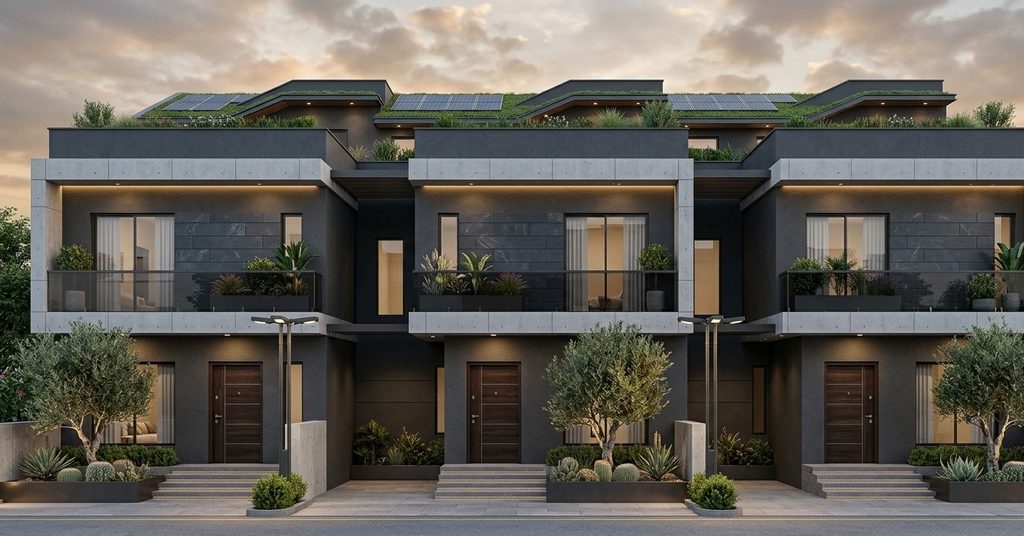
Following global shifts in lifestyle priorities, homebuyer preferences in NCR shifted toward larger living spaces, private green areas, and lower floor-area-ratio (FAR) developments. While high-rise towers dominate Greater Noida West, central and peripheral sectors have seen rising demand for independent horizontal homes, townhouses, and low-rise gated builder floors.
Buyers seeking spacious floor plans away from congested tower clusters frequently evaluate low-density villa concepts. Securing an exclusive residential community in Delhi NCR allows families to combine private land ownership with modern security networks, power backup systems, and localized community clubhouses. Plotted developments and luxury villas in sectors such as Swarn Nagri, Delta, and along the Yamuna Expressway corridor reflect this preference for personal space and multi-generational living arrangements.
Social Infrastructure and Commercial Ecosystem Development
A residential market cannot sustain long-term growth without robust social infrastructure. Greater Noida’s evolution was catalyzed by the simultaneous development of educational institutions, healthcare centers, modern retail hubs, and industrial technology parks.
Educational Hubs and Knowledge Parks as Growth Drivers
Knowledge Park I, II, and III were designed as dedicated educational zones housing dozens of engineering colleges, management institutes, and research centers. Institutions such as Gautam Buddha University, Sharda University, Shiv Nadar University, and Bennett University have turned Greater Noida into a major higher education hub in northern India.
This institutional concentration creates continuous demand for student housing, long-term rental accommodations for academic faculty, and ancillary commercial services. Additionally, families moving into Greater Noida benefit from a dense network of primary and secondary schools, including Delhi Public School, Ryan International, and Lotus Valley International, ensuring comprehensive academic options within comfortable driving distances.
Modern Retail, Healthcare Institutions, and Corporate Parks
Commercial real estate development in Greater Noida has shifted from localized neighborhood markets to regional destination malls and high-street retail centers. Establishments like Gaur City Mall, Grand Venice Mall, and various sector-level commercial plazas provide international retail brands, multiplexes, and dining options, eliminating the need for residents to travel to Noida or Delhi for leisure.
Healthcare infrastructure has developed at a similar pace. Multi-specialty hospitals including Yatharth Hospital, Fortis Hospital, Sharda Health City, and Bakson Hospital offer advanced tertiary medical care. Meanwhile, the establishment of mobile manufacturing plants, electronic hardware technology parks, and data centers along the Yamuna Expressway continues to expand the local white-collar workforce, driving consistent end-user housing demand.
| Urban Indicator | 1990s – Early 2000s | 2010s Development Era | 2020s & Beyond |
|---|---|---|---|
| Primary Buyer Profile | Industrial plot owners, government employees, land speculators | First-time home buyers, IT professionals, mid-income families | End-users, luxury villa buyers, NRI investors, corporate executives |
| Dominant Housing Type | Authority plots, low-rise individual houses | High-density multi-story group housing apartments | Gated luxury high-rises, low-density villas, integrated townships |
| Transit Infrastructure | Two-lane regional arterial links, private vehicle reliance | Noida-Greater Noida Expressway, Aqua Line Metro operationalization | Jewar International Airport, rapid rail links, multi-modal hubs |
| Commercial Driver | Small-scale manufacturing, traditional industrial units | Educational institutes, Knowledge Parks, localized retail | Global IT campuses, data centers, aerotropolis, major retail centers |
Real Estate Investment Dynamics and Capital Appreciation Trends
Understanding capital value trajectories in Greater Noida requires analyzing long-term supply-demand dynamics, regulatory interventions, and macroeconomic growth trends across northern India.
Historical Price Trends and Future Rental Yield Projections
In the early 2000s, land and residential apartment rates in Greater Noida were among the lowest in NCR. Capital values experienced significant growth between 2005 and 2012, driven by early expressway announcements and rapid group housing launches. However, between 2013 and 2019, the market entered a consolidation phase characterized by regulatory oversight, delivery delays in over-leveraged high-rise projects, and temporary inventory overhang in Greater Noida West.
The structural implementation of the Real Estate (Regulation and Development) Act (RERA) in Uttar Pradesh restored market discipline. Unviable projects were restructured, transparent delivery timelines were enforced, and institutional real estate firms consolidated market share. From 2021 onward, price appreciation accelerated significantly across all sub-markets, driven by end-user demand and visible construction progress on the Jewar International Airport project.
Rental yields in Greater Noida have expanded steadily. High student populations around Knowledge Parks and an increasing workforce along the expressway maintain strong occupancy rates for residential apartments. Investors focused on steady rental cash flow view two-bedroom and three-bedroom apartments, as well as low-rise builder floors, as dependable assets delivering healthy rental yields alongside steady long-term capital growth.
Institutional Investments and Buyer Demographic Shifts
The developer landscape in Greater Noida has undergone a noticeable quality transformation. High-net-worth buyers and long-term end-users increasingly favor projects delivered by established entities with strong capital structures and clean execution records. Working with a reputable real estate developer in NCR provides buyers with legal clarity, structural build quality, and guaranteed completion schedules under RERA norms. Heritage Prime and other established corporate entities have responded to this demand shift by focusing on mid-density luxury developments, sustainable green construction, and professional facility management services.
Institutional private equity funds and domestic financial institutions have also re-entered the market, providing construction finance to Tier-1 developers. This institutional capital backing ensures timely execution of large-scale townships, reducing pre-launch delivery risks for individual homebuyers. Detailed analytical coverage of these capital flows and pricing forecasts can be found in our latest property market updates, which monitor quarterly transaction volumes across NCR micro-markets.
Strategic Advice for End-Users and Property Investors
Navigating the real estate landscape in Greater Noida requires systematically evaluating legal clearances, developer track records, and micro-market growth dynamics.
Key Checklist Items Before Booking a Property in Greater Noida
- UP RERA Registration: Verify that the project is registered under Uttar Pradesh RERA and that quarterly progress reports, land ownership records, and approved floor plans match published authority details.
- GNIDA Authority Clearances: Ensure the developer holds an unencumbered land allotment certificate from GNIDA, with zero outstanding lease premium dues that could delay final registry.
- Occupancy & Completion Status: For ready-to-move properties, confirm that the Occupancy Certificate (OC) or Completion Certificate (CC) has been issued by GNIDA prior to execution of final sale deeds.
- Social Infrastructure Proximity: Evaluate distance to functioning schools, tertiary healthcare centers, and daily retail facilities rather than relying solely on future planned maps.
- Maintenance & Management Framework: Assess the track record of the designated facility management agency regarding security systems, power backup infrastructure, and common area upkeep.
Navigating Regulatory Clearances and Authority Transfer Norms
Property acquisition in Greater Noida involves leasehold transfer procedures governed by GNIDA guidelines. Unlike freehold property markets, ownership is granted on a 90-year leasehold basis from the urban authority. Buyers must ensure that lease rent payments are fully settled, transfer memorandum clearances are obtained, and stamp duty is accurately calculated based on circle rates published by the district administration.
Understanding these procedural steps prevents administrative delays during property resale or mortgage processing with scheduled commercial banks. Prospective buyers and real estate investors looking for personalized guidance on authority compliance, property evaluation, or inventory selection can contact seasoned property experts to navigate local transfer formalities and structural portfolio structuring.
Frequently Asked Questions (FAQ)
1. Is Greater Noida suitable for immediate end-use residential living?
Yes. Sectors such as Alpha, Beta, Gamma, Delta, Swarn Nagri, Sector 150, and completed townships in Greater Noida West feature mature social infrastructure, operational healthcare centers, renowned international schools, active commercial malls, and direct metro connectivity, making them well-suited for immediate occupancy.
2. How does Jewar Airport influence housing prices across Greater Noida?
The construction of Jewar International Airport acts as a major economic catalyst, attracting industrial, commercial, and aviation sector capital. This economic activity drives job creation and demand for nearby residential options, supporting long-term capital growth across Yamuna Expressway and central Greater Noida sectors.
3. What are the key differences between Noida and Greater Noida real estate?
Noida developed earlier, resulting in higher overall price points and denser urban sectors. Greater Noida benefits from a later master plan design featuring wider grid roads, larger sector footprints, higher proportions of planned green spaces, and lower entry pricing for luxury properties and plotted villa developments.
4. What amenities define modern luxury residential developments in Greater Noida?
Modern residential developments feature gated multi-tier security, expansive resident clubhouses, temperature-controlled swimming pools, indoor sports complexes, dedicated EV charging infrastructure, solar-assisted common utilities, and professional facility management services.