
Quick Summary
Greater Noida has emerged as a primary investment destination due to the expansion of industrial corridors and improved transit connectivity. Current housing demand is characterized by a shift toward integrated townships, proximity to employment hubs, and the requirement for larger, flexible living spaces. As the city continues to attract international manufacturers and tech firms, residential absorption rates remain steady, supported by institutional-grade infrastructure and planned metro extensions.
The Evolution of the Greater Noida Residential Landscape
Greater Noida began as an ambitious urban planning project intended to relieve population pressure from Delhi. Over the last two decades, the area has transitioned from sparse farmland into a high-density urban environment. The primary driver of this transformation is the deliberate creation of institutional, industrial, and residential zones. This spatial segregation allows for a more organized development pattern that appeals to both end-users and long-term investors.
Unlike many older suburban areas that grew organically and often haphazardly, the structural layout of this region was mapped with future growth in mind. Wide arterial roads, dedicated green belts, and centralized utility management define the current residential experience. Property seekers today often evaluate neighborhoods based on the efficiency of the underlying infrastructure rather than mere aesthetic appeal. This logical approach to urban growth has maintained the city’s relevance in a competitive national real estate market.
Connectivity Drivers and Their Market Influence
Infrastructure is the lifeblood of residential value. The expansion of the Noida Metro Aqua Line and the construction of the Eastern Peripheral Expressway have fundamentally altered how residents traverse the region. When travel times between residential clusters and major business hubs decrease, demand for housing typically spikes. Modern professionals working in the IT sectors of Noida and Delhi now prioritize locations that offer predictable commute times.
Furthermore, the upcoming airport project has become a cornerstone of long-term value appreciation. The proximity to global transit nodes allows the area to compete with mature residential markets. As connectivity improves, the demographic composition shifts, drawing a younger, more mobile workforce that demands modern amenities and reliable services. This population influx creates a persistent need for high-quality residential inventory.
Shifting Preferences Among Homebuyers
The post-pandemic market has introduced unique demands that developers are now forced to address. Homebuyers no longer view their residence merely as a place to sleep. Instead, there is a clear preference for space that can accommodate hybrid work arrangements. Larger floor plans, dedicated home office areas, and access to outdoor green spaces have become standard requirements for mid-to-high-tier housing segments.
We observe an increased appetite for projects that prioritize well-being and community living. For instance, when individuals search for ultra-luxury homes in Noida, they look for integrated wellness features such as air purification systems, dedicated cycling tracks, and community-operated fitness hubs. This trend toward holistic lifestyle integration is a hallmark of the new generation of homeowners in the region.
The Value of Integrated Townships
Integrated townships provide a distinct advantage by offering schools, retail clinics, and grocery stores within a single boundary. This internal self-sufficiency minimizes reliance on external infrastructure for daily necessities. Such developments attract families who want to simplify their logistics. As the market matures, the differentiation between standalone apartment blocks and well-planned township projects becomes clearer in terms of price retention and rental yield.
Analyzing Market Segments: Apartments vs Houses
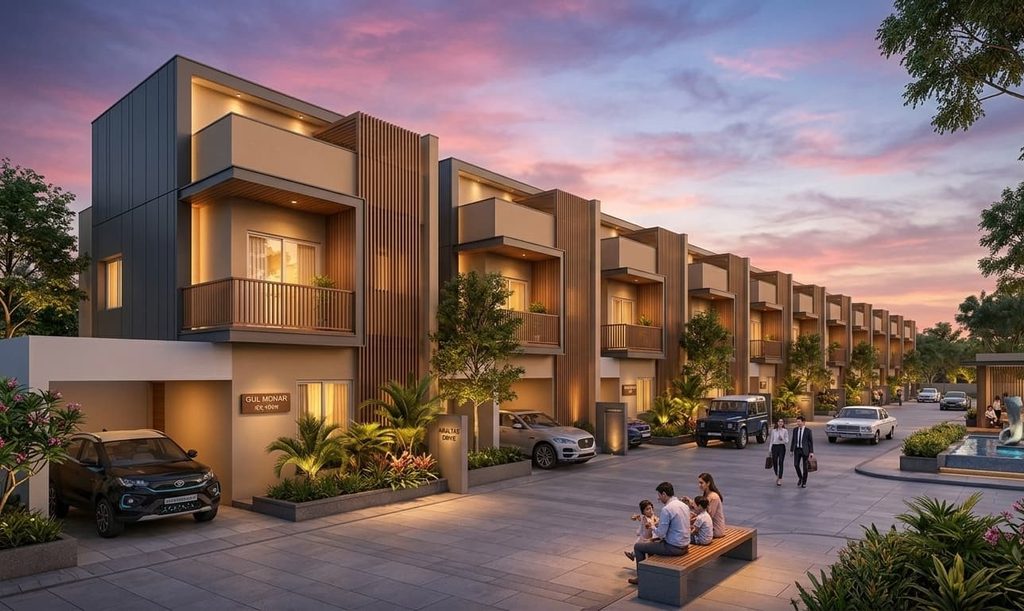
The residential market in the region is varied, spanning affordable housing initiatives to gated communities. Understanding these segments is key to navigating the property landscape. For those looking for more space and privacy, the supply of premium villas for sale offers an alternative to vertical living. These assets remain highly sought after by high-net-worth individuals who place a premium on individual land holdings and lower density environments.
Conversely, the apartment sector remains the engine of the volume market. High-rise developments allow for shared utility costs and sophisticated security systems. Property developers focusing on this segment must balance architectural density with sufficient parking and amenity space to remain competitive in a landscape where buyers are increasingly selective.
| Segment Type | Primary Driver | Target Demographic |
|---|---|---|
| High-Rise Apartments | Affordability and Amenities | First-time buyers and IT professionals |
| Township Residences | Convenience and Security | Growing families |
| Independent Houses | Status and Space | Senior management and investors |
The Role of Data and Trust in Property Transactions
The modernization of the Indian real estate sector has brought an increased focus on transparency. Buyers are more informed than ever, utilizing online databases to verify land records and developer track records before making commitments. Professionals in the industry have adapted by adopting strict user data protection guidelines to ensure that client interactions are handled with the highest standard of security. This culture of professional integrity strengthens the overall market, as buyers feel more comfortable investing their savings in property when they understand the terms and protections in place.
Heritage Prime continues to monitor these trends, observing that trust is perhaps the most valuable currency in the current environment. When developers prioritize clear communication and ethical business practices, they foster long-term loyalty that survives cyclical market downturns. Transparency in documentation and project timelines remains a competitive advantage for firms operating in the Greater Noida corridor.
Strategic Outlook: The Next Phase of Growth
Greater Noida is approaching a phase of consolidation. The initial speculative phase has passed, leaving behind a market grounded in actual occupancy and industrial activity. Looking ahead, the focus will likely shift toward sustainable development and energy efficiency. As global environmental standards influence the construction sector, projects that incorporate green building materials and water-saving technologies will likely command a premium.
Investors and end-users should pay close attention to government land-use policies. Areas designated for future industrial zones will naturally see a secondary demand for residential housing. By mapping these industrial nodes, one can identify neighborhoods that are poised for long-term appreciation. Those who are uncertain about where to focus their capital may find it beneficial to contact seasoned property experts to navigate the complex nuances of regional demand patterns.
Frequently Asked Questions
1. What factors are currently driving housing demand in Greater Noida?
The primary drivers include the expansion of industrial corridors, which creates immediate employment opportunities, alongside continuous improvements in transit infrastructure like the Aqua Line metro. These factors, combined with the availability of large, planned land parcels that allow for integrated townships, make the region an attractive choice for both working professionals and families seeking a structured urban environment.
2. How does the current real estate market compare to previous years?
In previous years, the market was often driven by speculative interest. Today, demand is significantly more end-user driven. Buyers are focused on completed or near-completion projects, showing a preference for developers who have a proven track record. There is also a distinct move toward quality, with buyers prioritizing amenities, location, and the availability of essential services like healthcare and schooling.
3. Are villas a better investment than apartments in the region?
Both asset types serve different needs. Villas offer higher land value and greater autonomy, making them attractive for high-net-worth individuals and those seeking long-term value preservation through land appreciation. Apartments, however, offer better liquidity and lower entry points, making them more popular among the broader workforce. Your choice depends on your specific financial goals and preferred lifestyle.
4. What should a buyer verify before investing in a property here?
A buyer should verify the project’s RERA registration, the developer’s delivery history, and the surrounding infrastructure development. Ensuring that the project has clear titles and necessary government approvals is essential. Additionally, considering the proximity to existing or upcoming commercial hubs will help in evaluating the long-term rental or resale potential of the property.