
Quick Summary
This comprehensive analysis explores the complex factors driving the prices of luxury villas in Greater Noida. Key factors include geographical connectivity via major expressways, infrastructural expansions like the upcoming Noida International Airport, land acquisition costs, developer reputation, and architectural standards. We also break down price trends across prominent sectors and highlight why discerning buyers are increasingly investing in this rapidly expanding residential hub.
Main Drivers of Villa Valuation in Greater Noida
How does geographic location and proximity to key expressways influence prices?
Geographic location remains the primary determinant of property value in any major metropolitan extension. In Greater Noida, the proximity to major arterial corridors like the Noida-Greater Noida Expressway, the Yamuna Expressway, and the Eastern Peripheral Expressway significantly determines the market value of independent houses. Properties situated closer to these expressways command a premium due to reduced travel times to central Delhi, Noida, and Faridabad. This accessibility increases interest from senior corporate executives and business owners who seek spacious homes without compromising their daily commute. Additionally, sectors aligned along the metro corridor, particularly those near the Aqua Line stations, show a noticeable price premium compared to interior sectors. Land pricing decreases as one moves further away from these transport networks, highlighting the value of connectivity. Buyers looking for premium residential properties in Delhi NCR often prioritize these well-connected pockets to secure long-term capital appreciation.
Along with this, proximity to commercial office clusters and major software parks in Sector 142, Sector 135, and the Knowledge Park areas creates a premium micro-market. Villa communities situated near these business zones experience higher demand from high-earning corporate employees who wish to minimize commute times. This concentration of employment hubs drives both capital appreciation and rental demand, reinforcing the market value of surrounding independent homes. As land becomes increasingly scarce along the primary expressway corridors, the premium on existing residential land allotments continues to escalate, ensuring that properties near these transit routes maintain stable, upward pricing curves over time.
What role does infrastructure development play in real estate valuation?
Infrastructural growth acts as a powerful catalyst for property valuation. The development of civic amenities, including multi-specialty hospitals, international schools, retail complexes, and commercial hubs, plays a direct role in raising villa prices. In Greater Noida, planned sectors with wide roads, underground cabling, reliable drainage systems, and extensive green belts attract higher demand. Additionally, major infrastructure projects, particularly the upcoming Noida International Airport at Jewar, have redefined the pricing dynamics of the entire region. Even before its operations commence, the anticipation of international connectivity has triggered a steady upward adjustment in land and villa rates.
The long-term impact of municipal planning is evident when comparing Greater Noida to other unorganized expansions in neighboring areas. The master plan for Greater Noida ensures that utility services, broad roadways, and dedicated green reserves are established before residential occupation begins. This pre-planned development limits local congestion and pollution, creating a peaceful living environment that high-income families find highly desirable. Buyers are willing to pay more today because they anticipate substantial equity growth once these public utility projects are completed. Additionally, the establishment of dedicated industrial and IT parks nearby attracts high-earning professionals, creating a robust local market for spacious residential units.
Architectural Design, Plot Size, and Construction Quality
How do premium amenities and developer reputation shift cost expectations?
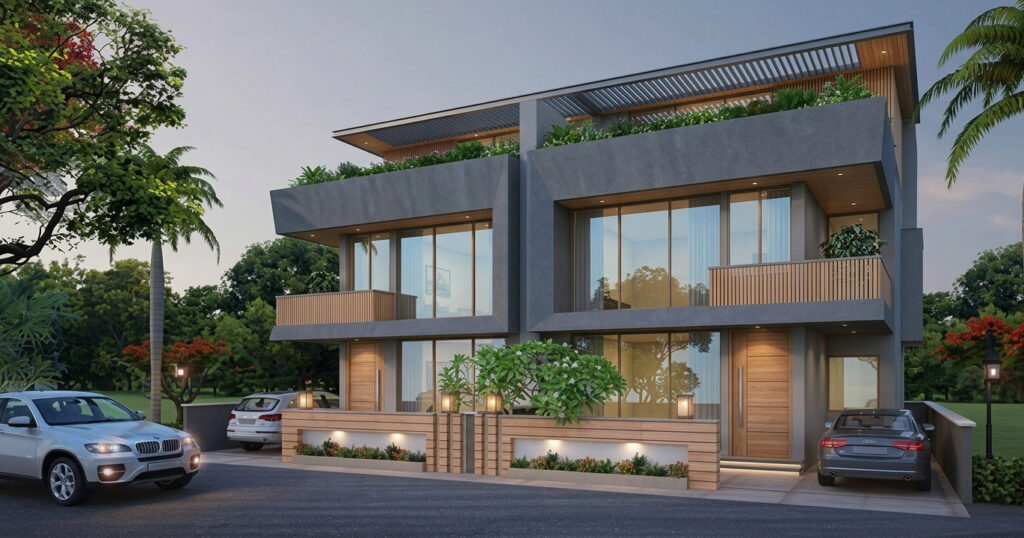
The reputation of the builder and the architectural quality of the construction are critical components of villa pricing. Established real estate developers with a track record of delivering high-quality structures can charge a premium of fifteen to thirty percent over lesser-known competitors. This price difference reflects the trust in structural integrity, timely delivery, and premium post-handover maintenance services. When examining the latest real estate projects in Delhi NCR, the inclusion of modern clubhouses, private swimming pools, landscaped gardens, and round-the-clock multi-tier security systems adds substantial value. A villa is not just an independent house: it is a lifestyle package. Gated villa communities that offer private concierge services, backup power grids, and well-maintained common parks naturally command much higher valuations than standalone houses built on individual municipal plots where maintenance is uncoordinated.
The quality of structural elements, raw materials, and interior finishing also plays an important role. High-end developments use premium Italian marble, double-glazed soundproof glass, advanced moisture-resistant sealants, and premium grade steel and cement. These elements minimize long-term maintenance requirements, saving owners substantial upkeep costs. Developers with a stellar reputation also offer better structural warranties and professional community management, ensuring that common utilities, internal roads, and perimeter security remain in top-tier condition for decades, thereby maintaining the high value of the properties within the estate.
What is the impact of smart home automation and sustainable building practices?
Modern luxury buyers demand modern features, and developers are adapting by integrating advanced home automation and ecological solutions. Villas equipped with smart security integration, automated climate control, motion-sensing lighting, and smart kitchen appliances are valued higher in the market. Beyond comfort, environmental sustainability has also become a significant factor. Features such as rainwater harvesting systems, solar panel installations, waste management setups, and thermal-insulated glazing add to the initial construction cost but result in lower long-term operational costs. These green certifications and sustainable practices enhance the long-term desirability of the property, helping it retain and grow its value in a market that is increasingly conscious of its ecological footprint. Heritage Prime notes that buyers show a clear preference for properties that balance luxury with sustainable, efficient energy usage.
In addition, eco-friendly developments often enjoy lower municipal tax rates and favorable utility pricing in some jurisdictions, adding a financial incentive to environmental consciousness. The integration of high-speed fiber-optic connectivity, electric vehicle charging docks in private garages, and greywater recycling systems are no longer considered optional upgrades; they are integrated directly into the baseline structure of modern high-value villas, creating a distinct price barrier between outdated developments and modern luxury estates.
Regulatory Policies, Zoning, and Land Acquisition Costs
How do local authority regulations affect the final pricing of independent villas?
The local administrative bodies, such as the Greater Noida Industrial Development Authority (GNIDA), establish guidelines that directly impact construction costs and overall property pricing. Land allotment rates, circle rates, external development charges (EDC), and internal development charges (IDC) set by the authority form the financial baseline for any villa project. When the authority revises circle rates upward, acquisition costs for developers rise, which is inevitably passed on to the end consumer. Floor Area Ratio (FAR) regulations also play a major role: restrictions on how much built-up area can be constructed on a given plot size limit the supply of ultra-spacious configurations, pushing prices higher for existing large-scale homes.
Compliance with the Real Estate Regulatory Authority (RERA) is another major price driver. While RERA registration safeguards the interests of buyers, the administrative costs, compliance procedures, and mandatory escrow accounts required under the system can limit developer liquidity, resulting in higher initial launching prices. However, this legal structure gives buyers confidence, reducing transaction risks and making the market far more attractive to long-term institutional and retail investors. This secure regulatory framework justifies the premium associated with organized developments compared to unapproved, non-RERA compliant properties on the city fringes.
Market Demand, Investment Trends, and ROI Expectations
Why are high-net-worth individuals choosing Greater Noida over other parts of the National Capital Region?
The search for a balanced lifestyle has shifted the focus of high-net-worth individuals toward micro-markets that offer both space and modern infrastructure. Unlike crowded micro-markets in other parts of the National Capital Region, Greater Noida offers larger plot layouts, cleaner air indexes, and organized urban planning. This shift has accelerated the demand for expansive living configurations, such as the Ayodhya Enclave luxury villa project, which caters to families seeking privacy, safety, and modern designs within an organized community. This concentration of premium buyers has altered the market dynamic, transforming the area from a secondary investment option into a primary residential choice.
In addition to the immediate lifestyle benefits, the long-term investment potential is a major driver of current market prices. The region is seeing a high influx of foreign direct investment, with large corporate groups, data centers, and industrial facilities establishing offices along the Yamuna Expressway corridor. This commercial expansion ensures a continuous inflow of corporate leaders and executive talent, maintaining a robust luxury rental market. To explore customized investment opportunities or clarify pricing structures, buyers often choose to get in touch with our real estate consultants to navigate the market effectively.
Comparative Analysis of Price Zones in Greater Noida
To provide a clearer view of the local landscape, we have analyzed the average pricing trends across various prominent sectors in Greater Noida. The pricing variations reflect factors such as proximity to expressways, the quality of local civic amenities, and the presence of premium gated developments. Below is a detailed comparison of these zones:
| Sector / Region | Average Price Range (per sq. ft.) | Primary Price Influencers |
|---|---|---|
| Sector Chi, Phi & Theta | INR 12,000 – INR 18,000 | Immediate access to Noida-Greater Noida Expressway, premium gated projects, and established golf course developments. |
| Sector Delta & Gamma | INR 8,500 – INR 12,500 | Mature residential neighborhoods, proximity to administrative offices, and established markets. |
| Greater Noida West (Noida Extension) | INR 7,000 – INR 11,000 | High density of group housing projects, growing commercial markets, and improving metro connectivity. |
| Yamuna Expressway Sectors | INR 6,000 – INR 9,500 | High long-term growth potential due to proximity to the upcoming Jewar Airport and upcoming industrial corridors. |
These figures illustrate how geography and infrastructure development create localized micro-markets. Sectors positioned directly along the expressway or bordering premium lifestyle facilities like golf courses command the highest price bands. Conversely, areas that are currently developing their civic infrastructure offer more accessible entry prices, making them attractive for long-term investors aiming for high capital appreciation over the next five to ten years. Understanding these differences helps buyers identify which sector matches their financial plans and lifestyle preferences.
Frequently Asked Questions
What is the average cost per square foot for a premium villa in Greater Noida?
The average price of a premium villa in Greater Noida varies widely based on location and amenities. In well-connected areas along the Expressway, such as Sector Chi or near the golf courses, prices generally range between INR 12,000 and INR 18,000 per square foot. In newly developing zones, such as the sectors along the Yamuna Expressway, prices start at around INR 6,000 to INR 9,500 per square foot, offering excellent options for buyers looking for long-term growth.
How does the Jewar Airport project impact current and future villa prices?
The Noida International Airport at Jewar is a major driver of real estate interest in Greater Noida and the Yamuna Expressway region. The project has accelerated corporate interest and commercial investment, driving up land acquisition costs and demand for premium independent residences. This infrastructure expansion is expected to continue supporting high property valuation and rental demand over the next decade.
Is it better to buy an independent villa or a villa inside a gated community?
Villas in gated communities generally command higher prices and retain value better than standalone villas. This premium is due to shared luxury amenities, structured upkeep, and advanced multi-tier security systems. Gated community developments also offer better community management, making them highly desirable for families and corporate tenants looking for safety and lifestyle conveniences.
How can investors verify the legal safety of villa projects in Greater Noida?
To ensure maximum safety, investors should verify the project RERA registration number on the UP RERA portal. It is also important to check the allotment letter and land dues clearance from the Greater Noida Industrial Development Authority (GNIDA). Consulting with experienced real estate professionals can further simplify the process and verify that the property has all necessary clear titles and environmental approvals.