
Quick Summary
Greater Noida is rapidly shifting from an industrial suburb into the National Capital Region’s most sought after residential zone. This transition is powered by exceptional grid-based master planning, upcoming mega-infrastructure projects like the Noida International Airport at Jewar, and a massive focus on open green spaces. This article provides a comprehensive look at the market dynamics, educational hubs, and rising demand for luxury housing that make Greater Noida a prime destination for modern living and strategic investments.
The Evolving Landscape of Greater Noida Real Estate
The evolution of Greater Noida is one of the most successful examples of large scale urban planning in South Asia. Originally conceived in the early 1990s as an extension to accommodate the spillover population of Delhi and Noida, the city was developed using a highly structured, grid-iron layout. Unlike older cities that expanded organically without adequate zoning, Greater Noida was mapped out from its inception with clear divisions between industrial, institutional, commercial, and residential sectors. This meticulous organization ensures that residential zones remain free from heavy commercial traffic and industrial pollution.
The local authority, Greater Noida Industrial Development Authority (GNIDA), has systematically focused on creating wide roads, underground utility networks, and massive green belts that run parallel to primary transit corridors. Over the last decade, this approach has drawn the attention of prominent developers who saw an opportunity to build projects that are impossible to execute in highly congested urban pockets. Today, the city is characterized by its expansive avenues, manicured public parks, and a clean, open atmosphere that is increasingly rare in other parts of the National Capital Region (NCR).
What makes Greater Noida different from Delhi and Gurugram?
When comparing the urban design of Greater Noida to Delhi and Gurugram, the differences in spatial management are stark. Delhi, with its historic density, struggles with aging infrastructure, extreme traffic congestion, and a severe shortage of open land, making new residential options prohibitively expensive and cramped. Gurugram experienced rapid commercial growth, but its rapid expansion often outpaced municipal infrastructure, leading to recurring issues such as water logging, inadequate drainage, and high-density clustering without sufficient public parks.
Greater Noida, on the other hand, was built with future expansion in mind. Residential sectors feature wide arterial roads, with minimum widths of 60 meters, ensuring smooth traffic flow even during peak hours. The drainage systems are designed to handle heavy monsoon downpours, and utilities like power lines and telecom cables are placed entirely underground to prevent visual clutter and weather related disruptions. This structured approach provides residents with a peaceful, clean, and highly predictable living environment that its neighboring cities cannot replicate.
How does the master plan support long term residential growth?
The master plan implemented by GNIDA guarantees that the ratio of green space to concrete remains exceptionally high. Over twenty percent of the total land area is dedicated to green belts, regional parks, and recreational zones. This master plan also ensures that every residential sector is self-sustaining, featuring designated local shopping centers, milk booths, dispensaries, and community halls within walking distance. This localized planning model prevents the necessity of long commutes for daily necessities, keeping regional roads clear and reducing overall carbon emissions.
Infrastructure Catalysts Driving Residential Appeal
An influx of major infrastructure projects has transformed Greater Noida from a quiet suburb into a highly connected regional economic engine. The presence of high speed expressways, extended metro corridors, and an upcoming international airport has made this region highly accessible, drawing both homebuyers and commercial enterprises to establish a permanent presence here.
How will the Noida International Airport transform local property values?
The development of the Noida International Airport at Jewar is the single most significant factor driving the real estate market in Greater Noida today. As construction nears completion for the initial phases, the airport is poised to act as a major global transit gateway for western Uttar Pradesh and the broader NCR. This megaproject is not merely about air travel: it is bringing massive investment in the form of logistics parks, hospitality projects, aviation academies, and manufacturing zones along the Yamuna Expressway.
Residential properties within a 30 to 45 minute drive of the airport site are experiencing sustained demand as multinational companies set up offices nearby. Working professionals, frequent flyers, and corporate executives are actively looking for high quality homes in well planned sectors, driving up capital values and rental yields. The airport is effectively shifting the economic gravity of NCR eastward, positioning Greater Noida as a prime hub for global commerce.
What role does the Aqua Line Metro expansion play in daily commuting?
Public transit is key to any successful residential micro-market. The Aqua Line Metro, managed by the Noida Metro Rail Corporation, currently connects major sectors of Noida with Greater Noida, terminating at Depot Station near Pari Chowk. This dedicated transit corridor has significantly simplified the daily commute for thousands of office-goers, students, and families. Plans are already underway to extend the Aqua Line further into Greater Noida West, which will connect highly populated housing complexes with commercial zones, providing direct transit without the stress of road traffic.
How do major expressways improve regional accessibility?
The connectivity network of Greater Noida is built around three major expressways: the Noida-Greater Noida Expressway, the Yamuna Expressway, and the Eastern Peripheral Expressway. The Noida-Greater Noida Expressway provides a seamless link to South Delhi and Noida’s commercial sectors. The Yamuna Expressway opens up direct access to Agra and Central Uttar Pradesh, while the Eastern Peripheral Expressway loops around the entire NCR, letting commuters bypass Delhi traffic entirely when traveling toward Haryana or Punjab. This trifecta of expressways makes Greater Noida one of the most accessible areas in northern India.
The Rise of Luxury Housing and Gated Communities
As consumer preferences evolve, there is a clear shift toward spacious, secure, and low density living. While high-rise apartments still dominate much of the NCR skyline, discerning homebuyers are increasingly turning their attention to premium developments that offer privacy, open green lawns, and customized living layouts.
Why are end-users choosing modern villa developments over high-rise apartments?
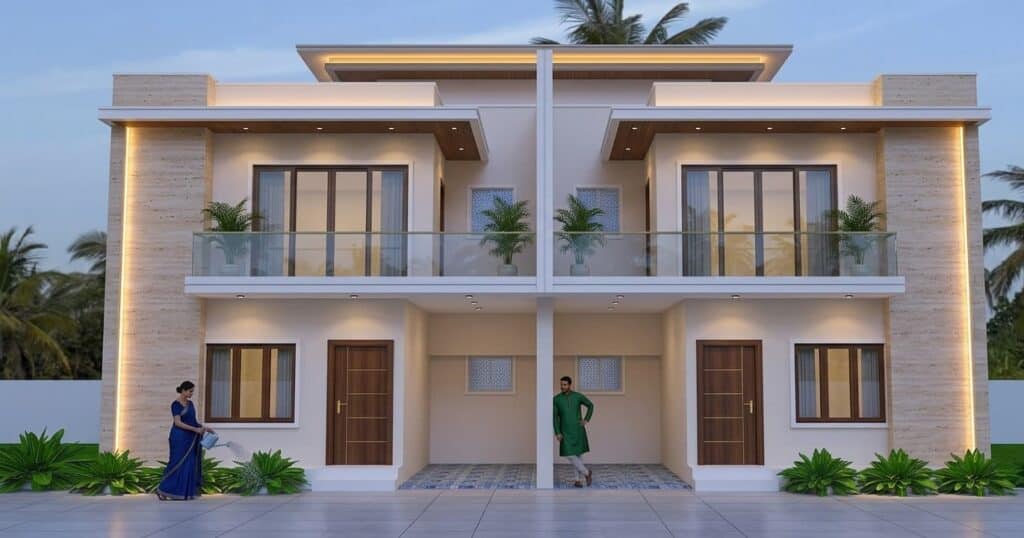
The desire for larger living spaces and greater privacy has led to a boom in low density residential developments. High-rise living, while convenient, often comes with crowded common areas, lift waiting times, and a lack of personal open spaces. Homeowners are now seeking independent residences where they can have private gardens, personal terraces, and the freedom to design their interiors without structural constraints. Buyers looking for these premium lifestyle options are investing in projects like the Palm Villas Noida gated community, which combines the independence of a luxury villa with the comprehensive security and community benefits of a master planned estate.
What premium amenities do modern residential projects in this zone offer?
Modern projects in Greater Noida are designed to resemble high end resorts. Developers are incorporating world class clubhouses, temperature controlled indoor swimming pools, private movie theaters, multipurpose sports courts, and extensive walking trails. The availability of larger land parcels allows for low density layouts with expansive central greens, children’s play zones, and senior citizen pavilions. For those exploring the market, investing in luxury independent villas in Noida and Greater Noida offers a unique opportunity to secure vast spaces at a price point that is highly competitive when compared to the cramped luxury markets of South Delhi and Gurugram.
Educational and Commercial Ecosystem of Greater Noida
A sustainable residential zone must offer robust employment opportunities and quality education to retain families over the long term. Greater Noida has successfully integrated both, creating a self-sustaining ecosystem that eliminates the need for residents to travel to other parts of the NCR for work or study.
Which educational institutions are attracting families to the region?
Knowledge Park, a dedicated institutional zone in Greater Noida, houses some of the region’s finest educational institutions. From prominent business schools to top tier engineering colleges and massive private universities like Sharda University, Galgotias University, and Shiv Nadar University, the area has become a major educational hub. In addition to higher education, the city features highly rated international schools such as Delhi Public School, Ryan International, and Step by Step, making it incredibly convenient for families with children to access world class education right in their neighborhood.
How is the corporate landscape expanding near Yamuna Expressway?
The local commercial market is expanding rapidly, with major IT firms, manufacturing conglomerates, and data centers setting up offices along the expressways. Global tech giants and electronic manufacturing companies have established massive campuses, creating thousands of high paying local jobs. Additionally, the development of specialized commercial zones, tech parks, and the upcoming Film City has accelerated corporate interest, encouraging executives and employees to purchase homes close to their workplaces.
Strategic Investment Potential and Market Analysis
From a pure investment perspective, Greater Noida represents one of the most reliable growth trajectories in the national real estate landscape. With balanced development, realistic pricing, and massive upcoming infrastructure projects, the region offers high capital appreciation potential with lower downside risks compared to other saturated markets.
What does historical price appreciation tell us about the future market?
Over the past five years, residential property prices in Greater Noida have shown stable and healthy growth. The market has moved away from speculative bubbles, transitioning into an end-user dominated space where price increases are driven by actual infrastructure delivery and rising occupancy rates. Let us examine the average capital values across key residential sectors:
| Year | Average Price (INR per Sq. Ft.) | Year-on-Year Growth |
|---|---|---|
| 2020 | 3,800 – 4,500 | Stable baseline |
| 2021 | 4,200 – 5,000 | ~10.5% |
| 2022 | 4,800 – 5,800 | ~15.0% |
| 2023 | 5,800 – 7,200 | ~22.0% |
| 2024 | 7,500 – 9,500 | ~28.0% |
This steady appreciation is a direct reflection of improving livability indices and physical infrastructure development. For detailed updates, market analysis, and emerging patterns, you can refer to our NCR real estate blog and market insights to stay informed about upcoming projects and regulatory shifts.
How does the regulatory framework protect property buyers here?
The implementation of UP-RERA (Uttar Pradesh Real Estate Regulatory Authority) has established a secure and transparent marketplace in Greater Noida. Buyers are protected against project delays, arbitrary changes in structural layouts, and financial misappropriation by developers. Heritage Prime remains committed to maintaining these transparent practices across all real estate advice and structural transactions. To understand how user information is handled securely during property inquiries, please review our strict user data protection guidelines which outline our commitment to transactional safety and personal privacy.
Frequently Asked Questions
1. Is Greater Noida safe for families?
Greater Noida is highly secure for families, featuring a modern grid layout that makes police patrolling highly effective. The local development authority has set up extensive CCTV networks across major intersections. Most housing societies and gated communities employ multi-tier digital visitor management and physical security systems, ensuring a safe and serene environment for children and senior citizens alike.
2. How far is Greater Noida from the upcoming Jewar Airport?
The distance varies depending on the specific sector. Centrally located sectors like Pari Chowk or Sector Chi are roughly 35 to 40 kilometers away from the Jewar Airport site. Thanks to the wide, signal free design of the Yamuna Expressway, this distance can be covered in less than 35 to 40 minutes under standard traffic conditions, offering great convenience for frequent travelers.
3. What is the average rental yield in Greater Noida sectors?
The average residential rental yield ranges between 3% and 4.5% annually. Sectors situated close to commercial hubs, corporate campuses, and major educational institutions in Knowledge Park often experience higher rental demand, making them highly profitable for investors seeking steady passive income from their real estate portfolios.
4. How does the green cover in Greater Noida compare to other parts of NCR?
Greater Noida stands out with over 20% dedicated green cover, which is significantly higher than most parts of Delhi, Gurugram, or older areas of Noida. The town planning strictly maintains massive open spaces, central parks, and green buffers along all main roads, which helps keep the air quality index relatively healthier and provides residents with a much greener lifestyle.