
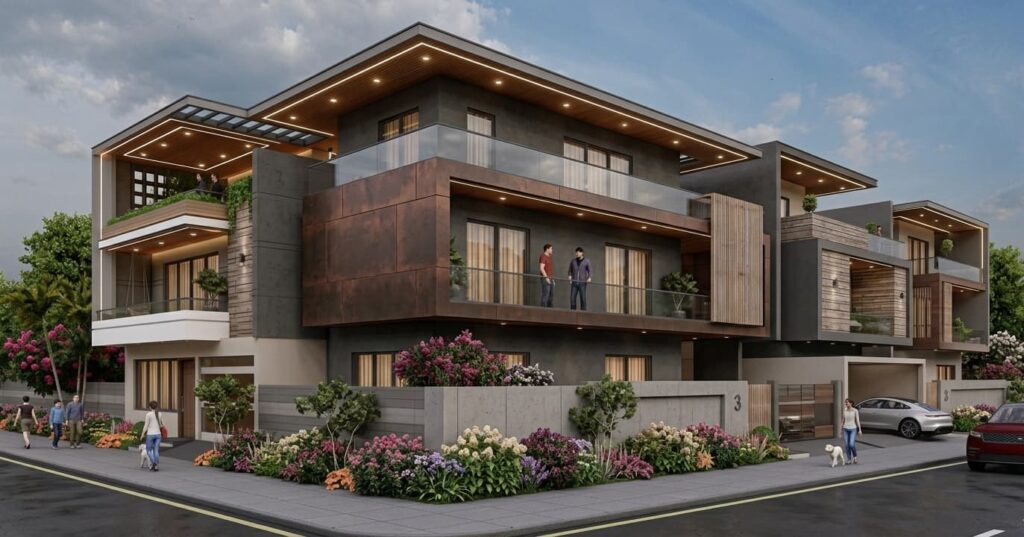
Quick Summary
The transition to remote and hybrid work models has permanently altered real estate preferences, steering professionals away from cramped urban apartments toward spacious suburban villas. This comprehensive analysis explores how the need for dedicated workspaces, private wellness areas, and long-term financial security drives the rising demand for independent homes, particularly in the expanding landscapes of Delhi NCR.
The Evolution of the Workspace and the Shift to Spreading Out
The modern professional landscape has undergone a permanent restructuring. What began as a temporary response to global circumstances has solidified into a structural shift in how businesses operate. Remote and hybrid work arrangements are no longer occasional perks; they are standard operating models for major corporations, tech firms, and professional service providers worldwide. This transformation has stripped away the requirement of daily commuting, allowing professionals to reconsider where and how they live.
When the office was a physical destination miles away, residential properties were frequently viewed as resting places, empty for most of the day. Today, the home is a multi-functional hub where economic productivity, leisure, family life, and physical wellness occur simultaneously. This continuous occupancy puts an unprecedented strain on residential infrastructure. High-density apartment living, once prized for proximity to commercial business districts, is increasingly viewed as restrictive and inadequate for the demands of continuous daily occupancy.
How has the daily routine changed for modern professionals?
The average workday now involves multiple video conferences, collaborative online sessions, and long periods of deep focus. Without the physical separation of an office commute, professionals must establish clear boundaries between their corporate tasks and personal lives. In a conventional apartment, these boundaries blur easily. The kitchen table becomes a desk, the living room couch serves as a conference space, and the presence of family members or housemates creates immediate friction. This lack of structure has prompted a major reassessment of spatial requirements, driving interest toward larger, low-density housing options.
Why are traditional apartments falling short for long-term remote setups?
Standard high-rise apartments are designed around the concept of shared amenities and optimized spatial efficiency. However, when multiple family members are working or studying from home, the lack of acoustic isolation and physical space becomes a major challenge. Shared walls, ambient noise from neighboring units, and limited natural light can hinder productivity. Furthermore, the absence of private outdoor spaces in typical apartments prevents professionals from taking brief, quiet breaks to recharge, making the independent structure of a villa highly attractive.
Space as the New Luxury: Indoor and Outdoor Integration
In the current real estate market, luxury is no longer defined solely by imported finishes or central urban addresses. Instead, luxury is defined by space, privacy, and control over one’s immediate environment. Modern buyers are looking for homes that offer physical separation from the noise of the city, along with the flexibility to customize their surroundings. This shift in buyer psychology has altered the trajectory of the high-end residential sector, bringing low-density developments to the forefront of buyer searches.
These trends have significantly influenced the performance of luxury housing spaces in Delhi NCR, where spacious formats are consistently outperforming high-density apartments. The desire for independent living structures is rooted in the need for versatility. A villa provides the owner with ownership of both the structure and the land, offering opportunities for expansion, personalization, and landscaping that are simply impossible in a condominium development. The integration of indoor areas with private yards, patios, and terraces creates a continuous living experience that supports both professional concentration and personal relaxation.
What design elements make a home suitable for continuous occupancy?
A home built for continuous occupancy must feature high ceilings, expansive windows to maximize natural light, and a layout that facilitates air circulation. It should also incorporate quiet zones that are physically removed from high-traffic domestic areas like the kitchen or family room. Villas naturally accommodate these features. With multi-level layouts, a villa allows residents to locate their working areas on a separate floor from the social spaces, establishing a clear physical and mental boundary between work and domestic life.
Dedicated Home Offices vs. Multifunctional Spaces
The makeshift workspace of the past has been replaced by the professional-grade home office. Today’s remote workers require setups that mimic corporate executive suites, featuring high-speed connectivity, professional backdrops for virtual meetings, ergonomic furniture, and advanced lighting control. Managing these setups within a standard apartment layout requires compromises that often reduce the overall comfort of the home. Consequently, the demand for properties that can accommodate dedicated workspaces without sacrificing bedroom or living areas has surged.
For instance, modern buyers often seek independent homes with modern amenities to ensure that professional duties do not conflict with family recreation. This separation is particularly important for dual-income households where both partners work remotely. Two concurrent video calls in close proximity can create acoustic interference and logistical challenges, making separate, insulated workspaces a modern necessity rather than a luxury preference.
Why do dual-income remote households require separate workstations?
When both partners work in corporate or creative roles, their daily schedules often clash. One may be hosting a collaborative team session while the other is analyzing sensitive financial data that requires confidentiality. A typical apartment rarely offers two distinct rooms that can be converted into soundproof offices without disrupting the household. Villas, with their multiple rooms, basements, or study alcoves, provide the physical capacity to house two distinct, high-functioning workspaces without compromise.
How do acoustic separation and layout design impact remote work performance?
Acoustic privacy is critical for productivity. Sound travels easily through thin apartment walls and shared utility shafts. In contrast, independent villas offer superior acoustic separation due to thicker outer walls, private structural foundations, and the absence of neighboring units directly above or below. A well-designed villa layout allows for the strategic positioning of the office away from street noise and internal domestic activities, which helps maintain focus and reduces mental fatigue.
Wellness, Greenery, and Mental Health in Suburban Enclaves
The psychological toll of spending nearly twenty-four hours a day indoors has brought wellness to the forefront of residential real estate design. Long hours of screen time, virtual communication, and sedentary habits make access to nature a vital part of daily health. Remote workers are realizing that their immediate environment directly impacts their stress levels, creativity, and energy levels. This realization has driven a wave of migration toward suburban enclaves and master-planned low-density developments.
The demand for luxury independent villas in Noida highlights a broader cultural shift toward prioritizing green buffers and low-density neighborhoods. These micro-markets offer clean air, quiet environments, and private green spaces that are difficult to find in central urban locations. Having a private garden or terrace allows remote workers to step outside for a screen break, engage in physical exercise, or work outdoors on mild days, which supports overall well-being and productivity.
What role does private outdoor space play in professional well-being?
Access to private green space offers significant restorative benefits. Studies in environmental psychology suggest that brief interactions with nature can restore cognitive resources, reduce cortisol levels, and enhance problem-solving abilities. For a remote worker, a private backyard or courtyard is more than a aesthetic asset; it is an active wellness space that provides a safe area for outdoor recreation, exercise, and mental decompression throughout the busy workday.
Economic Considerations and Long-Term Value Appreciation
While the lifestyle benefits of villa living are clear, the financial performance of these properties is equally compelling. For many years, urban apartments were favored for their liquidity and rental yields. However, the premium residential sector has experienced a structural shift. Land ownership remains one of the most reliable methods for long-term wealth preservation. Since land is a finite resource, plotted developments and independent villas generally appreciate at a higher rate than high-rise apartments, where structural depreciation can affect the long-term value of the building.
To illustrate the differences between these two property types, particularly from the perspective of a remote professional, consider the following structural comparison:
| Feature / Variable | High-Rise Apartments | Independent Luxury Villas |
|---|---|---|
| Spatial Flexibility | Limited by structural columns and strict association guidelines. | High; options for expansion, remodeling, and custom room layouts. |
| Acoustic Privacy | Moderate to low; shared floors, ceilings, and walls. | High; private structural footprint with no shared walls. |
| Outdoor Integration | Limited to small balconies and shared community parks. | Extensive private lawns, terraces, and open-air courtyards. |
| Long-Term Asset Value | Linked to structural lifespan; land share is divided among many. | High; direct ownership of land provides enduring value. |
| Work-Life Balance | Challenging due to shared boundaries and compact designs. | Excellent; dedicated levels and wings facilitate spatial division. |
Additionally, the rise of remote work has changed the relationship between location and cost. Previously, buyers paid a significant premium to live close to city centers. Now, with commuting reduced to a few days a month or eliminated entirely, buyers can direct their budgets toward larger suburban properties. This geographical shift allows them to acquire more square footage and private land for the same capital investment required for a premium city-center apartment.
Is buying a villa a sound financial move compared to high-end apartments?
Yes, historical real estate data shows that land appreciates significantly faster than concrete structures. In a high-rise condominium, a buyer’s investment is tied to a share of land divided among hundreds of residents, whereas a villa owner holds direct title to the plot. Over time, as suburban infrastructure improves and land becomes increasingly scarce, the land value of a villa typically drives overall property appreciation, outperforming vertical apartments in the long run.
Micro-Location Dynamics: Noida and Delhi NCR Lead the Way
The national capital region, particularly Noida, has emerged as a preferred destination for high-end residential developments. With its wide expressways, planned sectors, and focus on green space, the region offers an ideal environment for low-density residential enclaves. Modern professionals are moving away from congested urban pockets in search of planned communities that offer both space and connectivity.
Discerning home buyers seeking privacy combined with superior connectivity are looking toward developments like the ultra-luxury homes in Noida as premier examples of this lifestyle evolution. These master-planned enclaves offer private, low-density living alongside modern communal facilities, giving residents the benefits of independent homes without sacrificing security, maintenance, or social amenities. The proximity to key transport corridors ensures that when travel to the office or airport is required, it can be completed efficiently.
Where are remote workers choosing to set up their long-term bases?
The preferred locations are master-planned sectors along major expressways. These areas provide structured utility networks, underground cabling, robust power backup, and reliable high-speed internet infrastructure, all of which are essential for uninterrupted remote operations. These sectors offer a quiet, suburban atmosphere while remaining connected to major retail, educational, and medical hubs, making them practical choices for growing families.
Future Outlook: Will Remote Work Demand Persist?
The demand for spacious, independent housing is not a temporary trend. While some organizations have reintroduced hybrid office schedules, the expectation of flexibility has become deeply embedded in professional culture. Highly skilled professionals frequently prioritize workplace flexibility when selecting employers, and companies use remote-friendly policies to attract top-tier talent. This means that the need for functional, spacious home offices will remain a key consideration in real estate decisions for years to come.
As smart home technology, high-speed fiber networks, and decentralized business districts continue to develop, the distinction between urban center convenience and suburban lifestyle quality will become less pronounced. The premium residential market, represented by developers associated with Heritage Prime, is adapting to these changes by building homes designed for both professional performance and personal well-being. Investing in a villa is increasingly recognized as a commitment to a balanced, productive, and future-proof lifestyle.
Frequently Asked Questions
Why do remote workers prefer villas over premium high-rise apartments?
Remote workers prefer villas because they provide greater square footage, superior acoustic isolation, and private outdoor areas. This design makes it easier to set up professional home offices away from everyday household noise, improving concentration and productivity.
How does villa living improve productivity for work-from-home professionals?
Villas allow for physical and mental separation between professional and domestic life. Multi-level layouts enable dedicated office spaces on separate floors, while private gardens and terraces offer quiet outdoor spaces to recharge, reducing screen fatigue and supporting focus.
Is buying a villa a better financial investment than a luxury apartment?
Yes, villas typically offer better long-term capital appreciation because they include direct ownership of the land. High-rise apartment values are closely tied to the physical structure, which can depreciate, whereas land is a scarce resource that gains value over time.
What specific layout features should a remote worker look for in a modern villa?
A remote worker should prioritize villas with dedicated study rooms or adaptable basements, high-speed fiber-optic connectivity, large windows for natural light, and private outdoor spaces. These features ensure a comfortable, quiet, and efficient remote working environment.