
Quick Summary
Villas represent one of the most resilient asset classes in real estate due to their high land-to-structure value ratio. While building materials and physical structures depreciate over time, the underlying land consistently appreciates. This editorial analyzes how complete ownership autonomy, security in low-density gated communities, and strong structural longevity make villas a safer, highly defensive investment for long-term wealth preservation.
The Underlying Land Advantage in Villa Ownership
To understand the safety of a real estate investment, one must analyze the fundamental components of property value: the land value and the structural value. In standard residential purchases, the buyer pays for both. However, these two assets behave in completely opposite ways over a multi-decade timeline. Physical structures, regardless of the quality of concrete and finishes, undergo constant wear, tear, and obsolescence. They depreciate. Land, on the other hand, is a finite resource that steadily appreciates as population density and economic activity around it increase.
When an investor purchases a high-rise apartment, their legal ownership of the ground beneath is limited to an Undivided Share of Land (UDS). This fraction is calculated by dividing the total plot area among hundreds or even thousands of individual flat owners. Consequently, when the building reaches the end of its structural life cycle, the value of that individual UDS is often minimal. This makes high-rise investments highly susceptible to long-term depreciation, leaving owners with an asset that loses its primary value over fifty to sixty years.
Why does land appreciate faster than built-up areas?
Land appreciation is driven by basic economic principles of supply and demand. In major urban centers and expanding suburban corridors, the supply of land is fixed, while the demand from developers, commercial enterprises, and residential buyers rises continuously. Built-up spaces can be duplicated vertically, but the geographic footprint of a premier neighborhood cannot be expanded. This spatial scarcity ensures that land values rise at a velocity that far outpaces structural inflation.
Additionally, land offers absolute utility. It can be redeveloped, repurposed, or subdivided depending on future municipal zoning changes. This inherent versatility protects the owner against changes in architectural trends or shifting buyer preferences. An investor who holds a significant land parcel through a private villa maintains a highly liquid, highly adaptive asset that retains utility value across generations.
How does clear land ownership mitigate depreciation risks?
Clear, independent title deeds for a plot of land eliminate the complex legal dependencies that plague shared properties. In a multi-owner building, any major reconstruction, redevelopment, or structural repair requires the unanimous consent of the homeowners association. This often leads to protracted legal disputes, neglect, and accelerated structural decay. In contrast, the owner of a villa retains unilateral decision-making power over the physical asset, allowing them to perform preventative maintenance, upgrade systems, and preserve the property value without external interference.
Autonomy, Expansion, and Architectural Control
Another compelling argument for villas as defensive assets is the high degree of operational autonomy they grant the owner. Unlike apartment living, where residents are bound by restrictive bylaws, shared walls, and standardized layouts, villa owners enjoy complete sovereignty over their living environment. This autonomy has direct economic value, as it allows the asset to evolve alongside the changing financial or personal needs of the owner.
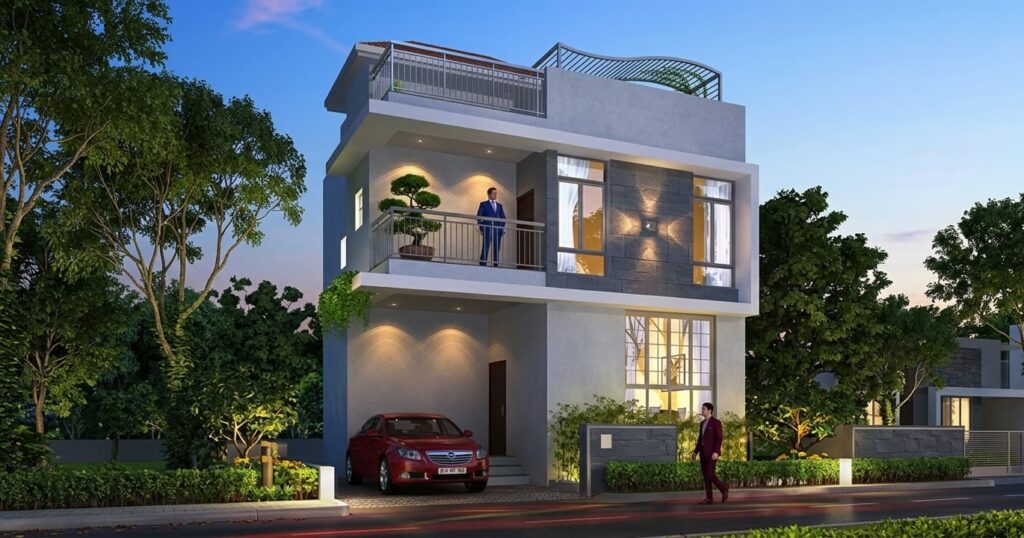
For those who prioritize flexibility, choosing independent homes with modern amenities ensures that the property is built to modern structural guidelines while retaining individual plot rights. This balance between community-managed services and individual autonomy is a hallmark of low-density luxury developments, protecting the buyer from both the chaos of unorganized standalone plots and the rigid constraints of high-density towers.
Can you remodel or expand a villa over time?
Yes, subject to local municipal building codes and Floor Area Ratio (FAR) regulations, villa owners can freely expand their properties. This might involve adding an extra floor, building an annex, expanding the kitchen, or constructing a private home office. Such physical expansions allow the property to adapt to growing families or changing lifestyle trends without forcing the owner to sell and move. In a vertical apartment block, adding square footage to an existing unit is physically impossible, which limits the property utility and forces owners to incur high transaction costs when upgrading their living spaces.
How does design flexibility impact long-term valuation?
The aesthetic and functional flexibility of a private residence ensures it does not become outdated. As architectural styles transition from traditional to minimalist or sustainable, a villa owner can renovate facades, install solar panels, set up rainwater harvesting systems, or upgrade to smart-home infrastructure. This continuous modernization keeps the property competitive in the premium resale market, allowing it to command higher price points than dated apartments that cannot integrate modern technological retrofits easily.
Security, Privacy, and Community in Gated Enclaves
One of the primary concerns for luxury real estate investors is security, both physical and financial. Modern luxury developments have successfully addressed this by moving away from isolated, standalone homes toward highly secure, gated villa communities. This model combines the absolute privacy of an independent house with the robust security infrastructure and shared recreational spaces of a premium condominium complex.
Investing in a property within an exclusive residential community in Delhi NCR provides an excellent case study of how localized security increases asset value. These secure communities feature perimeter monitoring, computerized access control, trained security patrols, and professional facility management. This collective oversight ensures that properties remain well-maintained and secure, even when owners are traveling internationally for extended periods.
What makes gated community villas safer than standalone houses?
Standalone villas built on independent municipal plots are often vulnerable to security breaches, local encroachment, and municipal neglect. Gated communities mitigate these vulnerabilities by creating a managed buffer zone between the public road network and the private residence. Additionally, maintenance of common roads, storm-water drains, and electrical substations is handled by a dedicated management agency, insulating the individual homeowner from localized infrastructure failures and administrative challenges.
How do modern security infrastructures protect physical assets?
High-end gated enclaves employ multi-tier security configurations. This includes infrared perimeter sensors, round-the-clock IP CCTV surveillance, and verified visitor registration protocols. By reducing the risk of unauthorized entry, these developments create a secure environment that attracts high-net-worth families, diplomatic personnel, and corporate executives. The presence of these secure measures directly correlates with lower insurance premiums and higher demand in both the rental and resale markets, reinforcing the financial safety of the investment.
Comparative Analysis: Villas vs. High-Rise Apartments
When allocating significant capital, investors must weigh the risk-reward profiles of horizontal versus vertical real estate. While high-rise apartments often offer lower entry prices and convenient initial rental yields, they are structurally fragile investments over longer horizons. The following table highlights the critical differences that distinguish independent homes as a safer long-term vehicle.
| Investment Metric | Luxury Villas (Gated Enclaves) | High-Rise Apartments |
|---|---|---|
| Land Ownership Share | 100% of the allocated plot (Exclusive Title) | Fractional Undivided Share (UDS) |
| Depreciation Curve | Minimal, offset by rapid land appreciation | Moderate to High as structure ages |
| Expansion Flexibility | High (Vertical and horizontal within local laws) | Zero (Fixed square footage) |
| Privacy Level | Absolute (No shared walls, private lawns) | Limited (Shared floors, walls, and corridors) |
| Resale Multiples | Typically higher due to scarcity of land parcels | Subject to heavy competition from newer projects |
Investors searching for durable asset options in dynamic sub-markets frequently evaluate luxury independent villas in Noida, where structured urban planning meets growing demand for premium family residences. These areas provide the infrastructural backbone needed to support long-term capital growth, making horizontal developments much more resilient than neighboring high-density apartments.
Why do high-rise apartments experience faster physical depreciation?
High-rise complexes are subject to intense usage across their shared mechanical, electrical, and plumbing systems. Elevators, central water pumps, and collective sewage treatment plants require constant capital expenditure to stay operational. When a homeowner association fails to fund these repairs adequately, the building quickly falls into disrepair. Additionally, the sheer volume of concrete exposed to environmental factors means that structural rehabilitation is incredibly costly, causing the aesthetic and functional appeal of high-rises to decline within fifteen to twenty years of completion.
Rental Yields and Resale Dynamics for Luxury Villas
A common misconception is that apartments are always superior for generating rental income. While apartments may offer easier entry-level leasing options, luxury villas target a completely different, highly stable tenant demographic. Corporate executives, embassy staff, and wealthy business owners prioritize privacy, security, and space above all else, making them willing to pay premium rental rates for well-maintained horizontal properties.
Securing a position within the Palm Villas Noida gated community is a prime example of targeting this lucrative market segment. Such developments are designed with high-quality materials, lush landscapes, and premium wellness facilities, ensuring they attract elite tenants who seek a quiet environment away from crowded urban centers while maintaining easy access to major corporate hubs.
Is there a consistent demand for premium villa rentals?
Yes. The premium rental market has experienced a significant shift in tenant preferences. Families are increasingly looking for homes that offer private outdoor spaces, dedicated home offices, and personal wellness areas. This trend has created a structural shortage of high-end villas in well-connected metropolitan regions. Because the supply of these low-density enclaves is naturally restricted by land availability, rental values remain robust even during broader economic downturns, providing a highly reliable cash flow stream for investors.
What factors drive high resale multiples for low-density housing?
When it comes to reselling a property, uniqueness is a primary driver of price appreciation. In any given metropolitan area, there are tens of thousands of identical two and three-bedroom apartments competing for the same buyers. This high supply keeps a lid on price growth. Villas, especially those located within master-planned gated developments, are scarce. This scarcity, combined with the fact that buyers are acquiring a physical plot of land alongside the home, allows villa owners to command premium resale multiples that reflect the true appreciation of the underlying land.
Environmental and Wellness Factors in Low-Density Living
Beyond the financial returns, the structural design of villa communities offers long-term benefits for personal health and environmental sustainability. Low-density developments naturally feature more green open spaces, lower carbon concentrations, and reduced noise pollution. For families planning their long-term living arrangements, these wellness factors are increasingly viewed as essential components of real estate value, directly influencing their purchasing decisions.
Analytical market surveys conducted by property consultancies like Heritage Prime indicate that modern buyers are willing to pay a premium of up to thirty percent for homes that offer cleaner air, open gardens, and low-density layouts. This shift is not a temporary trend but a permanent reallocation of capital toward healthier environments, securing the long-term relevance and desirability of villa investments.
How does lower density contribute to long-term asset resilience?
High-density neighborhoods often suffer from rapid urban decay due to overcrowded infrastructure, traffic congestion, and overloaded municipal services. Low-density villa communities, by design, put less strain on local utilities, water tables, and road networks. This preservation of local infrastructure ensures that the surrounding neighborhood remains appealing and functional over several decades, protecting the property from the systemic decline often seen in older, overcrowded apartment zones.
What is the impact of green cover and open spaces on property value?
Abundant green cover acts as a natural buffer against rising urban temperatures and noise pollution. It creates microclimates that improve air quality and provide psychological relief to residents. From a purely financial perspective, mature trees, manicured parks, and private lawns significantly improve the curb appeal of a property. This visual and environmental appeal acts as a major differentiator in the luxury resale market, helping properties retain their premium valuations even when newer developments enter the market.
Frequently Asked Questions
1. Why do villas appreciate faster than high-rise apartments?
Villas appreciate faster because they include a substantial share of exclusive land ownership. While the physical villa structure depreciates over time, the underlying land value appreciates rapidly due to its scarcity and high demand in urban areas. Apartments only offer a fractional share of land, which limits their long-term growth potential.
2. Is it safe to invest in standalone villas versus gated community villas?
Gated community villas are generally much safer investments. They provide professional security, access control, shared amenities, and regular maintenance. Standalone villas, while offering similar privacy, leave the owner fully responsible for physical security and infrastructure maintenance, which can be challenging to manage long term.
3. How do maintenance costs compare between villas and apartments?
Villas usually require higher direct maintenance costs because the owner is responsible for the entire structure, including the roof, outer walls, and private gardens. However, these costs are balanced by the absence of massive, recurring apartment association fees designed to maintain aging high-rise elevators, central plumbing, and complex vertical systems.
4. Are villas liquid enough if I need to sell them quickly?
Villas have a unique liquidity profile. While they may take slightly longer to sell than entry-level apartments due to their higher price points, they face very little competition because of their scarcity. In prime locations, high-end villas attract serious, well-capitalized buyers quickly, preserving your capital and ensuring strong transaction security.