
Quick Summary
Sustainable interior design in premium villas is shifting from a niche choice to a standard of luxury. This detailed guide explores how to combine environmental consciousness with upscale aesthetics. Key focus areas include selecting certified renewable materials, maximizing passive lighting and heating, adopting organic and chemical-free textiles, and integrating biophilic plant systems that actively purify indoor air. By implementing these structural and decor strategies, homeowners can create elegant, healthy, and future-proof living spaces.
Introduction to Sustainable Luxury Design
Why are villa owners choosing sustainable interiors today?
The architectural landscape is undergoing a permanent shift. Homeowners planning large residential estates are looking beyond surface-level aesthetics to consider the environmental legacy of their spaces. Historically, high-end decor relied on rare materials gathered with little regard for ecological cycles. Today, the concept of luxury has been redefined. True elegance is now measured by carbon footprints, indoor air quality, and the ethical sourcing of every design element. Villa owners recognize that sustainable choices protect resource reserves, preserve ecological stability, and create healthier living environments for families.
This shift is particularly evident when searching for premium properties, such as luxury independent villas in Noida, where contemporary buyers demand eco-conscious construction standards alongside premium design facilities. Building or remodeling with eco-friendly decor ensures that large properties consume fewer resources over their lifespans. This choice reduces volatile organic compound emissions, prevents deforestation, and minimizes waste sent to landfills, showing that style and environmental stewardship can exist in perfect harmony.
Balancing aesthetic elegance with ecological responsibility
Achieving a balanced interior requires thoughtful design choices rather than complete minimalism. Eco-friendly decor does not mean sacrificing rich textures, deep colors, or custom furniture. Instead, it invites design schemes based on natural authenticity. Raw stone, untreated timbers, brushed metals, and hand-woven fibers bring unique, organic variations that mass-produced synthetic materials cannot replicate.
By selecting items with unique histories, such as tables crafted from fallen forest trees or light fixtures shaped from recycled architectural glass, designers create spaces filled with character. The objective is to design around long-term utility. Selecting durable materials reduces the need for frequent replacements, which lowers overall lifetime consumption and maintains an elegant interior for decades.
Sourcing Eco-Friendly and Renewed Materials
What are the best renewable woods and non-toxic finishes?
Wood remains a primary design element in premium homes, used in everything from structural ceiling beams to custom cabinetry. To maintain an eco-friendly profile, selecting the right timber source is critical. Forest Stewardship Council (FSC) certification guarantees that wood is harvested from managed forests that prioritize biodiversity and soil health. Fast-growing alternatives like bamboo, eucalyptus, and acacia offer the structural strength of traditional hardwoods while maturing in a fraction of the time.
Alongside sourcing wood responsibly, selecting non-toxic sealants, varnishes, and paints is equally important. Traditional varnishes release volatile organic compounds (VOCs) for years after application, compromising indoor air quality. Specifying natural plant-based oils, beeswax finishes, and zero-VOC water-based paints protects household health while allowing the natural beauty and grain of the wood to remain visible.
Reclaimed timber, bamboo, and cork in premium spaces
Reclaimed timber sourced from old barns, vintage shipping facilities, or dismantled historical structures offers unmatched texture and strength. Having weathered decades of natural climate shifts, this wood is highly stable, resistant to warping, and carries a unique patina. Using reclaimed beams for double-height villa ceilings or using them as feature walls adds a distinct sense of history to a space.
For modern flooring and wall treatments, cork and bamboo are exceptional choices. Cork harvesting does not harm the tree, as only the outer bark is carefully stripped, allowing the tree to regenerate naturally. Cork provides natural thermal insulation, dampens sound, and yields a soft, comfortable walking surface. Bamboo can be compressed into high-density flooring planks that outperform traditional oak and maple in durability, providing a sleek, modern finish suitable for high-traffic villa hallways.
Energy-Efficient Lighting and Natural Light Maximization
How can smart architectural features reduce electrical dependence?
Architectural design plays a crucial role in lowering energy consumption. Large-scale properties can leverage daylighting strategies to minimize the need for artificial lighting during daytime hours. High-performance double-glazed glass facades, clerestory windows, and strategically placed skylights draw sunlight deep into the home, balancing natural illumination throughout the day.
This design approach is a key feature in premier developments like the Palm Villas Noida gated community, where floor plans are optimized to capture natural light, reducing reliance on the grid. Integrating deep roof overhangs and automated exterior louvers protects the interior from harsh midday heat, keeping the home cooler and lowering air conditioning demands while allowing soft, natural light to fill the rooms.
Choosing energy-efficient lighting fixtures without losing style
When natural light fades, energy-efficient LED fixtures provide high-quality illumination while using a fraction of the power of traditional bulbs. Modern architectural LEDs offer adjustable color temperatures, allowing homeowners to shift from bright daylight tones during the day to warm, relaxing amber hues in the evening.
To complement this efficiency, lighting fixtures can be selected from brands that use recycled metals, handmade paper shades, or mouth-blown recycled glass. Incorporating intelligent home automation systems allows for customized lighting profiles. Motion sensors in corridors, dimmers in dining rooms, and automated schedules ensure lights operate only when needed, minimizing energy waste across the estate.
Sustainable Textiles and Biophilic Decor Elements
Which natural fabrics are best for luxurious villa drapes and upholstery?
Decor elements like drapes, rugs, and furniture upholstery cover large surface areas in a home, making their chemical composition and sourcing highly influential on indoor air quality. Synthetic fibers such as polyester, nylon, and acrylic are petroleum products that shed microplastics and can off-gas chemicals. Replacing these with organic, plant-derived alternatives elevates the home environment while remaining eco-friendly.
Pure Belgian linen, organic cotton, and hemp are premium materials that offer outstanding durability and a sophisticated texture. Linen, made from the resilient flax plant, requires minimal water and pesticides to cultivate, softening naturally with use. For upholstery, organic wool provides natural flame resistance, soil resistance, and exceptional insulation properties. This ensures the home remains comfortable in both warm and cool seasons without relying heavily on artificial climate control.
Incorporating living walls and indoor gardens for cleaner air
Biophilic design integrates natural elements directly into indoor spaces, supporting our inherent connection to the natural world. In grand villa entryways or double-height living rooms, a vertical living wall serves as an impressive design feature that also purifies the air. These integrated green walls use hydroponic watering systems to sustain diverse plant species, filtering out dust and carbon dioxide while releasing fresh oxygen.
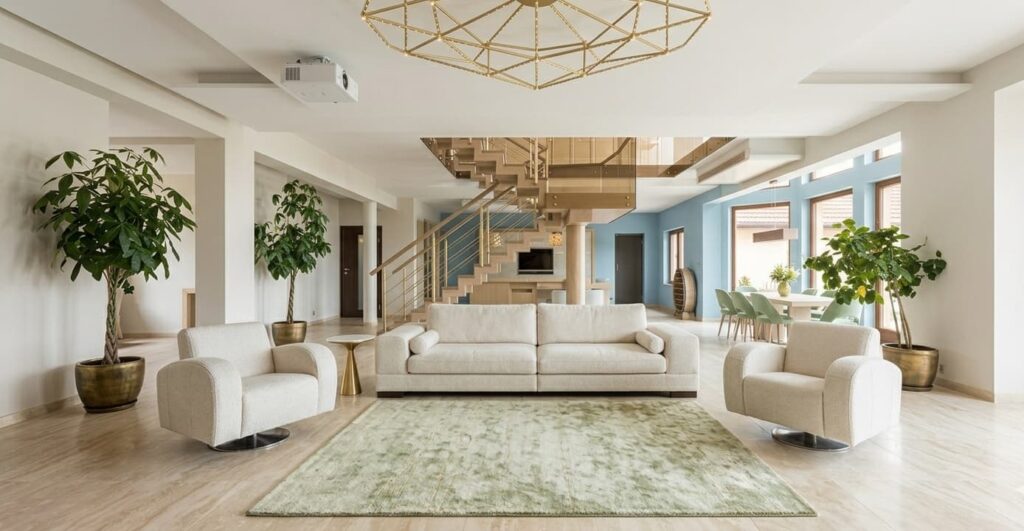
For a simpler approach, grouping potted specimen plants like Fiddle Leaf Figs, Kentia Palms, and Snake Plants in handcrafted terracotta or stoneware containers creates localized clean-air zones. These plant arrangements soften hard architectural lines, naturally regulate indoor humidity, and reduce daily stress levels, helping to create a peaceful, restorative home environment.
Water Conservation and Exterior Green Integration
Can outdoor landscaping and indoor water features be sustainable?
A comprehensive approach to green design connects a villa’s interior decor with its outdoor spaces. Traditional water features and manicured lawns can consume significant amounts of water. However, implementing smart, closed-loop systems allows water elements to operate sustainably. Indoor water fountains can use recycled water filtration systems, which circulate the same water while naturally humidifying dry indoor air.
For helpful design insights on merging indoor comfort with exterior landscape architecture, exploring resources like an NCR real estate blog and market insights provides valuable ideas on sustainable estate planning. Creating natural transitions between indoor living areas and outdoor spaces encourages a lifestyle focused on nature, highlighting the physical and visual benefits of eco-conscious architecture.
Selecting native flora and smart irrigation systems
Landscaping choices should focus on native plant species that are naturally adapted to the local climate and soil conditions. These plants require far less water, fertilizer, and maintenance than exotic varieties, and they support local birds and pollinators. Replacing water-heavy lawns with drought-tolerant groundcovers, ornamental grasses, and gravel paths creates a modern, low-maintenance garden design.
To maximize water efficiency, modern estate gardens use smart drip-irrigation systems. These systems deliver water directly to plant root zones, minimizing evaporation losses. Soil moisture sensors and local weather tracking systems ensure the irrigation schedule adjusts automatically based on natural rainfall, saving water and keeping the villa’s surroundings healthy.
Case Study and Comparison Matrix
When selecting interior decor materials for a sustainable premium residence, comparing options based on durability, environmental impact, and maintenance help homeowners make informed, long-term decisions. Experienced teams, like those at a reputable real estate developer in NCR, evaluate materials to ensure they meet modern performance standards while preserving natural resources.
The table below provides a detailed comparison of popular eco-friendly materials used in premium villa interiors:
| Material | Durability Rating | Carbon Footprint | Primary Luxury Appeal | Maintenance Level |
|---|---|---|---|---|
| Reclaimed Timber | Extremely High | Very Low (Repurposed) | Rich historical patina, unique character | Low (Requires occasional oiling) |
| FSC-Certified Bamboo | High | Low (Rapidly renewable) | Sleek, minimalist lines, clean finish | Low (Standard sweep and damp mop) |
| Natural Cork Flooring | Medium to High | Very Low (Harvested from bark) | Acoustic insulation, warm texture | Medium (Requires protective sealing) |
| Organic Linen Textiles | High (Improves with age) | Low (Flax cultivation is eco-friendly) | Relaxed elegance, high breathability | Medium (Gentle washing or dry cleaning) |
| Recycled Terrazzo | Extremely High | Medium (Low lifestyle impact) | Custom stone designs, polished look | Low (Easy cleaning, scratch-resistant) |
Practical Steps for Transitioning Your Villa to Green Decor
Where should you start when remodeling an existing property?
Transitioning a large home to eco-friendly design is most effective when taken in planned phases. Homeowners do not need to replace all furnishings immediately, as throwing away functional furniture creates unnecessary waste. Instead, start with small, impactful updates like swapping out standard incandescent or halogen lighting for smart LED setups and using low-VOC, non-toxic paints during routine wall updates.
When existing furniture eventually requires replacement, choose high-quality pieces made from sustainable materials. Focus on items built with solid wood and mortise-and-tenon joinery rather than composite boards held together with synthetic glues. This phased approach allows you to build a curated, eco-friendly interior naturally over time.
Partnering with sustainable designers and developers
Collaborating with professionals who specialize in sustainable design is key to achieving a successful green transition. Experienced architects and interior designers can help source certified materials, design custom layouts that capture natural light, and plan smart home systems that reduce resource use. Heritage Prime properties reflect this commitment to thoughtful design, offering structural planning that respects the local environment.
By working with sustainable designers, you gain access to specialized workshops, eco-friendly textile mills, and craftsmen who prioritize ethical practices. This collaborative approach ensures that your villa’s design reflects a shared commitment to environmental care, creating a space that is both exceptionally designed and mindfully built.
Frequently Asked Questions
How do I verify if the furniture I purchase is truly sustainable?
To verify the sustainability of furniture, look for recognized third-party certifications. For wood components, look for the Forest Stewardship Council (FSC) label, which ensures responsible forest management. For upholstered items and textiles, certifications like the Global Organic Textile Standard (GOTS) or OEKO-TEX Standard 100 guarantee that the fabrics are free from harmful chemicals and processed ethically. Additionally, look for Greenguard certification, which ensures the product meets strict chemical emission standards, helping maintain healthy indoor air quality.
Are eco-friendly materials as durable as traditional synthetic materials?
Yes, many natural, sustainable materials are highly durable and often outlast synthetic options. Reclaimed hardwoods, high-density bamboo, and recycled metals are naturally strong and wear-resistant. Natural textiles like high-quality organic linen and wool are exceptionally resilient and maintain their texture over time, whereas synthetic fibers like polyester tend to degrade and pill within a few years. Investing in premium natural materials ensures your furniture remains beautiful and functional for decades.
Does biophilic decor require a lot of maintenance in a large home?
Biophilic decor can be tailored to fit your lifestyle and maintenance preferences. While vertical living walls require built-in automated irrigation systems, simpler solutions like grouping hardy potted plants such as Snake Plants, ZZ Plants, and peace lilies require minimal watering and care. For spaces where regular plant maintenance is difficult, using preserved moss panels provides the soft, natural aesthetic of fresh foliage without needing water, soil, or sunlight, offering a beautiful green accent with almost no maintenance.
What are VOCs and why should I avoid them in my villa?
Volatile Organic Compounds (VOCs) are carbon-based chemicals that evaporate easily into the air at room temperature. They are commonly found in traditional solvent-based paints, varnishes, synthetic carpet adhesives, and manufactured wood products. VOCs can off-gas into your home for years, potentially causing headaches, respiratory irritation, and long-term health concerns. Choosing zero-VOC paints, solvent-free adhesives, and solid wood furnishings helps maintain clean, healthy indoor air throughout your villa.