
Quick Summary
The demand for duplex villas in India is experiencing high growth, driven by shifting buyer preferences, the rise of remote work, and a collective desire for greater personal space. This comprehensive report analyzes the key market drivers, demographic transitions, architectural developments, and geographic investment hubs shaping the premium residential sector over the next decade.
Rising Popularity of Duplex Villas in the Indian Real Estate Market
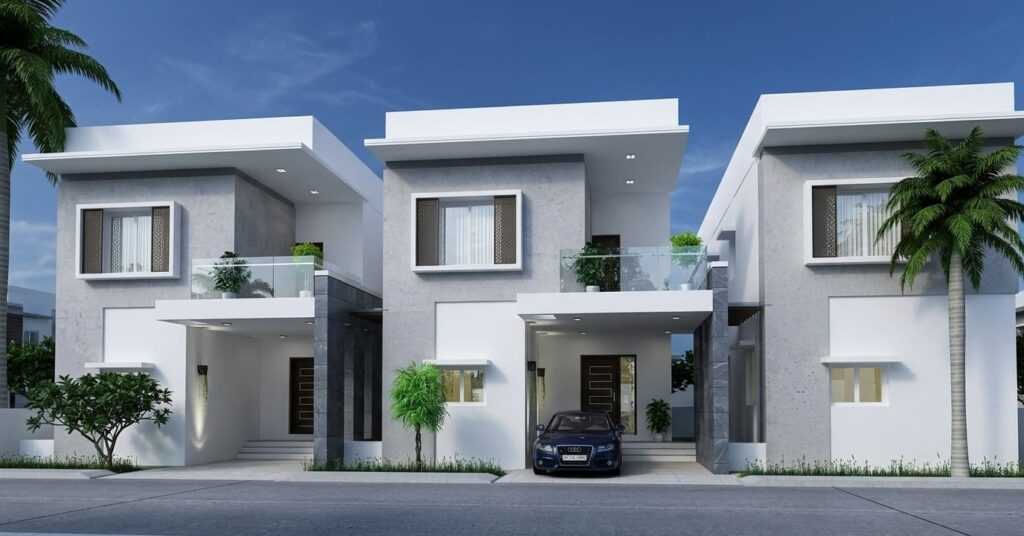
The Indian residential real estate market is undergoing a structural transition. For several decades, rapid urbanization directed the flow of capital and consumer interest toward high-rise apartment complexes. However, a significant shift in buyer psychology is now redirecting attention back toward horizontal, multi-level residential layouts. Modern homebuyers in major metropolitan areas are increasingly prioritizing privacy, structural independence, and long-term land ownership. This preference is particularly evident in the expanding market share of duplex villas, which combine the security of managed communities with the freedom of independent living.
A duplex villa represents a distinct lifestyle choice. By distributing the living space across two distinct physical levels, these properties offer a sophisticated layout that single-floor apartments simply cannot replicate. The structural independence of a villa reduces common walls, meaning fewer disturbances from neighbors and a greater sense of personal space. This design style has captured the interest of affluent professionals, business owners, and non-resident Indian investors who seek to build a long-term asset that matches global architectural standards.
Why are homebuyers shifting from high-rise apartments to multi-level homes?
The primary driver behind this transition is the concept of functional zoning. In a standard single-floor apartment, personal rooms and active living spaces exist on the same physical level, often leading to a lack of privacy when hosting guests or managing daily activities. A duplex villa solves this issue by creating vertical separation. The lower floor is typically designated as a social zone, containing the main living area, formal dining spaces, a guest bedroom, and the kitchen. The upper level remains a highly private sanctuary, reserved for master bedrooms, children’s rooms, private studies, or family media lounges.
This architectural separation ensures that domestic activities do not conflict with one another. For example, a professional working from home can conduct quiet virtual meetings on the upper level while family members engage in social activities on the ground floor. Additionally, duplex designs often feature private lawns, backyard decks, and personal terraces, which provide immediate access to the outdoors, fresh air, and personal green spaces, amenities that are highly restricted in typical apartment complexes.
What is the current market sentiment regarding spacious layouts?
Current market sentiment indicates that buyers no longer view generous square footage as a luxury accessory; instead, they see it as a fundamental requirement for a modern, healthy lifestyle. The collective experience of recent years has emphasized the limitations of cramped vertical living. Homebuyers are looking for properties that can adapt to changing lifestyles, serving as a school, an office, a fitness studio, and a sanctuary simultaneously.
Economic factors also support this sentiment. The growth of disposable income among high-earning corporate employees and entrepreneurs, alongside stable housing loan access, has sustained a strong appetite for premium homes. Investors and end-users are willing to pay a premium for properties that offer high land-share ratios, customizable layouts, and low-density surroundings, making duplex villas a highly coveted residential asset class.
Demographics Driving the Shift: Who is Buying Duplexes?
The surge in demand for duplex villas is supported by clear demographic trends. The primary buyer profile has expanded beyond the traditional older demographic who historically favored independent houses. Today, younger buyers, particularly in the age bracket of thirty-five to fifty years, are emerging as key drivers of the villa market. These buyers are often senior executives in the IT and financial services sectors, tech entrepreneurs, or modern business owners who value privacy, exclusivity, and customized architectural aesthetics.
These buyers are also deeply influenced by global living standards. Having traveled extensively or lived abroad, they seek a housing option that mirrors the suburban estate layouts common in international markets. This demographic expects high-end interior finishes, structural flexibility, smart-home automation, and a strong connection to natural elements, features that are standard in premium duplex projects.
How does the rise of remote work influence luxury home buyers?
The adoption of remote and hybrid work models has restructured urban real estate patterns. Because professionals no longer need to travel to central corporate offices on a daily basis, they are comfortable moving further away from congested business districts to locate spacious homes in suburban developments. This decentralization has enabled the development of large horizontal housing formats in outer residential sectors.
A dedicated home office is now a standard design requirement. In a duplex villa, the flexibility to convert an extra bedroom, a study, or a quiet loft on the upper floor into a fully integrated workspace is highly valued. This physical separation prevents household distractions from interrupting professional activities. Heritage Prime research observes that properties offering dedicated zones for work and fitness consistently command higher interest and premium valuations in the secondary market.
What role do multi-generational households play in duplex demand?
In India, the social tradition of multi-generational living remains very strong, even among modern, affluent families. A duplex layout is highly compatible with this family structure. It offers a balance of shared family life and individual privacy, allowing different generations to live together comfortably.
Typically, the ground floor is planned with elder family members in mind. It hosts the formal living spaces, kitchen, and a master bedroom suite, eliminating the need for grandparents to navigate staircases. The upper floor can then be occupied by the younger generation, providing them with a separate space for their personal schedules, home offices, and entertainment areas. This arrangement preserves close family bonds while respecting the need for personal boundaries and quiet hours.
Emerging Real Estate Hubs for Premium Independent Living
The development of duplex villas requires large, contiguous land parcels, which are rarely available in the core areas of mature Indian cities. Consequently, developers are focusing on rapidly developing outer corridors and master-planned suburbs. These emerging sub-markets offer the physical space needed to create low-density residential enclaves characterized by broad roads, manicured parks, and modern civic infrastructure.
Cities like Delhi NCR, Bengaluru, Hyderabad, and Pune are leading this trend. In Hyderabad, regions like Gachibowli and the Outer Ring Road corridor have seen massive villa developments. In Bengaluru, areas along the North and East corridors, such as Devanahalli and Whitefield, are experiencing strong growth. These locations provide the space for wide roads, integrated security, and community infrastructure, while keeping residents connected to major economic centers.
Why is the National Capital Region becoming a hotspot for villa developments?
The National Capital Region (NCR) has emerged as one of the most active markets for luxury horizontal housing. Large-scale infrastructure investments, such as the construction of expressways, high-speed rail, and metro line expansions, have made outlying sectors highly accessible. Industry analysts monitoring the region closely follow the latest property market updates to track price movements and locate high-potential sub-markets before they appreciate.
Noida and Greater Noida, in particular, stand out due to their wide sector roads, planned green spaces, and modern drainage networks. This structured planning has led to a marked rise in transaction volumes for luxury independent villas in Noida, where buyers seek a balance of privacy and urban convenience. The low-density environment in these areas offers an appealing alternative to the congested vertical towers of inner cities.
What physical infrastructure projects are accelerating this residential shift?
The expansion of physical infrastructure is key to unlocking suburban land values. In NCR, projects like the Noida-Greater Noida Expressway, the Yamuna Expressway, and the construction of the Noida International Airport at Jewar have transformed the region. These developments connect regional micro-markets directly to international transit hubs and economic centers, reducing commuting concerns for luxury buyers.
Simultaneously, the development of commercial retail malls, international schools, and tertiary-care hospitals along these transit corridors ensures that residents of duplex villa communities do not have to travel long distances for their daily needs. This shift has established these suburban areas as self-sustaining ecosystems that support a high-end lifestyle.
Designing the Modern Duplex: Key Architecture and Lifestyle Trends
Modern duplex design has moved away from traditional, heavy masonry styles in favor of clean lines, large glass walls, and open-plan interiors. Modern villas prioritize the seamless flow of light and air, using architectural features like double-height entrance foyers and floor-to-ceiling windows to create a sense of scale and openness. The focus is on integrating indoor living spaces with the outdoor landscape, using private gardens, verandas, and inner courtyards to enhance the living experience.
Furthermore, these designs incorporate flexible layouts. Inner walls are often non-load-bearing, allowing homeowners to customize room sizes, add home theatres, or create larger open kitchens as their lifestyles evolve. In Noida, modern projects featuring ultra-luxury homes in Noida showcase how modern master planning can seamlessly integrate high-end structural features with green areas, providing residents with an upscale living environment within a secure gated community.
What are the must-have design features of next-generation duplexes?
Next-generation duplex villas prioritize smart space utilization, sustainable materials, and technology integration. Key architectural features include floating open staircases that act as design centerpieces, skylights that bring natural light deep into the home, and private internal elevators for convenient movement between floors. Home automation is also a key feature, allowing residents to control lighting, climate, security cameras, and motorized blinds through mobile applications or voice commands.
Outside, modern villas feature private rooftop terraces designed for leisure. These spaces can be customized with outdoor seating, organic kitchen gardens, or private plunge pools. The use of natural materials, such as exterior stone cladding, wood-polymer composites, and low-emissivity glass panels, enhances both the appearance and the energy efficiency of the home.
| Feature | High-Rise Apartments | Modern Duplex Villas |
|---|---|---|
| Privacy Levels | Moderate; shared walls, corridors, and communal spaces. | High; independent structures with personal boundaries and yards. |
| Land Ownership | Fractional undivided share of land (UDS). | Direct ownership or high proportionate share of physical plot. |
| Structural Flexibility | Highly restricted; no changes to the external frame or layout. | High; freedom to customize interiors, terrace gardens, and layouts. |
| Vertical Zoning | Single-level living with minimal physical separation of areas. | Multi-level configuration separating social zones from private rooms. |
Financial and Investment Outlook of Owning a Duplex Villa
From an investment standpoint, a duplex villa represents a highly secure asset class. Unlike high-rise apartments, where the physical structure depreciates over time and the land share is divided among hundreds of residents, a villa owner typically owns the physical land plot on which the home is built. This direct land ownership ensures long-term capital preservation, as land in high-growth urban corridors continues to appreciate due to scarcity.
Additionally, the low-density nature of villa developments protects them from overcrowding, helping them retain their premium character and market value over decades. For buyers focused on capital growth, partnering with a reputable real estate developer in NCR provides confidence regarding land titles, quality standards, and regulatory compliances, protecting your long-term investment.
How do appreciation rates of duplex villas compare to standard apartments?
Historically, land-backed assets appreciate at a faster rate than high-density vertical apartments. The structural component of an apartment begins to age immediately after completion, while the underlying land portion is the primary engine of long-term capital appreciation. In premium residential corridors, land prices have consistently outperformed apartment valuations.
Furthermore, the supply of independent duplex villas in master-planned communities remains low relative to the massive supply of multi-story apartments. This demand-supply mismatch creates a strong foundation for capital appreciation, especially in established sectors where new land parcel allocations are limited.
What are the rental yield prospects for premium multi-level properties?
While high-rise apartments often provide steady, volume-based rental yields, luxury duplex villas cater to a premium rental niche. They attract senior corporate expatriates, multinational business heads, and high-earning professionals who prioritize security, privacy, and extensive living spaces. These tenants are willing to pay premium rental rates for properties located in secure, gated villa communities.
Additionally, the flexible layout of a duplex allows for alternative rental strategies. For example, some owners lease the distinct levels separately to professionals who need a live-work setup, or use a portion of the property as a premium home office, maximizing the return on investment through flexible usage models.
Future Challenges and Sustainable Solutions in Villa Construction
While the demand for duplex villas is strong, the sector faces certain challenges, particularly concerning resource management, environmental impact, and construction costs. Independent homes require more land and resources per household than high-density developments. To address these concerns, progressive real estate developers are adopting green construction methods and incorporating sustainable systems into their master plans.
Sustainable development is not just about reducing carbon footprint; it is also about long-term operational efficiency. By planning for rainwater harvesting, solar energy integration, and natural thermal insulation, developers ensure that independent homes remain efficient to run, reducing utility costs and supporting local conservation efforts.
How are eco-friendly practices shaping the future of individual home construction?
Modern villa construction is increasingly incorporating eco-friendly practices from the initial planning stages. Architects are using passive solar design to position buildings in ways that maximize natural light during winter while minimizing direct heat during summer. This design strategy reduces the heating, ventilation, and air conditioning load on the home.
Additionally, modern projects are utilizing advanced waste management systems, low-energy LED lighting, and greywater recycling networks for watering landscaping. Gated communities are also dedicating large areas to native trees and permeable paving, which help replenish groundwater levels and create cooler microclimates within the community.
Frequently Asked Questions
What is the difference between a duplex villa and a standard two-story house?
A duplex villa is a single residential unit designed over two floors, connected by an internal staircase or elevator, featuring double-height spaces and integrated premium amenities, often located within a secure gated community. In contrast, a standard two-story house can refer to any multi-floor structure, which may have external staircases, split ownership, or lack coordinated architectural planning and shared community facilities.
Is buying a duplex villa a better long-term investment than a flat?
Yes, from a long-term capital appreciation perspective, a duplex villa is often a stronger investment. Because a significant portion of the purchase price goes toward direct land ownership, it appreciates at a faster rate than a flat, which only grants fractional land ownership. Furthermore, the limited supply of premium villas in master-planned communities helps sustain strong demand and resale value.
How does security compare between duplex villas in gated communities and standalone plots?
Duplex villas in gated communities offer significantly better security than standalone plots. Gated communities feature multi-tiered security protocols, including perimeter fencing, 24/7 manned security checkpoints, CCTV surveillance, visitor verification systems, and smart-card access, giving homeowners the peace of mind of independent living with the security of an apartment complex.
What maintenance costs should a duplex owner expect?
A duplex owner is responsible for both individual maintenance, such as private gardens, individual paint, roof waterproofing, and internal plumbing, and common area maintenance fees. While individual maintenance costs can be higher than those of standard apartments, gated communities coordinate major external services, keeping overall maintenance organized and predictable.