
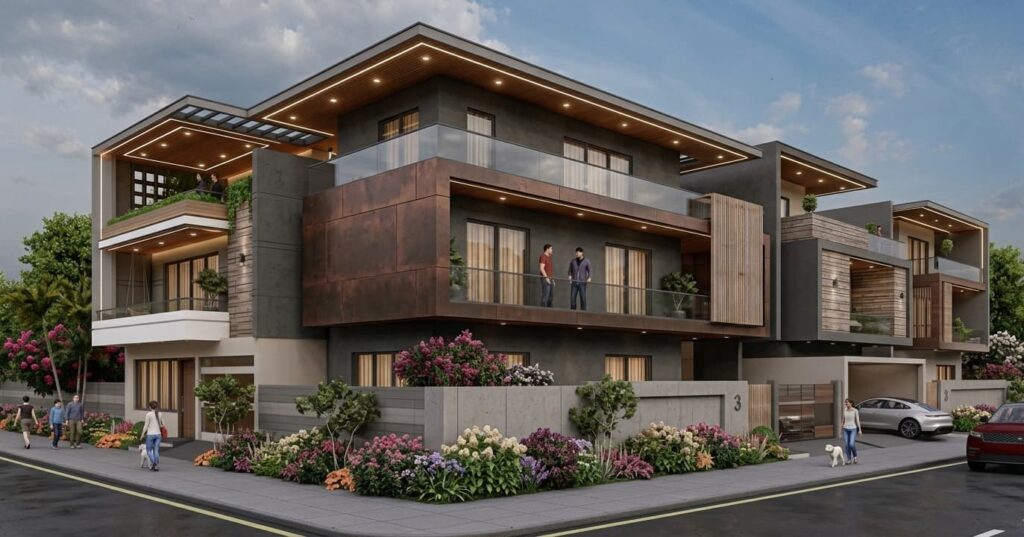
Quick Summary
Investing in villas near the Yamuna Expressway represents a significant opportunity in the northern Indian real estate sector. Fueled by mega infrastructure projects such as the Noida International Airport at Jewar, the Film City, and major industrial clusters, this corridor is transitioning from an emerging highway zone into a premium lifestyle hub. Low density master planning, rising demand for spacious land-based properties, and projected high capital appreciation make independent villas a highly lucrative option for luxury buyers and institutional investors alike.
The Evolution of Yamuna Expressway as a Real Estate Corridor
Why is the Yamuna Expressway attracting high-net-worth investors?
The Yamuna Expressway, stretching over 165 kilometers to connect Greater Noida with Agra, has evolved from a high-speed transit corridor into a highly sought-after destination for luxury real estate investments. Initially conceptualized to ease traffic and boost tourism to the Taj Mahal, the surrounding regions have experienced rapid industrial and residential zoning. High-net-worth individuals and corporate professionals are focusing on this area due to the availability of large land parcels that allow for spacious, horizontal developments. Unlike the dense vertical high-rises found in Central Noida or Gurugram, this corridor offers the physical space needed to construct expansive, luxury homes with private lawns, dedicated parking, and custom architecture.
This structural shift in buyer preference is closely aligned with the desire for a healthier, more balanced lifestyle. Affluent buyers are prioritizing locations that provide cleaner air, expansive green spaces, and lower population density, without compromising on connectivity to major urban centers. As land availability in Delhi and Gurugram hits a bottleneck, the Yamuna Expressway has emerged as the logical frontier for premium residential estates, ensuring that early investors secure substantial land equity at highly competitive entry points.
What infrastructure developments are driving this growth?
The long-term value of real estate is directly tied to infrastructure development, and the Yamuna Expressway is currently benefiting from some of the largest public sector investments in Asia. At the forefront of this transformation is the Noida International Airport at Jewar, which is designed to act as a primary aviation hub for northern India. The presence of an international airport nearby structurally alters property dynamics, attracting multinational corporations, hospitality brands, and logistics companies that generate sustained demand for premium housing. Investors searching for luxury housing spaces in Delhi NCR are focusing on the surrounding sectors due to the strategic integration of transit systems, including the proposed pod taxi networks, Metro line extensions, and high-speed rail links.
Beyond transit, the Yamuna Expressway Industrial Development Authority (YEIDA) has systematically planned specialized economic zones along the corridor. These include a dedicated Medical Device Park, an Apparel Park, a Toy Park, and a massive Semiconductor manufacturing facility. The influx of highly paid technical experts, executives, and global business travelers creates a strong organic market for high-end leased housing, securing the future viability of independent villa developments in nearby residential zones.
Infrastructure Catalysts Reshaping Property Valuations
How does the Noida International Airport impact local villa prices?
The construction of the Noida International Airport is a primary driver of land and villa price appreciation along the Yamuna Expressway. Historically, regions surrounding major international airports, such as Changi in Singapore or those in Kempegowda in Bengaluru, experience a massive surge in real estate valuation during the planning, construction, and operational phases. The commercial activities generated by international airports require massive administrative and operational staff, which subsequently drives up housing demand across all segments. For the luxury villa sector, this impact is amplified because high-ranking executives and business founders seek private, secure, and upscale residences within a 20-minute drive of the terminal.
Property valuations near the expressway have already shown steady upward movement, with land rates appreciating significantly year-over-year. As flight operations commence and scale up, the localized demand for self-sustained gated communities with top-tier security and private amenities is expected to rise sharply, resulting in strong capital gains for early investors who purchase assets before the airport becomes fully operational.
What role does the Film City and Medical Device Park play in economic expansion?
The proposed International Film City in Sector 21, spread over 1,000 acres, is planned to serve as a major hub for media production, post-production, entertainment, and tourism. This project is expected to bring a steady flow of creative professionals, production companies, and international artists to the region, creating a niche market for high-end, short-term and long-term luxury rentals. Gated villas, offering privacy, premium security, and high aesthetic standards, are the preferred choice for high-profile residents in the media and entertainment industries.
Simultaneously, industrial clusters like the Medical Device Park and the Electronic Manufacturing Clusters are bringing heavy capital investments from global manufacturers. To sustain this economic development, a reputable real estate developer in NCR must build robust, modern residential projects that match international living standards. Heritage Prime observes that these coordinated economic activities ensure that the residential demand along the expressway is backed by genuine economic utility rather than speculative trading, establishing a solid foundation for long-term growth.
Comparative Analysis: Villas vs. Group Housing Apartments
Why are luxury buyer preferences shifting from vertical to horizontal living?
Over the past decade, high-density high-rises were the standard model for urban living in the National Capital Region. However, structural overcrowding, maintenance challenges in aging towers, and a growing desire for personal privacy have shifted the preferences of premium home buyers toward horizontal living. Luxury buyers are increasingly choosing independent villas over standard apartments because villas offer complete ownership of the land parcel, greater design flexibility, and a private living experience. A villa allows owners to design custom gardens, private swimming pools, and dedicated home offices without the noise, shared walls, and restrictions of high-rise apartment living.
Additionally, the psychological value of owning land cannot be overstated. Land is a finite resource, particularly in well-planned urban corridors like the Yamuna Expressway. While an apartment owner only holds a small, undivided share of land in a massive housing society, a villa owner holds direct ownership of the physical land, which appreciates much faster than the building structure itself over time.
Villa vs. Apartment Investment Metrics
The following comparative table highlights the key structural and investment differences between purchasing an independent villa and a standard high-rise apartment along the Yamuna Expressway corridor:
| Investment Metric | Independent Luxury Villas | High-Rise Apartments |
|---|---|---|
| Land Ownership | Direct ownership of plot and structure | Undivided share of land (UDS) |
| Capital Appreciation | High (primarily driven by raw land value appreciation) | Moderate (depreciating building age offsets land value) |
| Privacy & Control | Maximum; independent walls and private open spaces | Limited; shared walls, communal amenities, association rules |
| Customizability | High flexibility in layout, expansion, and design | Zero external and highly limited internal structural modifications |
| Density and Greenery | Low density, expansive open spaces, private landscaping | High density, shared parks, higher congestion |
Projected Capital Appreciation and Rental Yield Dynamics
What are the projected long-term capital gains along the Yamuna Expressway?
The Yamuna Expressway real estate market is moving from a speculative phase into an institutional end-user phase. Investors who purchase properties here can expect steady, long-term capital gains. Historical real estate data from master-planned corridors in major metropolitan cities suggests that property values appreciate at a compound annual growth rate (CAGR) of 12% to 18% during the key infrastructure delivery window. This window is currently active along the expressway, as major projects transition from development to active operations.
To maximize these returns, investors should focus on secure, master-planned developments. Navigating the upcoming premium housing developments in this region allows buyers to choose properties designed with modern utility in mind. As high-speed transport networks and commercial zones expand, the limited supply of premium independent villas will likely outpace demand, driving healthy capital appreciation for early asset owners.
How does rental demand for premium villas compare to standard housing?
While high-rise apartments typically offer steady, moderate rental yields, premium villas serve a highly lucrative, high-paying segment of tenants. These include senior executives of manufacturing units, international technical consultants, airport operational leaders, and commercial airline pilots. These tenants prioritize high security, privacy, and modern amenities, and they are willing to pay a premium for properties that deliver on these requirements.
Additionally, multi-generational families and business owners looking for temporary or long-term relocation options create a strong market for spacious, independent homes. Projects like the Shyam Kunj Villas luxury township are designed to meet this demand, offering a combination of independent living and community-level security. The combination of high rental yields and long-term asset appreciation makes well-located independent villas a highly resilient addition to any real estate investment portfolio.
Master Planning and Green Initiatives Along the Corridor
How does the YEIDA master plan prevent unplanned urban sprawl?
One of the major advantages of the Yamuna Expressway is the highly structured master plan designed and implemented by YEIDA. Unlike older, organically grown cities that struggle with traffic, inadequate drainage, and lack of green cover, the sectors along the Yamuna Expressway are planned with future-proof design principles. Roads are designed as wide avenues with dedicated utility corridors, ensuring that maintenance work can be carried out without disrupting traffic flow.
The master plan also strictly controls development density. Only a specific percentage of land is allocated for residential use, with significant portions reserved for green belts, industrial zones, and institutional developments. This strict zoning prevents unplanned urban sprawl, ensuring that the corridor maintains its high-end, clean character even as population density increases over the coming decades.
What sustainability features are being integrated into new villa developments?
Modern premium residential developments along the expressway are incorporating advanced sustainability practices to reduce environmental impact and offer self-sufficiency. Developers are integrating rainwater harvesting systems, solar-powered street lighting, and localized waste management systems directly into their projects. Villas are designed to maximize natural light and ventilation, lowering energy consumption and creating a healthier living space.
These green practices also offer tangible economic benefits for villa owners, including lower maintenance costs and reduced utility bills. As environmental regulations become stricter, properties with built-in eco-friendly features are likely to command higher valuations and attract eco-conscious luxury buyers.
Risks, Challenges, and Mitigations for Villa Investors
What legal and physical due diligence is required before buying land or villas?
While the growth potential along the Yamuna Expressway is significant, investors must conduct thorough due diligence to protect their capital. The first step is to verify the land title and ensure the project is fully registered with the Real Estate Regulatory Authority (RERA) of Uttar Pradesh. RERA compliance ensures that the developer has secured all necessary approvals, is adhering to construction timelines, and is using investor funds transparently.
Investors should also verify that the developer has clear ownership of the land and has paid all dues to the local development authority. Working with established developers who have a proven track record of timely delivery and transparent business practices helps mitigate these risks, ensuring a smooth, secure investment process.
How do infrastructure construction timelines affect investment exit strategies?
Real estate is a long-term, illiquid asset class, and investment success along the Yamuna Expressway depends heavily on the completion timelines of public infrastructure projects. If major projects like the airport or metro extensions experience delays, it can affect the pace of capital appreciation and rental demand in the short term.
To mitigate this risk, investors should plan for a five-to-seven-year holding period. This timeframe allows the surrounding commercial and transit infrastructure to mature fully, ensuring maximum value when planning an exit. Buying at competitive initial pricing also provides a buffer against temporary market fluctuations, helping to secure solid returns over time.
Frequently Asked Questions
Is investing in a villa near the Yamuna Expressway safe for NRI buyers?
Yes, investing in a villa along the Yamuna Expressway is highly secure for Non-Resident Indians (NRIs), provided the property is registered under the UP RERA framework. The regulatory authority enforces transparency, ensures structured development timelines, and protects investor capital. Additionally, the planned infrastructure, such as the Noida International Airport, offers long-term capital growth and reliable rental demand, making it an excellent asset class for diversifying global wealth into high-growth Indian real estate.
What is the typical plot size and construction quality of premium villas in this zone?
Premium villas along the Yamuna Expressway typically offer generous plot sizes ranging from 150 square yards to over 500 square yards, giving owners ample space for independent living. These properties are built using high-quality materials and modern construction technologies to ensure long-term structural durability. They feature earthquake-resistant frames, high-end interior finishes, smart home integrations, and private green spaces, creating a premium living environment that matches international standards.
How long will it take for Noida International Airport to fully impact property values?
The impact of the Noida International Airport on local property values is a multi-phase process. The first wave of appreciation occurred during the planning and initial land acquisition stages. The second, more significant phase is happening now as construction nears completion and flight trials begin. Once the airport is fully operational and commercial passenger and cargo traffic scales up over the next three to five years, surrounding residential property values are projected to see sustained, long-term appreciation.
How does Heritage Prime fit into the landscape of real estate developments in NCR?
Heritage Prime serves as an objective, trusted guide in the regional real estate landscape, helping buyers navigate the growing NCR market. By analyzing market trends, land valuations, and master planning initiatives, Heritage Prime assists investors in identifying high-potential residential opportunities, such as independent villas and luxury developments, ensuring secure and informed investment choices near key economic hubs like the Yamuna Expressway.