
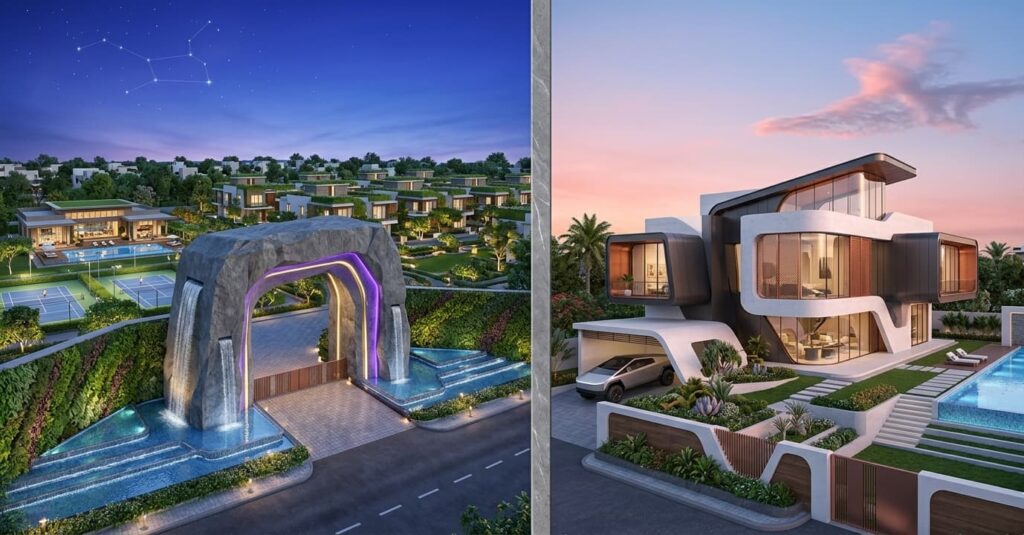
Quick Summary
Choosing between an independent villa and a gated community villa requires balancing individual autonomy with collective convenience. Independent villas provide total control over design, zero community rules, and long-term land value appreciation, but demand hands-on management for security and services. Gated villas deliver immediate lifestyle integration with multi-tier security, shared amenities, and managed upkeep, at the cost of monthly maintenance fees and structural constraints. This comprehensive guide details the financial, operational, and lifestyle metrics to help you make an informed choice.
Table of Contents
- The Evolution of Modern Housing Aspirations
- Defining the Contenders: Gated vs Independent Villas
- Security Infrastructure: The Ultimate Shield
- Lifestyle Amenities and Community Dynamics
- Architectural Autonomy and Customization Limits
- Financial Realities: Cost Analysis and Upkeep
- Long Term Investment Prospects and Capital Growth
- The Selection Matrix: Choosing Your Ideal Path
The Evolution of Modern Housing Aspirations
The concept of homeownership has transformed significantly over the last decade. High-net-worth individuals and discerning buyers are no longer satisfied with standard multi-story apartments that offer limited space and restricted privacy. This shift in buyer psychology has sparked a massive surge in demand for low-density luxury housing options across metropolitan areas. The desire for personal space, private gardens, and multi-generational living quarters has made villas the preferred choice for modern families seeking a balanced lifestyle.
When exploring the premium housing market, buyers face a key structural choice: should they buy an independent standalone house or invest in a secured gated development? Both housing formats represent significant financial commitments and offer vastly different daily living experiences. While one path offers complete individual sovereignty, the other emphasizes community integration, shared responsibilities, and structured safety nets. Finding premium residential properties in Delhi NCR that align with your personal values requires a detailed look at the practical and financial realities of both options.
What is driving the preference for low-density housing?
The primary driver is the demand for physical space and health-conscious living environments. High-rise developments often struggle with issues like crowded common areas, shared ventilation systems, and high noise levels. In contrast, villas provide vertical and horizontal independence, private open-air terraces, and dedicated green spaces. The growing demand for remote working arrangements has also forced homeowners to look for larger properties that can easily accommodate dedicated home offices, fitness zones, and study areas for children without compromising on family privacy.
Defining the Contenders: Gated vs Independent Villas
To make an informed choice, it is helpful to clearly define what each housing type offers. An independent villa refers to a standalone residential building constructed on a self-owned piece of land. The homeowner owns both the physical land parcel and the structure built upon it, without any shared walls, common boundaries, or collective management structures. This format gives the owner absolute authority over construction timelines, architectural themes, plumbing layouts, and landscaping designs, free from third-party oversight.
Conversely, a gated villa is situated within a planned, private residential enclave. These enclaves are typically managed by a professional facility management agency or a resident-led association. In this setup, while the buyer owns the specific built-up villa and its immediate plot footprint, they also hold undivided interest in common infrastructure. This includes private internal roads, community parks, clubhouse facilities, water treatment plants, and peripheral security installations. The master plan of these developments is highly standardized to maintain a cohesive visual aesthetic and orderly community flow.
How does the legal ownership structure differ?
For independent villas, the land deed, building plan approvals, and utility connections are registered directly in the individual owner’s name. The owner must manage all local municipal interactions, land taxes, and building safety clearances themselves. In a gated enclave, the master plot is approved as a collective residential project, and individual villas are registered with specific undivided share coordinates. Gated developments must also comply with RERA guidelines, giving buyers an extra layer of legal protection against delivery delays and title disputes.
Security Infrastructure: The Ultimate Shield
For many modern homeowners, family safety is the deciding factor. Gated community living excels in this area, offering a highly structured, multi-tier security system designed to prevent unauthorized access. These communities feature fortified boundary walls, computerized visitor logging portals, round-the-clock security patrols, and high-definition CCTV networks monitoring all common areas. This comprehensive infrastructure ensures that children can play safely outside and elders can walk in the evenings with peace of mind.
When looking at Palm Villas Noida gated community, you can see how advanced technology is used to manage security. Automated boom barriers, RFID vehicle tags, and biometric verification for household staff remove the risk of human error at entry points, creating a secure environment that is difficult to replicate in a standalone house.
What are the safety challenges of independent houses?
Independent standalone homes require the owner to design, fund, and maintain their own security setup. This involves installing individual CCTV cameras, burglar alarms, laser perimeter sensors, and hiring private security guards. While this can be highly effective, the operational responsibility and recurring costs fall solely on the homeowner. Standalone villas are also more vulnerable when the family is traveling for extended periods, as they lack the natural neighborhood surveillance and integrated response networks found in gated communities.
Lifestyle Amenities and Community Dynamics
The social framework of a neighborhood has a significant impact on daily well-being. Gated villa communities are designed to foster active social interaction and healthy living. They feature high-end clubhouses, swimming pools, gymnasium spaces, tennis courts, and multipurpose halls for family gatherings. These shared spaces act as natural hubs for social engagement, helping children make friends and giving adults a space to network and unwind without leaving the property.
Independent villas, on the other hand, offer an isolated, quiet lifestyle. While you can build private amenities like a personal plunge pool, a home theater, or a rooftop gym, these require a substantial capital investment and take up valuable space on your plot. Additionally, the lack of immediate social infrastructure can sometimes feel isolating, especially for children and senior citizens who benefit from the daily interactions of a structured neighborhood community.
How does maintenance management compare?
Maintenance is another area of contrast. In a gated community, professional facility management teams handle garbage disposal, garden maintenance, street light repairs, and water supply logistics. Homeowners pay a predictable monthly maintenance fee, leaving them free to enjoy their lifestyle. In a standalone home, the owner is responsible for managing all maintenance issues, from hiring plumbers and electricians to clearing storm drains and repainting the exterior. This hands-on management can become a time-consuming chore over time.
Architectural Autonomy and Customization Limits
For buyers with a specific vision for their home, architectural freedom is a key priority. This is where independent villas have a distinct advantage. If you want to design a modern home with unique cantilevers, an unconventional layout, or custom interior spaces, standalone land ownership gives you the freedom to do so, provided you comply with local building regulations. You can choose your own materials, select your contractors, and construct your home at a pace that matches your financial flow.
In a gated community, this level of personalization is highly restricted. To maintain a cohesive neighborhood aesthetic, developers enforce strict design codes that dictate exterior paint colors, boundary wall heights, window designs, and overall elevation styles. If you prefer a unique, custom-designed home, these restrictions can feel limiting. However, if you prefer a clean, uniform neighborhood look, this standardization helps protect property values.
Can you expand or modify a gated community villa?
Expansion opportunities in gated enclaves are highly limited. Homeowners are generally not allowed to build extra floors, add structural annexes, or modify the exterior of their properties, as this would alter the community’s approved design. Independent villa owners have the flexibility to expand vertically or horizontally over time to accommodate growing family needs, as long as they stay within the local Floor Area Ratio (FAR) guidelines.
Financial Realities: Cost Analysis and Upkeep
The financial dynamics of these two property types are vastly different. An independent villa project requires the buyer to secure a clear, litigation-free plot of land, which can be difficult in prime urban areas. The owner must then manage the construction process, coordinate with architects, clear municipal approvals, and handle utility connections. While this allows for cost control over materials, it carries risks of cost overruns, regulatory delays, and construction management challenges.
Purchasing a gated villa is a more straightforward financial transaction. The developer handles all land procurement, plan approvals, construction logistics, and utility connections. Buyers can purchase fully finished or semi-finished luxury residences, such as independent homes at Shyam Kunj Villas, which combine the privacy of a personal home with the structured framework of an established community. While the initial purchase price of a gated villa may include premium charges for common amenities, it avoids the hidden hassles of managing your own construction project.
| Feature / Parameter | Gated Community Villa | Independent Standalone Villa |
|---|---|---|
| Security System | Multi-tier, CCTV, Guard Patrols, Access Gates | Self-managed, Camera setups, Private Guards |
| Lifestyle Amenities | Clubhouse, Gym, Pool, Parks, Sport Courts | Private only (Must be self-funded) |
| Design Freedom | Restricted by Community Guidelines | Absolute Freedom (Within Local Bylaws) |
| Maintenance Responsibility | Managed by Association (Monthly Fees) | Fully Individual (Requires Personal Effort) |
| Construction Effort | Zero (Handled by Developer) | High (Self-managed Construction) |
Long Term Investment Prospects and Capital Growth
Real estate is a key wealth-building asset, making long-term value appreciation a critical factor. Independent villas enjoy strong capital growth over time, as the appreciation is driven by the value of the underlying land. Because land is a scarce resource in urban centers, standalone plots in well-connected areas often see higher rate increases compared to built-up apartments. However, finding buyers for high-value independent properties can take longer, as they require large capital outlays and complex title verifications.
Gated villas offer highly attractive, liquid investment prospects. These premium homes are in high demand among corporate executives, NRI buyers, and modern families who prioritize immediate livability and security. Because they are part of structured projects, banks and financial institutions process loans faster, making them easier to buy and sell. For the latest trends in appreciation rates, rental yields, and buyer preferences, refer to our NCR real estate blog and market insights.
How does rental yield compare?
Gated villas generally command higher rental yields and attract premium tenants. Corporate expats and executive families often prefer gated enclaves because they offer instant access to international schools, recreation clubs, and high-end security. Independent standalone houses can be harder to rent at premium rates unless they are located in highly exclusive, central neighborhoods, as tenants are often reluctant to take on the daily maintenance responsibilities of an independent property.
The Selection Matrix: Choosing Your Ideal Path
The choice between an independent and a gated villa ultimately comes down to your lifestyle, stage of life, and personal preferences. If you value architectural freedom, plan to build a unique custom home, and are comfortable managing security and maintenance yourself, an independent villa on a private plot is an excellent choice. This path offers a highly personal, private living experience that a structured community cannot match.
If you prefer a convenient, secure lifestyle with access to top-tier amenities, social opportunities for your family, and professional maintenance support, a gated community is the ideal fit. This option provides a balanced living environment where you can enjoy the privacy of a villa alongside the support and convenience of a managed community. For those looking to invest in one of the most promising growth corridors in the region, exploring premium villas for sale in Noida offers a great starting point for finding your next home.
Consider your long-term goals carefully. A home is more than just a physical building, it is the setting for your family’s daily life. Weigh the active, community-oriented lifestyle of a gated development against the quiet, customized freedom of a standalone property to choose the path that best supports your family’s aspirations.
Frequently Asked Questions
Which housing type offers better long-term resale value?
Both property types appreciate well, but they appeal to different buyer profiles. Independent villas appreciate primarily due to the rising value of land in urban areas. Gated villas appreciate because of the quality of the surrounding community, amenities, and ongoing maintenance. Gated villas are often easier to sell quickly because they appeal to a wider range of modern buyers who want security and ready-to-use facilities.
Are maintenance costs significantly higher in gated villas?
Gated villas require a regular monthly maintenance fee to cover shared services like security, landscaping, pool upkeep, and road repairs. While this fee is recurring, it is often more cost-effective because the expenses are shared across the community. Independent villa owners do not pay monthly fees, but they must cover all repair and upkeep costs individually, which can lead to unpredictable, high expenses over time.
Can I customize the exterior of my villa in a gated community?
Generally, gated communities do not allow significant exterior modifications. To maintain a uniform, attractive look across the development, resident associations and developers enforce strict guidelines regarding paint colors, structural additions, and boundary walls. If you want full freedom to design and modify your home’s exterior, an independent villa is a better choice.
Is it easier to get home loans for independent or gated villas?
Securing a loan is usually quicker and simpler for gated villas. Financial institutions regularly pre-approve major developer projects, as the land titles, building plans, and environmental clearances are already verified. For independent villas, banks conduct thorough individual audits of the land title, boundary clearances, and building plan approvals, which can make the loan approval process longer and more complex.