
Quick Summary
Duplex living offers a balanced middle ground between dense apartment living and the premium pricing of fully independent villas. This editorial explores the key structural, financial, and lifestyle dynamics of duplex properties. Key advantages include double-income potential, zoning flexibility, and multi-generational housing options. Challenges center on daily vertical mobility, shared walls, and maintenance coordination. Our analysis covers architectural definitions, layout differences, and legal compliance steps to help you make an informed real estate decision.
Defining the Duplex: Architectural and Functional Dynamics
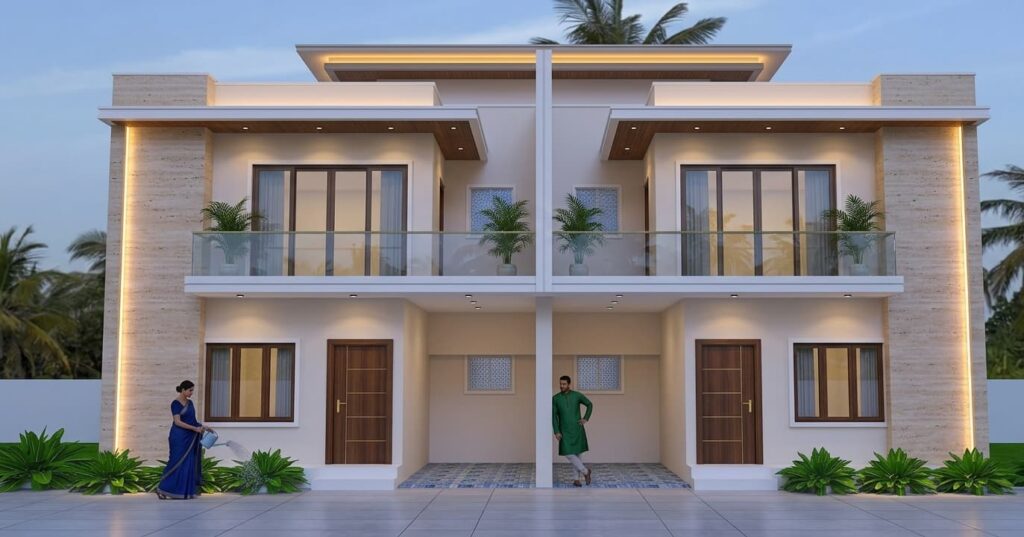
The term duplex refers to a single residential building containing two distinct living units. These units can be arranged either side-by-side sharing a common central wall, or stacked vertically across two floors connected by an internal staircase. Unlike a standard two-story house where a single family occupies the entire structure as one integrated unit, a classic duplex is architecturally designed to accommodate either two separate households with independent entry points or a single large household seeking clear spatial zoning across two levels.
In rapidly urbanizing real estate markets, the demand for vertical duplexes has grown significantly. Buyers appreciate the sense of ownership and space that resembles a private villa, combined with the lower cost basis of multi-family structures. Market analyses by property valuation experts and advisory platforms like Heritage Prime suggest that modern duplex units provide an entry point into premium residential sectors for families who find standalone luxury properties financially out of reach.
What is the difference between a duplex and a two-story house?
While both structures feature multiple floors, their legal designations and internal layouts differ. A two-story house functions as a single undivided property with one kitchen and shared utility bills, designed for one household. A duplex contains two distinct zones with separate kitchens, utility meters, and bathrooms. Even when used by a single multi-generational family, the architectural layout of a duplex allows for the absolute separation of daily living activities between the upper and lower levels.
How does a duplex differ from a townhouse or flat?
A flat is a single-level unit within a larger multi-story apartment block, sharing walls with multiple neighbors above, below, and beside. A townhouse is part of a row of uniform multi-story houses sharing side walls with adjacent units. A duplex consists of only two units under one roof, resulting in fewer shared walls, larger yard space, and a more private living experience compared to high-density apartment blocks.
The Economic Equation: Financial Advantages of Duplex Properties
Investing in a duplex presents unique financial leverage opportunities. One of the most compelling models is owner-occupancy coupled with rental generation, often called house hacking. Under this arrangement, an owner resides in one of the units while leasing the second unit to a tenant. The monthly rental income received from the tenant can offset a major portion of the home loan payment, making property ownership highly affordable over the long term.
This structural configuration also offers unique benefits for family-run businesses or remote professionals who require a dedicated home office that remains completely separate from domestic noise. Instead of renting external commercial space, a professional can dedicate an entire floor of their duplex to business operations, which may qualify for distinct tax deductions depending on regional tax codes.
In major metropolitan hubs, discerning buyers often look for independent homes with modern amenities to enjoy spatial independence while benefiting from structured housing layouts. A duplex aligns perfectly with this objective, offering a private entrance, dedicated parking, and a lower overall purchase price than an equivalent standalone estate.
Is a duplex a good investment for long-term rental income?
Yes, duplexes historically perform well in high-demand rental markets. They attract stable, long-term tenants such as young families and retired couples who prefer a yard and a quiet residential setting over high-rise apartments. For the owner, managing a duplex is highly cost-efficient because both rental units are located under a single roof, simplifying roof maintenance, landscaping, plumbing upgrades, and tenant relations.
Can buying a duplex lower overall property acquisition costs?
Acquiring a duplex is generally more cost-effective on a per-square-foot basis than buying two separate properties. Land acquisition, foundation pouring, and roof construction costs are shared between the two units, lowering the developer’s manufacturing expenses. These savings are passed on to the buyer, allowing families to secure twice the volume of livable space for a fraction of the cost of two detached structures.
Spatial Freedom: Lifestyle and Multi-Generational Integration
The physical layout of a duplex allows for natural lifestyle separation. For families who wish to care for aging parents or accommodate adult children while maintaining individual boundaries, the dual-level design provides a perfect solution. Each generation can maintain its own schedules, meal preparation times, and entertainment preferences without direct physical interference from the other, while remaining close enough to offer immediate assistance when needed.
The abundance of natural light and ventilation is another key benefit. Because vertical duplexes occupy multiple floors, they often feature expansive floor-to-ceiling windows, double-height ceilings in the main family areas, and multiple balconies. This layout creates an open, airy environment that is rarely found in traditional single-floor apartments, where window placement is constrained by surrounding units.
For those seeking an exclusive residential community in Delhi NCR, choosing a duplex format within a planned development combines private lifestyle advantages with community-based security, continuous power backup, and shared recreational parks. This balance ensures that families can enjoy the quiet atmosphere of a private home alongside the convenience of modern community living.
How does a duplex enhance work-from-home arrangements?
A duplex offers a clear solution to the challenge of work-life balance. By designating the lower level for professional workspaces, meetings, and creative studios, and reserving the upper level exclusively for family life, remote workers can establish a clear mental and physical boundary. This separation minimizes distractions, improves productivity, and prevents work-related stress from entering private living spaces.
What are the design opportunities within a double-level home?
Having two levels opens up many custom interior design options. Homeowners can install architectural features like floating staircases, glass balustrades, or double-height accent walls. The upper level can be configured as a quiet sleeping zone with private suites, while the lower level serves as an active social hub with kitchen facilities, dining areas, and guest lounges, preventing social activities from disrupting resting household members.
The Drawbacks: Understanding the Practical Challenges
Despite the significant benefits, duplex living has its share of daily challenges. The most immediate physical consideration is vertical movement. Navigating stairs multiple times a day can be exhausting and may present serious challenges for elderly family members, individuals recovering from injuries, or parents managing toddlers. While domestic elevators can be retrofitted, they add substantial installation and energy costs to the property budget.
Another consideration is sound transmission and shared spaces. In side-by-side duplex structures, low-frequency sounds from subwoofers, heavy footsteps, or slamming doors can travel through shared walls if high-grade soundproofing insulation was not installed during construction. In vertically stacked duplexes, noise from the upper unit can easily disrupt residents in the lower unit, requiring careful consideration of flooring materials and acoustic ceiling panels.
Maintenance coordination is also a key factor. Unlike high-rise apartment complexes where a central facilities management team handles all exterior repairs, duplex owners must directly arrange and pay for external maintenance. If the roof leaks, the facade needs painting, or the drainage system fails, the expense and coordination efforts must be shared by the two co-owners. Disagreements over repair budgets, aesthetic choices, and timeline expectations can occasionally cause tension between adjacent neighbors.
Are duplexes harder to resell in the open market?
Resale liquidity depends greatly on location and target demographics. Because duplexes represent a niche product category, they may have a slightly smaller pool of buyers than standard three-bedroom apartments. Young families with very small children or elderly retirees may avoid homes with internal stairs. However, in major urban hubs where land prices are high, duplexes remain highly attractive to middle-income buyers seeking a villa-like experience on a budget.
What are the common landlord-tenant issues in a duplex?
When an owner lives in one unit of a duplex and leases the other, proximity can lead to friction. Simple issues like shared driveway access, visitor parking, waste disposal placement, and late-night noise require clear communication and boundaries. It is important to establish a formal tenancy agreement that clearly outlines property usage rules, utility sharing arrangements, and quiet hours to prevent misunderstandings.
Comparative Evaluation: Duplex vs. Single-Family vs. Penthouse
To help prospective buyers evaluate which property structure matches their long-term family and financial needs, we have created a direct comparison highlighting structural, financial, and operational differences across property types.
| Feature | Duplex Property | Single-Family Villa | Luxury Penthouse |
|---|---|---|---|
| Acquisition Cost | Moderate; land and structural costs are shared. | High; full cost of land and structure is paid by one owner. | Premium; includes developer-added premium for top-floor views. |
| Rental Generation | Excellent; dual units allow living in one while renting the other. | Limited; usually rented as a single high-ticket unit with lower yields. | Moderate; high rental price limits the pool of prospective tenants. |
| Privacy Level | Moderate to High; shared wall or ceiling with only one neighbor. | Absolute; no shared walls, private boundaries, and independent yard. | High; limited shared walls but located within a larger multi-unit building. |
| Maintenance Burden | Shared; costs are split between the two unit owners or handled by the landlord. | Individual; owner is fully responsible for all exterior and interior maintenance. | Low; managed by the housing society team, paid via maintenance fees. |
This matrix demonstrates that while a single-family villa offers unmatched privacy, it also carries the highest financial and operational maintenance burdens. On the other hand, a penthouse provides convenience but comes with a premium price tag and high monthly community fees. The duplex stands out as a balanced option, combining financial utility, generous square footage, and manageable maintenance responsibility.
Regulatory, Legal, and Management Dynamics
Before purchasing a duplex, it is essential to conduct thorough legal and regulatory due diligence. Buyers must carefully verify the property title deeds to confirm whether the structure is registered as a single undivided parcel of land or as two separate legal units with independent deeds. This distinction directly impacts your ability to sell or mortgage a single unit in the future.
In many jurisdictions, local municipal planning laws place strict restrictions on adding separate kitchens or dividing a single villa into two rental units. Failing to obtain the necessary approvals from local development authorities can lead to municipal penalties, issues with home loan approvals, and difficulties in securing separate electricity and water connections.
When purchasing a property, buyers must review the legal terms and service conditions before completing any financial transactions. Working with a qualified legal professional ensures that all documentation, local zoning disclosures, and community rules are fully understood, protecting your long-term interests.
Furthermore, working with transparent and verified real estate platforms provides peace of mind. Partnering with professional agencies that protect your personal information and transactions aligns with our customer data privacy policy to ensure complete safety throughout your property search and transaction journey.
How are utility bills split in a duplex?
To prevent disputes, it is highly recommended to have independent municipal meters installed for electricity, water, and gas services. When independent metering is not structurally possible, owners must establish a clear cost-sharing agreement based on occupancy ratios or floor area percentages. Having these arrangements in writing before occupancy is key to maintaining a positive relationship between neighbors.
What insurance policies are required for a duplex?
If you own the entire duplex, you will need a comprehensive landlord or multi-family property insurance policy that covers the main structure, liability for common areas, and loss of rental income in case of major damage. If the units are owned by different individuals, each owner must secure a separate structural insurance policy with mutually agreed-upon terms for rebuilding shared components, such as the roof, foundation, and boundary walls.
Frequently Asked Questions
Can a duplex be legally converted into a single-family home?
Yes, converting a duplex into a single-family home is possible. This conversion typically involves removing the secondary kitchen, creating internal pathways, and merging the plumbing and electrical systems under a single meter. However, you must consult local architectural experts and obtain municipal permits to ensure that these changes comply with building codes and tax regulations.
How do property taxes differ for a duplex compared to a regular house?
Property taxes are calculated based on how the property is registered with local authorities. If registered as a single undivided property, you will receive a single tax bill based on the total built-up area. If registered as two separate properties, each unit will be assessed independently, and the owners will receive separate tax bills based on their respective units’ valuation.
What are the main soundproofing options for duplex walls?
Effective soundproofing methods include adding resilient channels to the shared walls, installing dense acoustic drywall, and filling the wall cavities with mineral wool insulation. Sealing gaps around electrical outlets, plumbing pipes, and baseboards with acoustic sealant also plays a significant role in reducing noise transmission between the two living spaces.
Does a duplex require more maintenance than a standard apartment?
Yes, duplexes require a higher level of hands-on maintenance. In an apartment complex, the building management team handles structural repairs, painting, and landscaping through monthly maintenance fees. In a duplex, you and your co-owner are directly responsible for arranging, managing, and financing all exterior and structural repairs, which requires regular attention and coordination.